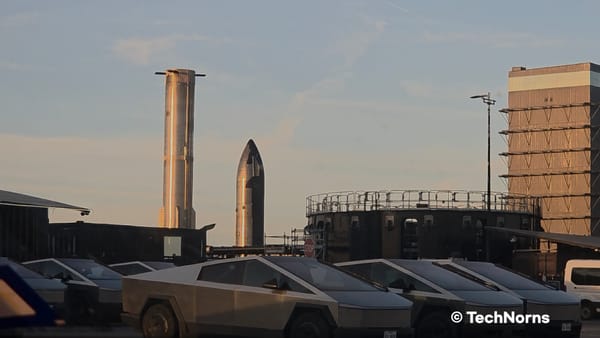
Why Elon Musk Called Starship’s Engine “Alien Technology”
Elon Musk called SpaceX’s Raptor 3 engine “alien technology.” A closer look reveals why the Starship engine breaks from traditional rocket design, prioritizing reusability, manufacturability, and Mars fuel production over exposed mechanical complexity.

Part 1: “Raptor 3 Is on Another Planet”
Raptor 3 is SpaceX’s latest methane-fueled rocket engine designed for Starship, optimized for full reusability and long-term Mars missions.
When I visited NASA’s Johnson Space Center in Houston earlier this year, one question stayed with me: why did Elon Musk describe SpaceX’s latest Starship engine, Raptor 3, as “alien technology”?
Standing in front of the Saturn V’s F-1 engine—the beating heart of the Apollo program—the contrast was impossible to ignore.
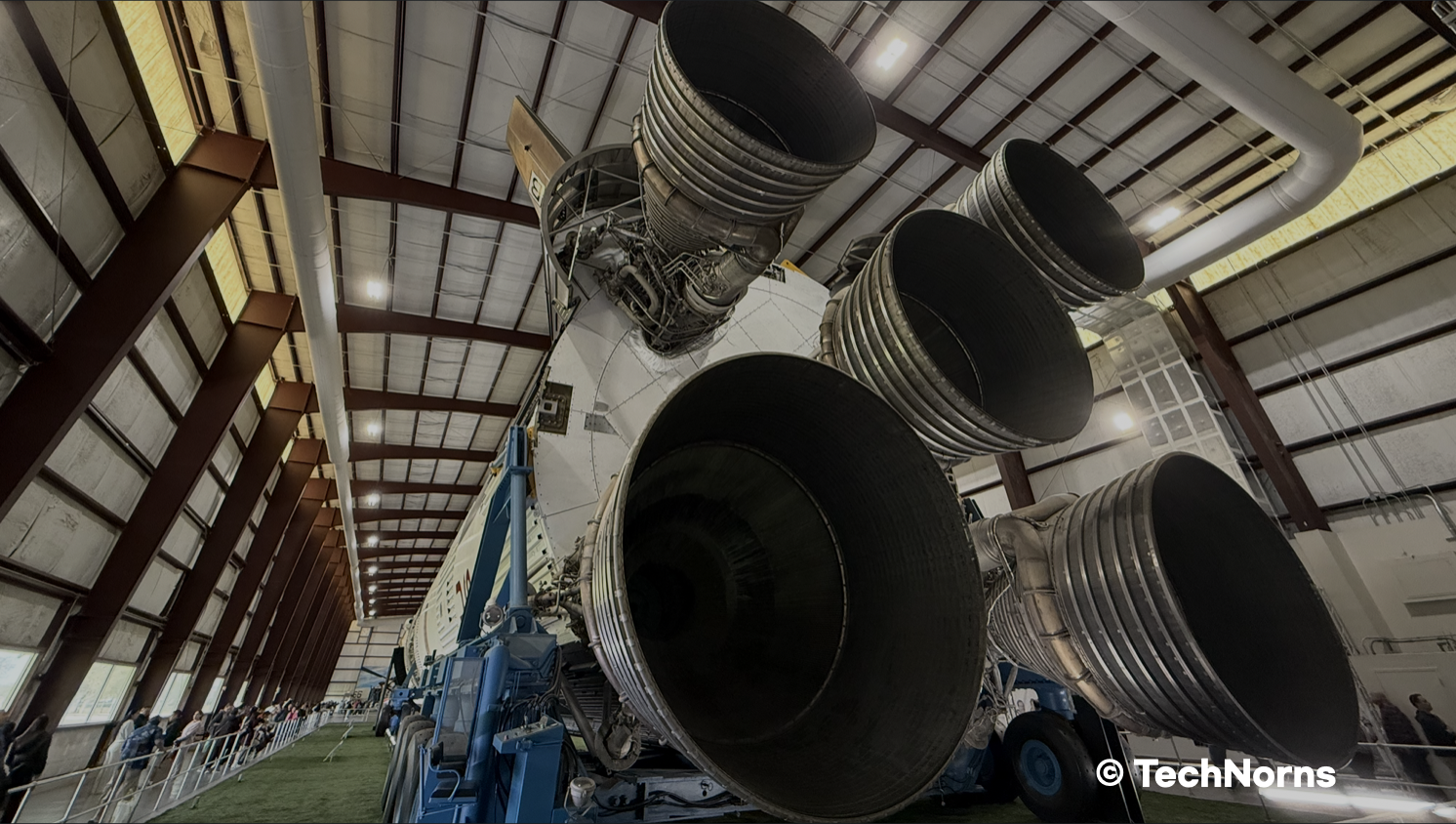
The Saturn V’s F-1 engines on display at NASA’s Johnson Space Center—an icon of Apollo-era rocket design, defined by exposed plumbing, massive scale, and visible mechanical complexity.
“You know, Raptor 3 is really—I’d say—kind of an alien-technology rocket engine,” Musk said.
The F-1 is exactly what decades of aerospace engineering taught us a rocket engine should look like. Thick fuel lines crisscross its exterior. Exposed pipes, valves, sensors, and joints compete for space. The engine wears its complexity on the outside, radiating mechanical tension and brute-force pragmatism. It looks dangerous, powerful, and unmistakably human-made.
Raptor 3 rejects that entire visual language.
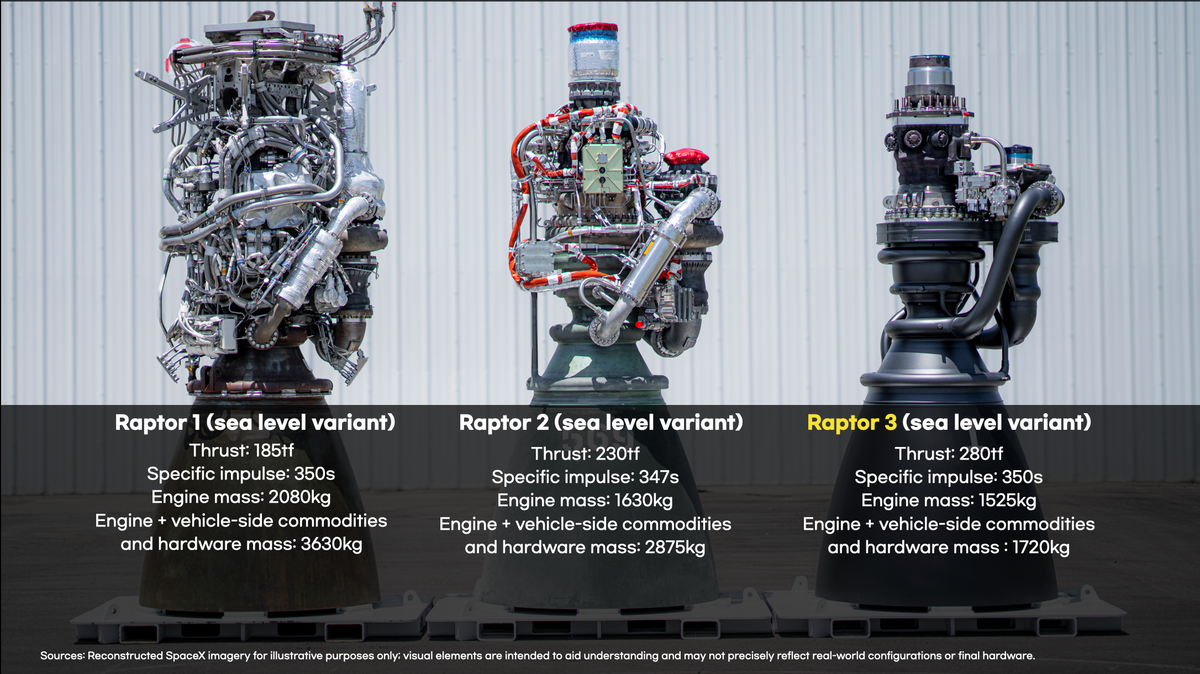
Where the F-1 is chaotic and exposed, Raptor 3 is unnervingly clean. No visible plumbing. No cables. No protective shrouds. From the outside, it resembles a smooth metallic artifact more than a working propulsion system—like a machine that swallowed all its organs and left nothing behind.
That visual absence is precisely what unsettled many aerospace veterans.
“I mean, even industry experts, when we showed a picture of the Raptor 3, said the engine was not complete,” Musk recalled. “So then we said, well, here’s the engine ‘not complete,’ firing at a level of efficiency that has never been achieved before.”
In the summer of 2024, when Musk posted an image of Raptor 3 on X, the spaceflight community reacted with open disbelief. The comments quickly filled with skepticism: Is this actually operational? Is this just a shell? Where are the pipes?
To seasoned engineers, the engine looked less like flight hardware and more like a display mockup—something you’d expect to see behind glass at a museum. The familiar sense of mechanical intimidation was gone. And that absence alone triggered doubt.
But the smooth exterior was not an aesthetic choice. It was the visible outcome of a deeper philosophical shift in how SpaceX thinks about propulsion.
Traditional rocket engines evolved under a set of constraints defined by Earth: expendability, limited production volume, and missions measured in minutes. Raptor was designed under a different assumption altogether—that engines must be produced at scale, reused frequently, and ultimately operate far from Earth.
Which raises the more important question: why did SpaceX abandon kerosene engines like Merlin—already proven, reliable, and enormously successful—in favor of a methane engine no one else had fully operationalized at this scale?
The answer has little to do with raw thrust.
It has everything to do with Mars.
Starship is not designed to visit Mars. It is designed to leave Mars.
A round-trip mission changes everything. Carrying return fuel from Earth is mathematically prohibitive for a vehicle the size of Starship. The only viable option is to produce fuel on Mars itself.
Mars has no oil. What it does have is an atmosphere composed of roughly 95% carbon dioxide, along with vast reserves of water ice beneath the surface.
Combine CO₂ with hydrogen, run it through the Sabatier reaction to produce methane and water, and then electrolyze that water to unlock the liquid oxygen (LOX)—Starship’s vital oxidizer. In that sense, Raptor is less a rocket engine and more a nodal point in an interplanetary supply chain.
Methane was not chosen because it is superior on Earth. It was chosen because it is manufacturable on Mars using local resources. With nothing more than CO₂, water ice, and electricity, a future Starship could theoretically refuel itself for the journey home.
Raptor’s radical appearance reflects that origin. It is not optimized for a single heroic launch. It is optimized for repetition, manufacturability, and survival across planets. External complexity was pushed inward. Interfaces were eliminated, reducing the number of potential failure points—each joint, weld, and seal historically among the most common sources of catastrophic engine failure. Parts were integrated. What looks “unfinished” is, in reality, the result of aggressive simplification.
And that is why Raptor 3 feels alien—not because it defies physics, but because it was designed under assumptions that most of the aerospace industry has never seriously adopted.
In Part 2, we’ll look at how this design philosophy reshapes manufacturing itself—and why Raptor may represent not just a new engine, but a new industrial logic for spaceflight.