AGAIN CES 2026: Bringing Las Vegas Innovation to the National Science Museum of Korea
Sun Lee’s keynote at the National Science Museum’s “AGAIN CES 2026” explored the Physical AI competition between Musk and China. The talk covered NVIDIA’s Rubin platform, the shift from servers to racks, and the rise of agentic and physical AI. Over 100 people attended despite the cold.
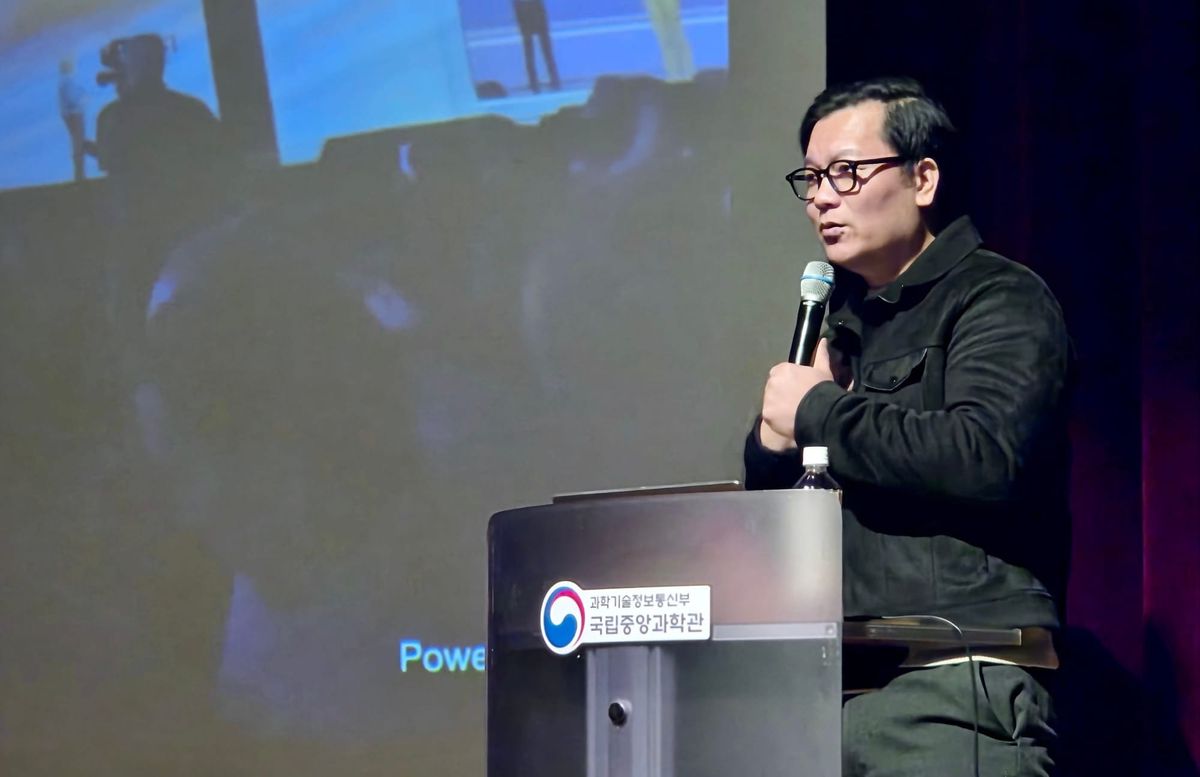
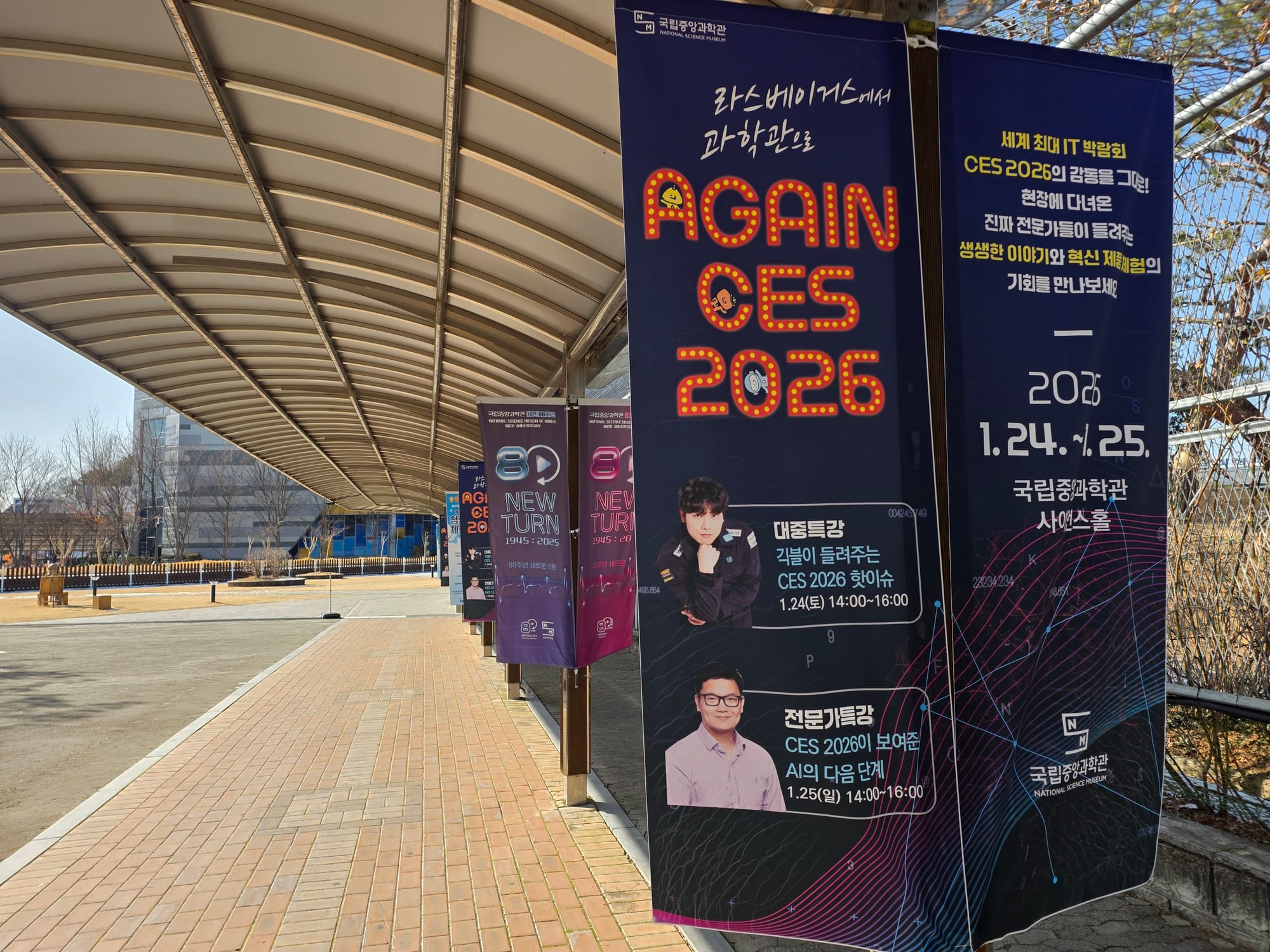
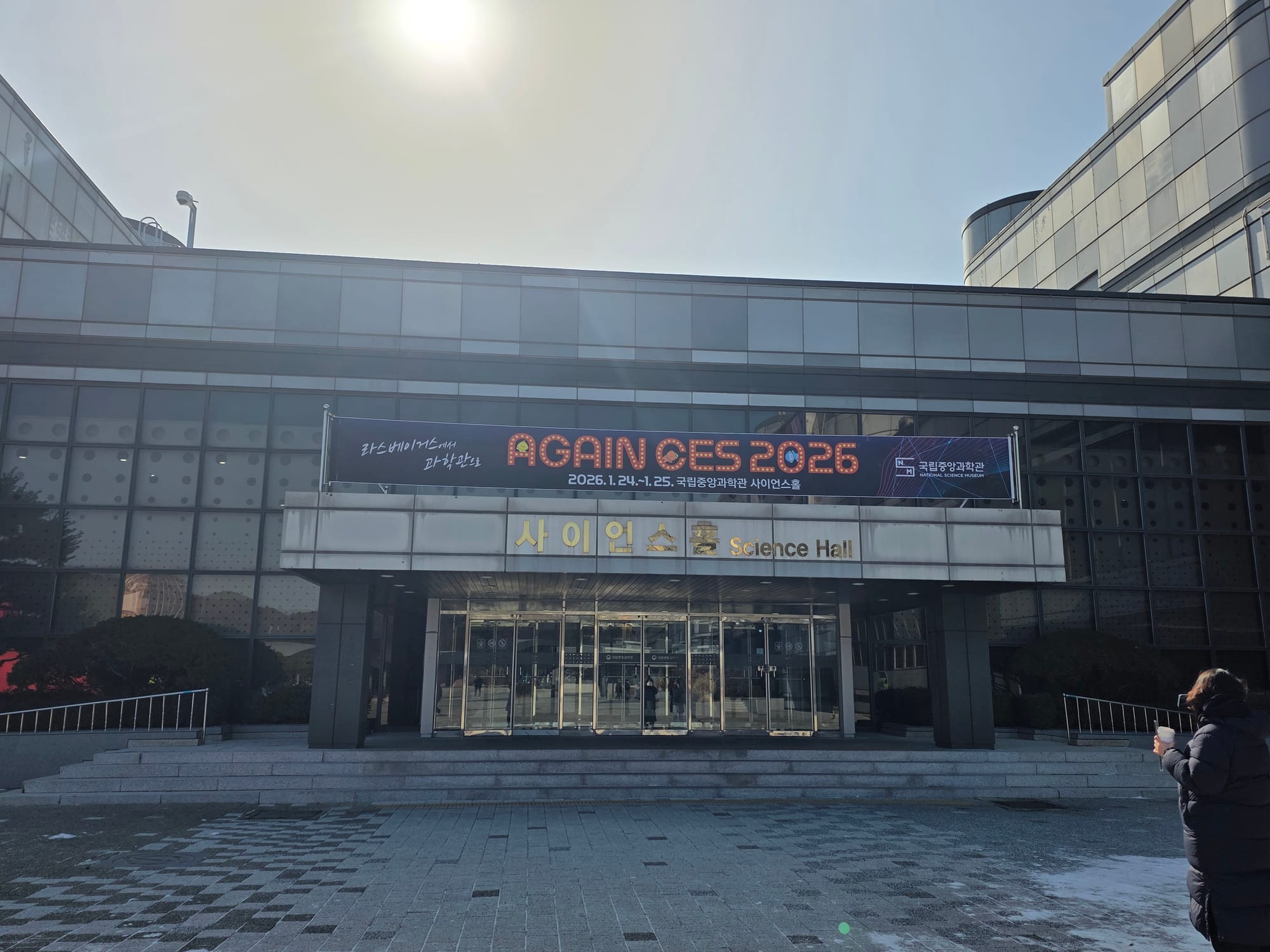
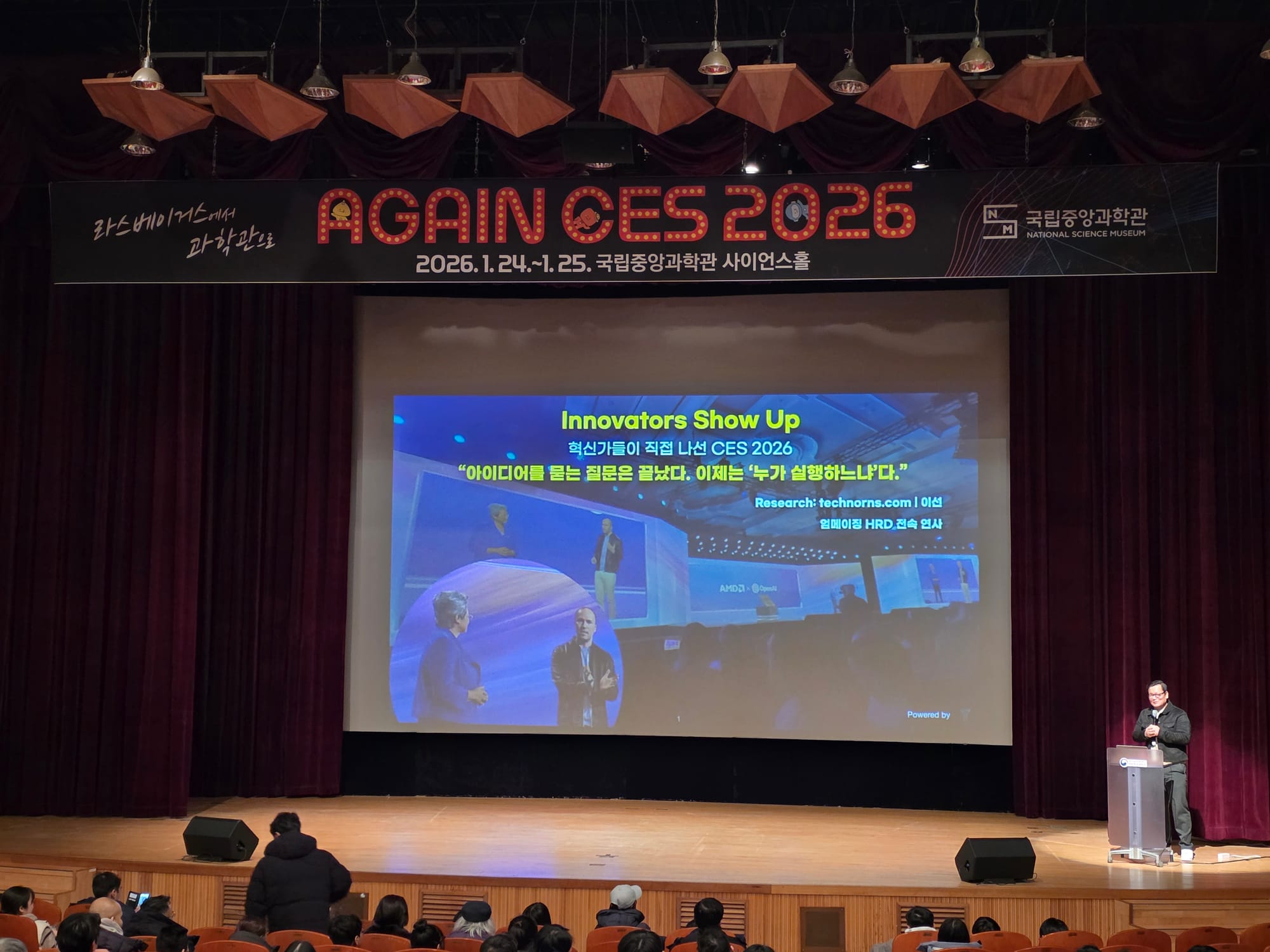
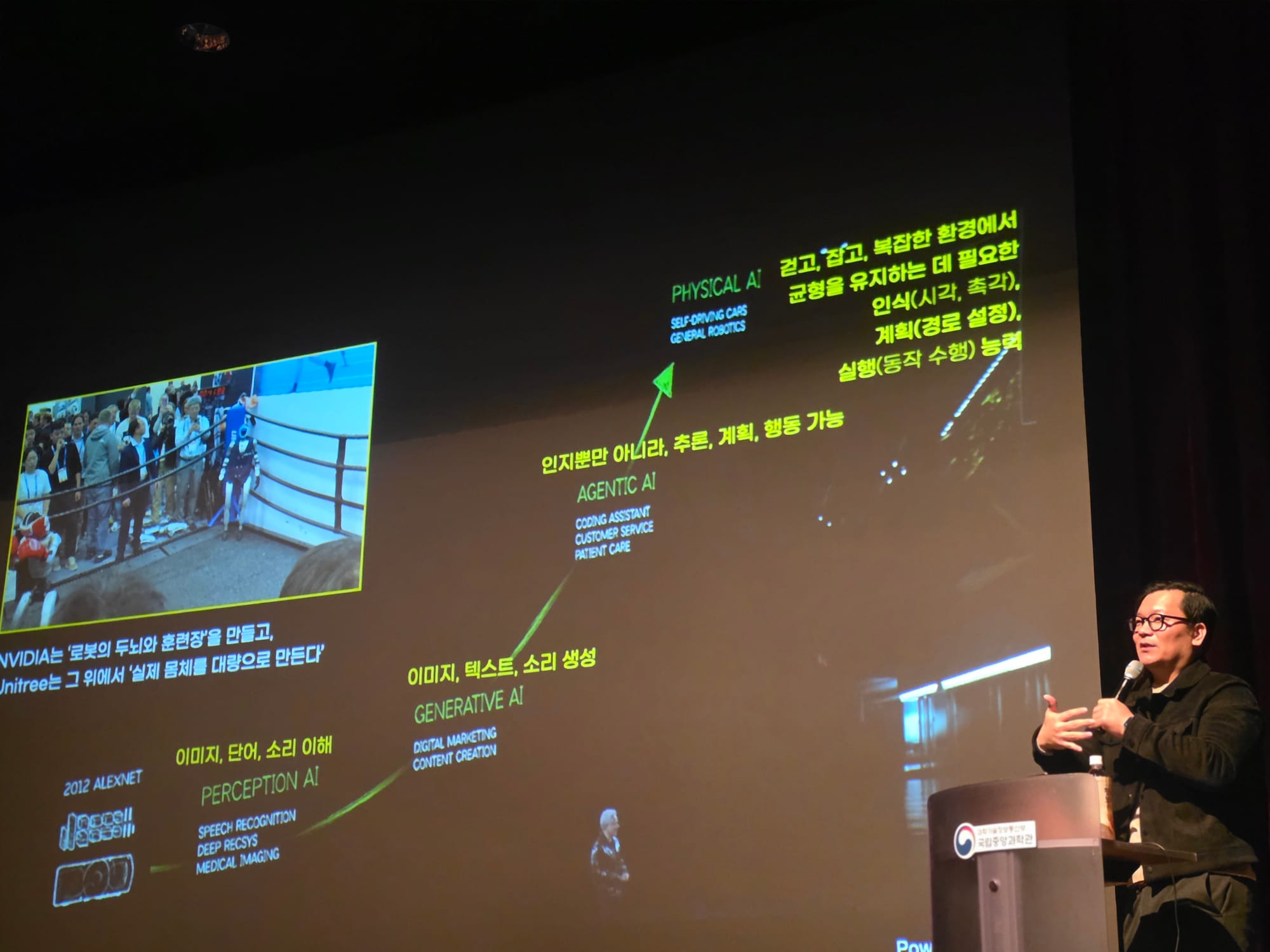
Sun Lee delivering a keynote lecture on Physical AI at the National Science Museum of Korea. The presentation explored the evolution of AI from perception to agentic and physical intelligence, highlighting real-world applications in robotics, autonomous systems, and beyond.Banners promoting "AGAIN CES 2026" at the National Science Museum of Korea. The event brought the excitement of CES 2026 to the public through special exhibitions and expert lectures.The main entrance of the Science Hall at the National Science Museum of Korea, featuring the large banner for “AGAIN CES 2026” (January 24–25, 2026). The event successfully connected the latest global technology trends from CES with the Korean public.
In January, the world’s largest IT exhibition, CES 2026, took place in Las Vegas. To bring the latest innovations from the show to the Korean public, the National Science Museum of Korea hosted the special event “AGAIN CES 2026”.
Despite the freezing cold on a Sunday, over 100 enthusiastic audience members filled the auditorium at the National Science Museum for the “AGAIN CES 2026” special lecture. The strong turnout reflected high public interest in the latest technology trends from CES 2026.Sun Lee delivering a keynote lecture on Physical AI at the National Science Museum of Korea. The presentation explored the evolution of AI from perception to agentic and physical intelligence, highlighting real-world applications in robotics, autonomous systems, and beyond.
As part of the program, I gave a keynote titled “The Physical AI Power Struggle: Musk’s Empire vs. China’s Ecosystem”. In the talk, I covered several major trends:
NVIDIA’s latest announcements, including the Vera Rubin NVL72 platform that integrates Vera CPU and Rubin GPU with NVLink, ConnectX, BlueField, and Spectrum-X technologies
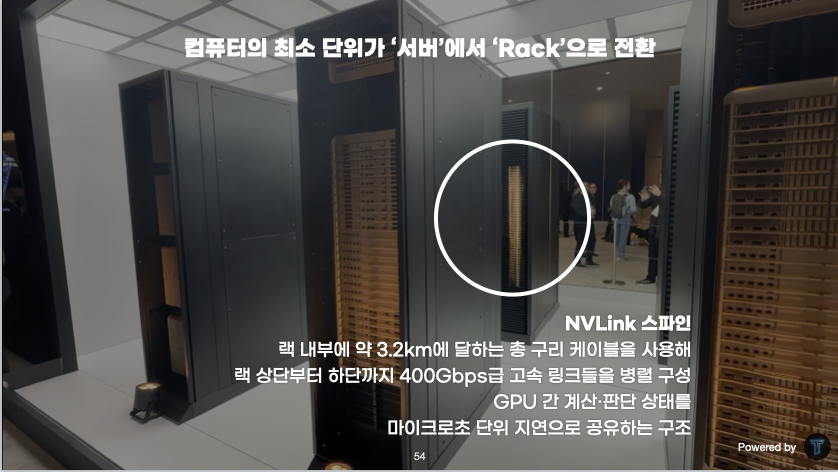
The shift in computing from individual servers to entire racks, enabling massive parallel GPU performance
The evolution from model-centric AI to agentic and physical AI
How AI infrastructure competition is now expanding to include power, cooling, networking, and operational efficiency
This slide from Sun Lee’s keynote at the National Science Museum illustrates the shift in computing architecture from individual servers to full racks. NVIDIA’s NVLink Spine technology turns a single rack into one unified AI supercomputer. Inside the rack, approximately 3.2 km of copper cabling and 400Gbps high-speed links connect the GPUs in parallel, enabling microsecond-level computation and inference state sharing across the system.
Even on a freezing cold Sunday, more than 100 people filled the auditorium. It was truly rewarding to share the excitement of CES 2026 with such an engaged audience.If you’re interested in the technologies that will shape our future, I highly recommend visiting the special exhibition and lectures at the National Science Museum of Korea.