Gigacasting Didn't Become a Moat. It Became the Standard.
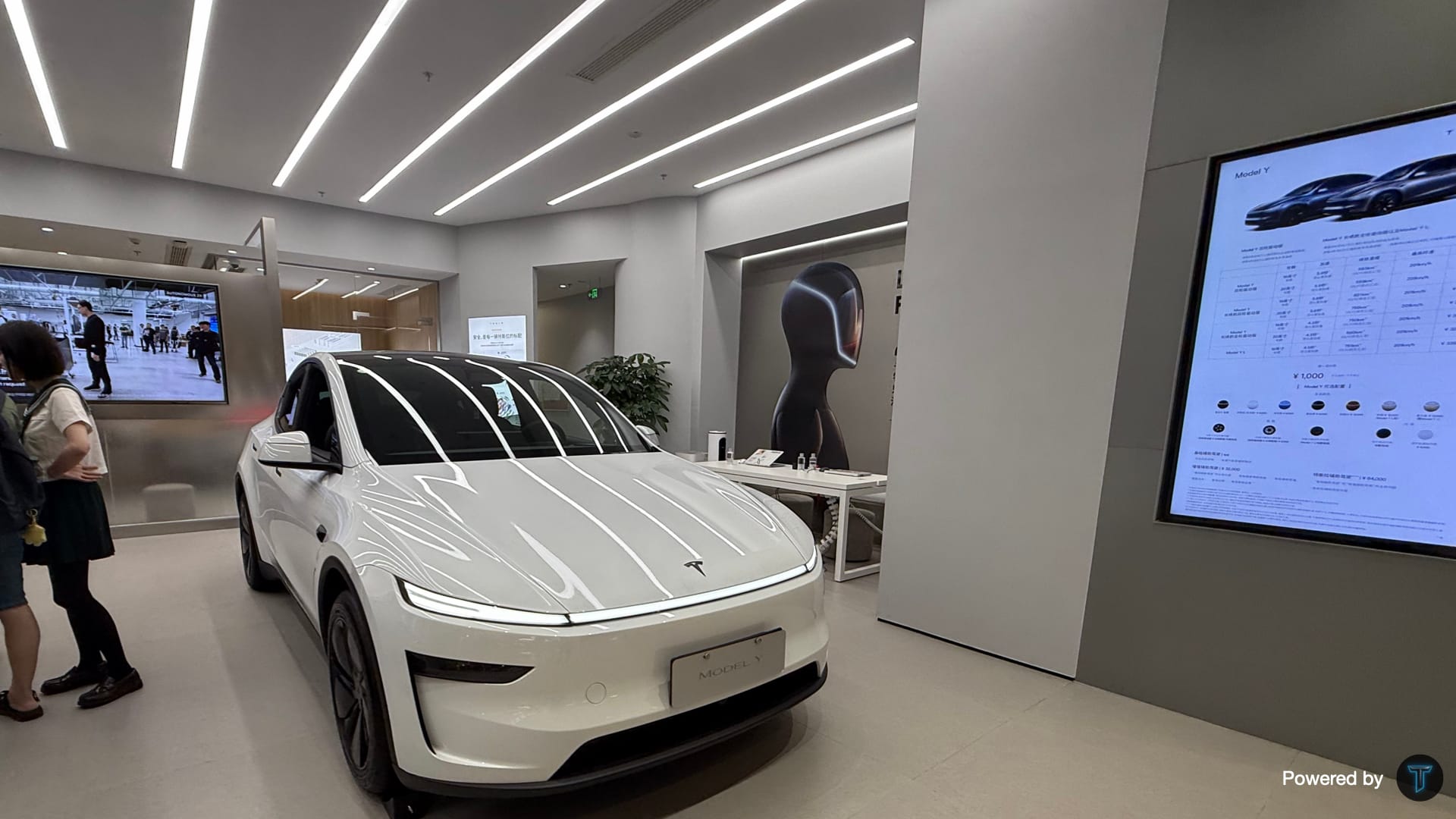
A Model Y front casting in Germany, a rear casting at the Petersen, and a Tesla store in Hangzhou on a weekday. Three things I wrote down while standing in front of them.

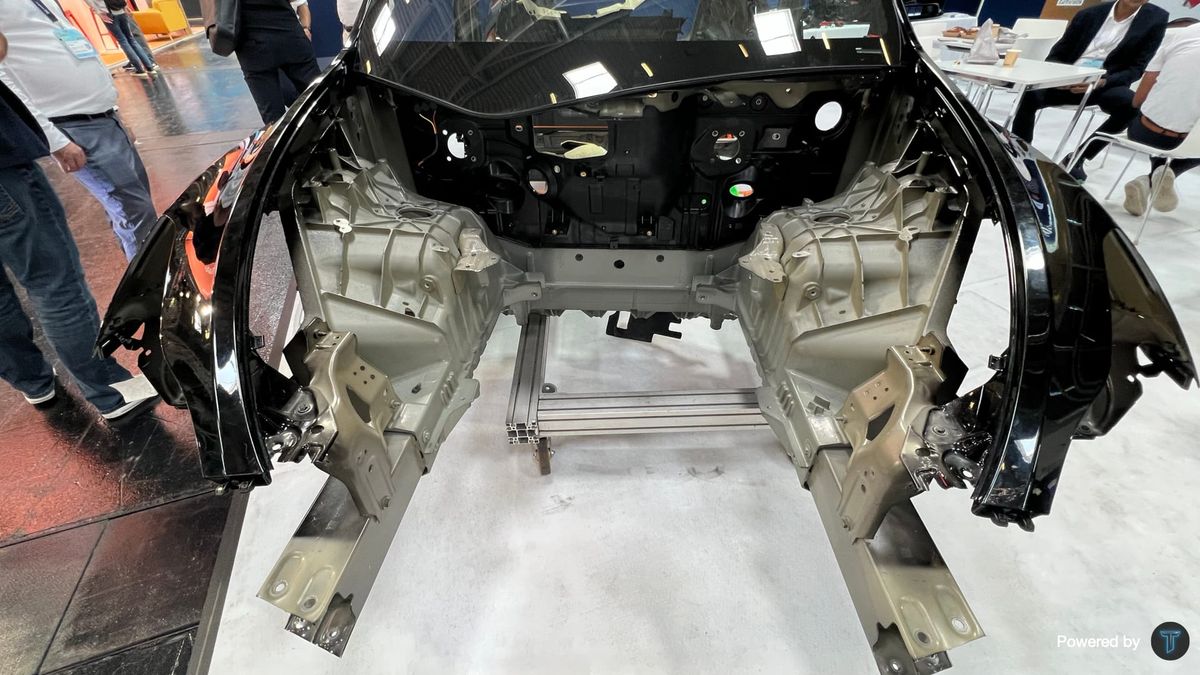
In my 2024 manuscript I wrote that gigacasting would open a gap Toyota and Ford would struggle to close. Two years on, that prediction points the wrong way. Gigacasting never produced the gap. It became the industry standard instead. And the clearest evidence for that came not from Tesla but from a British insurance research body.
Tesla pulled back first, weeks after my manuscript closed
On May 1, 2024, Reuters reported that Tesla had retreated from its next-generation gigacasting plan. The company halted its attempt to punch out the underbody of a small-vehicle platform in a single piece and returned to the proven three-section method: two gigacast front and rear sections plus a midsection of aluminium and steel framing to hold the battery. That is the same construction used on the Model Y and the Cybertruck.
The one-piece underbody would have replaced more than 400 individual parts. Executing it would have required new gigapresses with clamping force of 16,000 tonnes or more, and larger factory buildings to house them. The retreat began in the autumn of 2023 and stopped entirely in late February 2024, alongside the halt of the affordable-model program.
The 6,000-tonne press and three-section structure my manuscript described still hold. What was invalidated is the step after that, the premise that gigacasting would keep scaling up and keep widening the gap.
The assembly method nobody had tried did arrive
My manuscript said Tesla would not stop at gigacasting and would go on to assemble cars in a way nobody had attempted. That prediction was right. It came two years late, and on a different vehicle.
On February 17, 2026, the first production Cybercab came off the line at Giga Texas, and Musk posted on X congratulating the team that built it. Volume production began in April. The Cybercab is the first Tesla vehicle built with the unboxed process, which builds the front, rear, sides, and battery structure in parallel and joins them at the end rather than dragging a body down a sequential line.
On the first-quarter 2026 earnings call, Musk lowered expectations. A new product with an entirely new supply chain always follows a stretched-out S-curve, he said, with initial output very slow before ramping exponentially toward the end of the year. He added that meaningful revenue is unlikely before 2027 at the earliest.
So the assembly revolution my manuscript anticipated materialized on a robotaxi rather than an affordable mass-market car. And that vehicle's value sits in its software, not its metal.
Toyota did not fail to catch up. Toyota caught up.
My manuscript argued Toyota would struggle because abandoning human-centered processes would be too hard. In practice, Toyota adopted the technology.
According to Nikkei, Toyota decided to install a 9,000-tonne casting machine built by Ube Machinery at a production center in Aichi prefecture. The target application is the Lexus LF-ZC, whose body is divided into front, center, and rear sections with gigacastings at both ends. That is the same architecture as the Model Y. Toyota's own machine was initially designated for prototyping rather than mass production. At the prototype stage, the rear section consolidated 86 parts that had previously moved through 33 processes into a single piece.
The number worth watching is mold changeover time. When Toyota built its first prototype in September 2022, swapping the heavy molds took a full day. By reducing the number of components that had to be detached, that came down to 20 minutes. At the Motomachi plant, a partly built car with tires and a battery but no sides or roof drives itself at 0.1 meters per second toward a robot arm. Honda has installed a 6,000-tonne machine at a research facility in Tochigi, and Nissan plans one of its own by fiscal 2027, targeting a 20% reduction in component weight.
The cultural barrier my manuscript predicted was real. It did not prevent adoption.
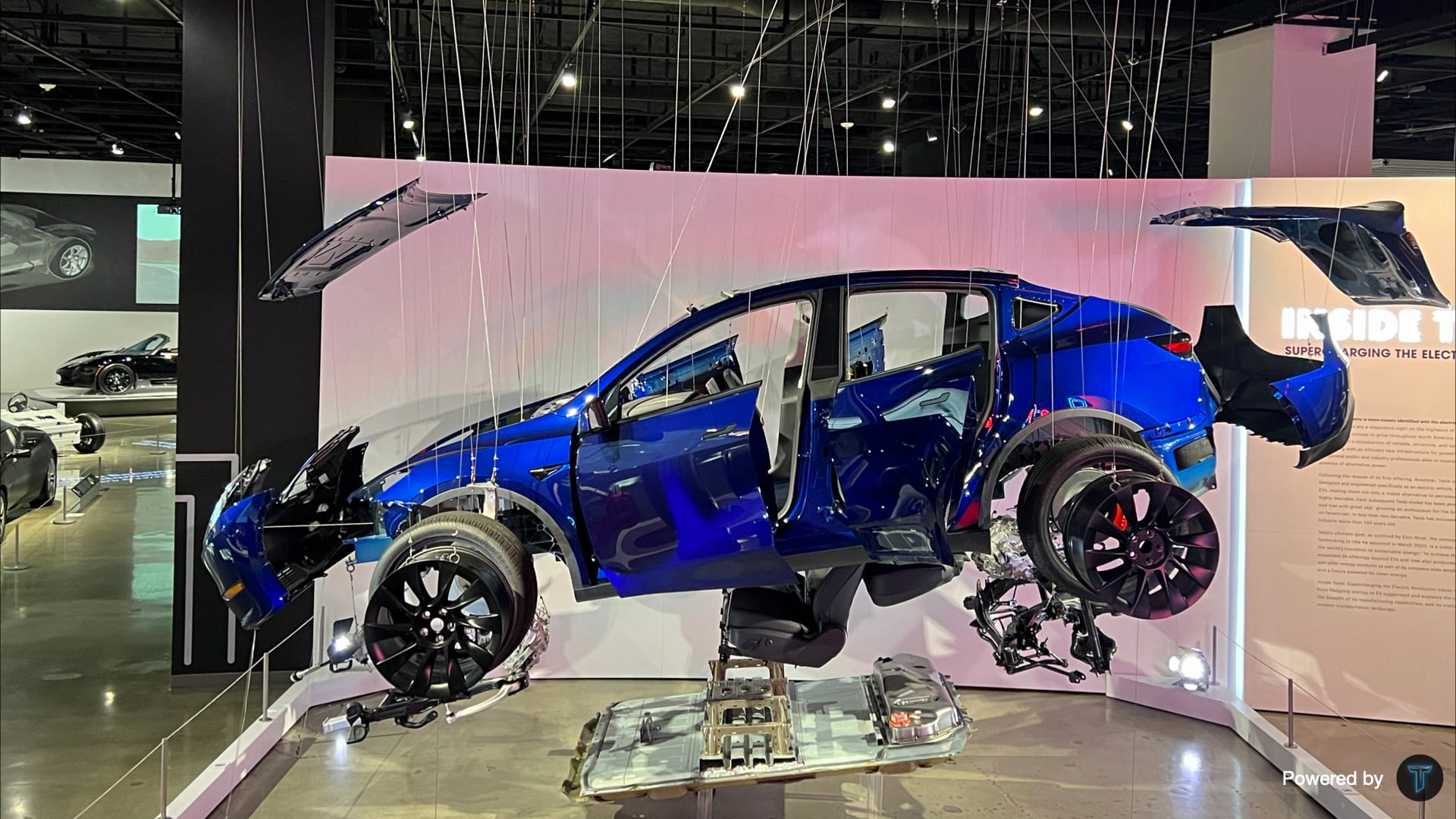
The repair-cost objection was tested, and the result went the other way
The strongest objection to gigacasting was that collision damage would be unrepairable and force write-offs. Thatcham Research, the UK automotive risk intelligence centre, spent two years testing that objection. Working from real claims data supplied by UK insurers and in cooperation with the Allianz Centre for Technology in Germany, it subjected Model Y vehicles to controlled impacts at varying severities at its Berkshire headquarters.
The findings, published on September 25, 2025, went the other way. Partial replacement of the Model Y's rear megacast cost £2,167 less than the equivalent repair on the Model 3's multi-part steel rear sub-assembly, and full replacement saved £519. The Model Y also came in cheaper than the Mercedes EQE, the Hyundai IONIQ 5, and several internal combustion vehicles.
The detail explains the result. In low-severity testing at 15 km/h, the megacast sustained no structural damage at all, allowing the vehicle to be repaired without touching the casting. Medium-severity testing at 25 km/h did require full replacement because of crack propagation and structural misalignment, but the replacement component costs £716. Tesla's separately available replaceable cast rear rail assemblies cost £31 each.
Thatcham's conclusion was that the deciding factor is not the casting itself but whether repairability was designed in from the start. Without reasonably priced partial and full replacement parts and matching repair procedures, the organisation said, the findings would have looked very different. It flagged remaining problems too. Welding repairs on the aluminium megacast can only be carried out at Tesla-approved facilities, and non-destructive testing procedures need to be clearer to catch damage invisible to the naked eye.
The decisive signal is that a repair certification now exists
On May 21, 2026, Thatcham launched an aluminium welding certification. It cited the spread of megacasting as the reason and built dedicated megacasting content into the course.
In the same announcement, Thatcham stated that megacasting, pioneered by Tesla, is now being adopted more widely by manufacturers including Toyota and Ford. Those are precisely the two companies my manuscript named as unlikely to keep up.
The existence of a certification tells you where the technology sits. Had it remained one company's proprietary process, it would have stayed in that company's internal service manual rather than becoming an industry qualification. A common credential means this is no longer an advantage held by a few. It is baseline competence for repair technicians.
The vocabulary shows the same shift. Thatcham uses "mega cast" for the component in its reporting and notes that "giga cast" and "hyper cast" are terms branded by individual manufacturers. The name Tesla coined did not win the industry's standard usage.
Where did the moat go
The causal chain in my manuscript ran like this. Gigacasting reduces part count and process steps, that produces advantages in speed and cost, and competitors locked into human-centered processes cannot follow.
The first two steps still hold. The third was wrong. A gigapress is something you can buy, from Idra or from Ube Machinery. Anything you can buy or build is not a moat.
This is where Korean industry should look. In Thatcham's September 2025 announcement, Hyundai was listed alongside Toyota, Volkswagen, and Volvo among manufacturers that had announced megacast implementation plans. Eight months later, the companies named as adopting it more widely were Toyota and Ford. That list is not a survey, so Hyundai's current stage cannot be inferred from it. What can be said is that in two years this technology changed character from a differentiator into a requirement, and arriving late no longer buys an advantage. It only avoids a deficit.
Two differentiators remain. One is assembly architecture that restructures the line itself, as the unboxed process does, rather than the casting machine. The other is the software layered on top. Tesla shelving the one-piece underbody and moving resources to the robotaxi reads as the same judgment.
In 2024 I treated gigacasting as the cause of the gap. As of 2026 it was not the gap. It was the entry ticket.
For research inquiries or collaboration, contact: ceo@technorns.com