Why Did Vietnam Decide to Build Its Own Car?
Why did Vietnam build its own car brand? VinFast reveals the country's industrial ambitions—and the challenge of competing on the world stage.

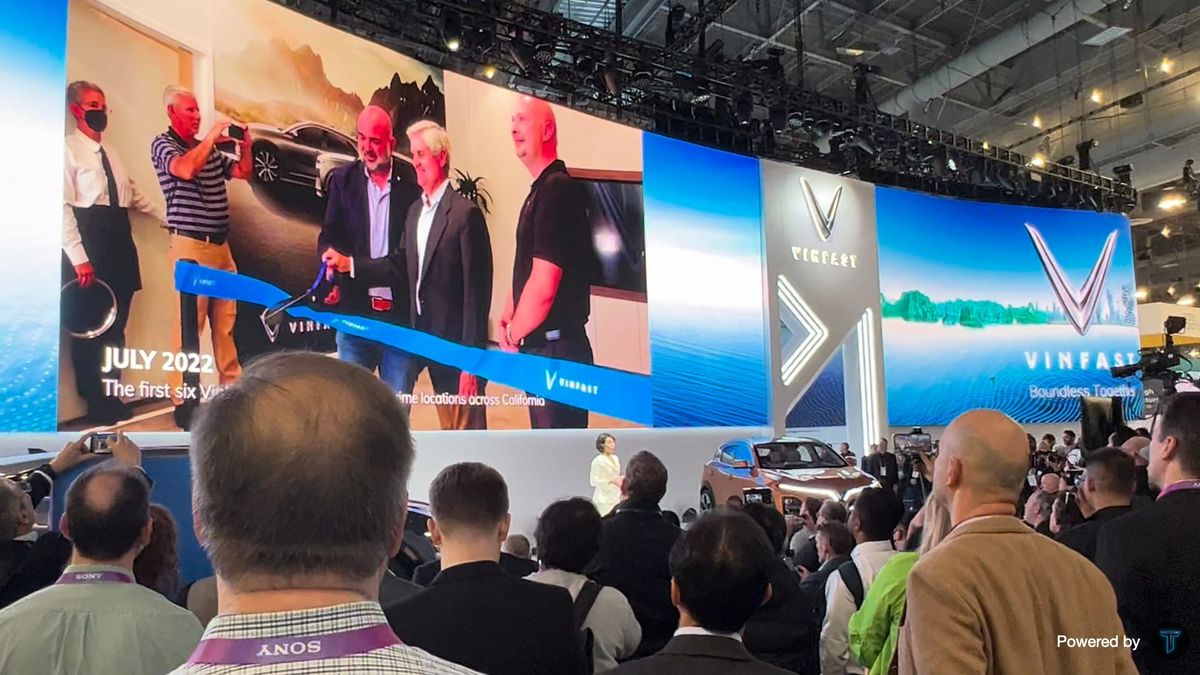
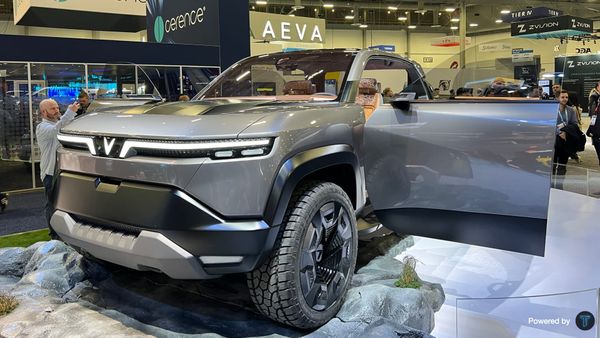
In 2017, when VinFast began building its first automobile factory in Hai Phong, Vietnam was hardly a country in need of another carmaker.
Toyota, Ford, Hyundai and other foreign manufacturers were already competing for Vietnamese customers. Some had been assembling vehicles in the country for decades. The market was growing, but it remained relatively small by global standards.
So why would Vingroup, a Vietnamese conglomerate better known for real estate, shopping malls and resorts, venture into one of the world's most expensive and unforgiving industries?
The decision makes more sense when viewed through Vietnam's economic history.
Over the past three decades, Vietnam has transformed itself into one of Asia's major manufacturing centers. Its factories produce smartphones, computers, clothing and countless other goods for international markets. Foreign investment has brought employment, infrastructure and access to global supply chains.
But much of that success has depended on companies headquartered elsewhere.
A smartphone assembled in Vietnam may carry an American or Korean brand. Its most valuable components may come from other countries. Product development, intellectual property and strategic decisions often remain in the hands of foreign corporations.
Vietnam has become remarkably good at manufacturing products for the world. Building a globally recognized Vietnamese brand is a different challenge.
Automobiles offered an opportunity to pursue that ambition.
A modern car contains thousands of components. Producing one requires expertise in mechanical engineering, electronics, software, materials science and precision manufacturing. An automotive industry can support an extensive network of suppliers, engineering companies and skilled workers.
For countries trying to move beyond labor-intensive manufacturing, this has long made the automobile an attractive industry.
South Korea provides perhaps the most familiar example.
When Hyundai introduced the Pony in 1975, few international consumers associated South Korea with automobile manufacturing. The country was still building its industrial base, and Japanese, American and European companies dominated the global market.
Hyundai did not develop the Pony entirely on its own. Italian designer Giorgetto Giugiaro designed the car, while Japanese technology and British engineering expertise contributed to its development.
The important achievement was that Hyundai had begun producing and selling a vehicle under its own brand.
The Pony was followed by decades of investment in engineering, supplier development, manufacturing efficiency and quality control. Hyundai eventually became one of the world's major automobile manufacturers.
That history is particularly relevant to Vietnam.
The two countries followed different paths toward industrialization, and the international automobile market is far more competitive today than it was in the 1970s. Nevertheless, South Korea demonstrated that a country without an established automotive industry could eventually develop one.
VinFast's founder, Pham Nhat Vuong, was attempting something similarly ambitious, although on a much faster timetable.
VinFast moved rapidly from constructing its factory to launching its first vehicles in 2019. Its initial models relied heavily on established foreign technology and engineering partnerships.
This approach attracted criticism from those who questioned how much of the cars could genuinely be considered Vietnamese.
Yet such criticism overlooks an important part of automotive history.
Few successful carmakers developed every essential technology independently. Hyundai relied on foreign expertise. Japanese manufacturers learned from American and European production methods. Even today's largest automotive companies purchase sophisticated components from international suppliers.
The more important question is whether those partnerships eventually produce lasting domestic capabilities.
Can Vietnamese engineers acquire the knowledge needed to develop future vehicles? Can local suppliers meet demanding international standards? Can domestic companies move from supplying relatively simple parts to producing more valuable automotive systems?
These questions matter considerably more than the nationality of every component inside a VinFast vehicle.
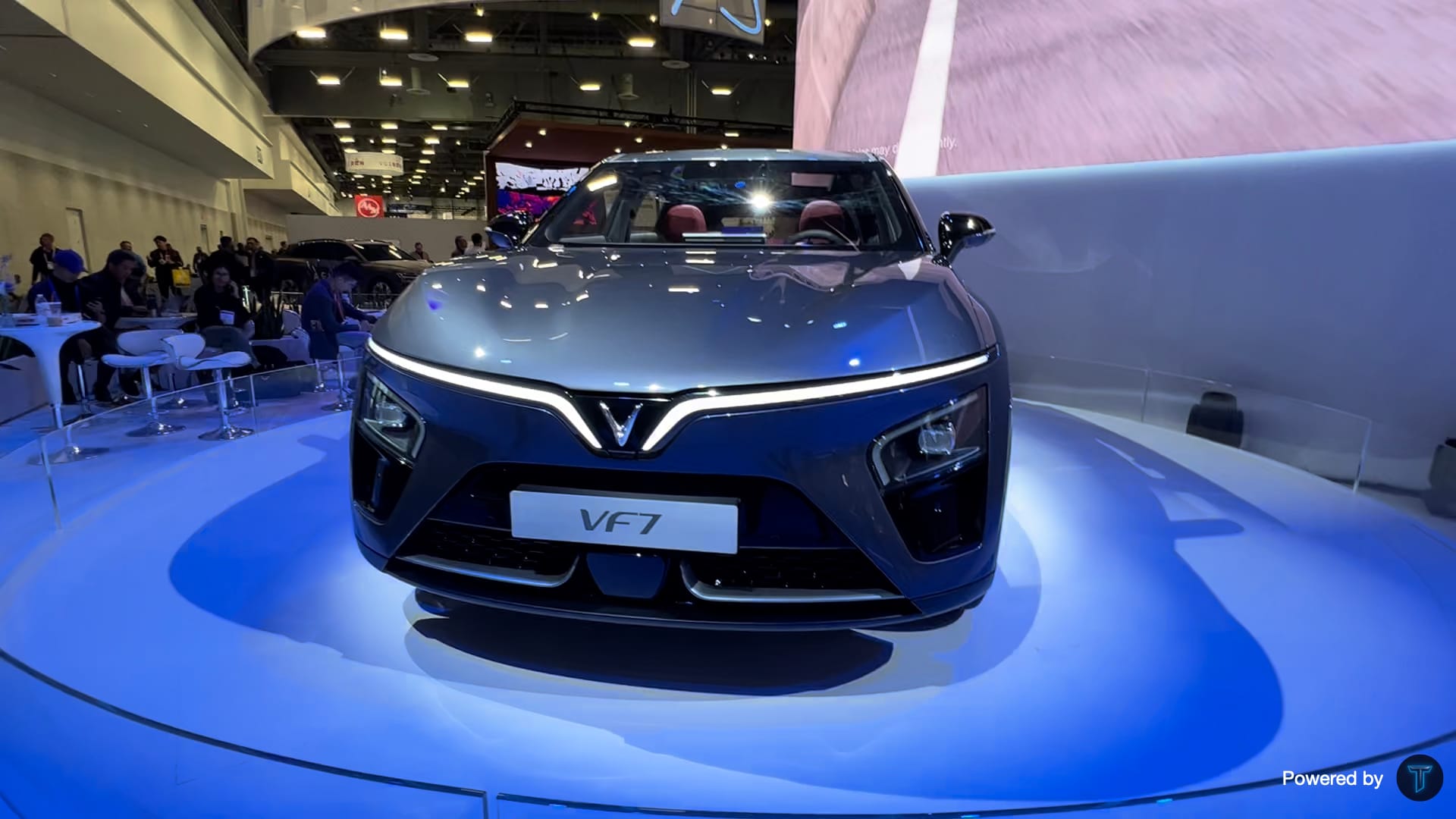
VinFast subsequently made an even more consequential decision: abandoning gasoline-powered passenger cars in favor of electric vehicles.
At first glance, the move seemed unusually risky. VinFast had barely established itself as a conventional automaker before committing to a different technology.
But the timing offered a possible advantage.
Traditional automotive manufacturers had spent generations refining internal combustion engines, transmissions and related technologies. New entrants faced an enormous disadvantage in trying to catch up.
Electric vehicles changed part of that equation.
Batteries, electric motors and software became central to vehicle development. Established manufacturers still possessed tremendous advantages in manufacturing, engineering and distribution, but some of their accumulated expertise in gasoline engines was becoming less decisive.
For a newcomer such as VinFast, the transition created an opening that might not have existed in the conventional automobile market.
The difficulty, of course, was that other companies recognized the same opportunity.
Tesla had already demonstrated the commercial potential of electric vehicles. Chinese manufacturers were expanding rapidly, supported by extensive battery supply chains and increasingly sophisticated engineering capabilities. Established Japanese, Korean, European and American automakers were also investing heavily in electrification.
VinFast was entering a race in which many competitors possessed greater financial resources, deeper technological experience and stronger international reputations.
There was another complication.
South Korea developed its automobile industry during a period when global competition, trade policies and manufacturing technology were very different. Vietnam cannot simply repeat that experience.
Modern automotive manufacturing requires enormous capital investment. Developing a new vehicle platform can cost billions of dollars. Meeting international safety regulations, establishing distribution networks and providing reliable after-sales service demand additional resources.
Even producing a technically competitive vehicle does not guarantee commercial success.
Consumers buying cars are making substantial financial commitments. They care about reliability, resale value, maintenance costs and whether a manufacturer will still support their vehicle years later.
A new brand must earn that trust.
VinFast also faces a fundamental tension between its domestic and international ambitions.
Within Vietnam, the company benefits from strong brand recognition and the appeal of a locally developed product. Its association with one of the country's most prominent business groups gives it a visibility that foreign newcomers would struggle to match.
But patriotic sentiment has limited value in international markets.
An American or European consumer considering a VinFast vehicle is unlikely to care whether Vietnam has succeeded in creating a national automobile brand. That buyer will compare its price, quality, technology and service with alternatives from companies already established in the market.
The standards are the same regardless of where the manufacturer comes from.
This is why VinFast's story cannot be judged solely by the number of vehicles it produces or sells.
The company is a private enterprise, and its financial performance ultimately matters. Its success cannot be measured indefinitely by the size of its factories, the scale of its investments or the ambitions of its founder.
At the same time, the broader industrial consequences deserve attention.
If VinFast helps develop Vietnamese engineering talent, encourages domestic suppliers to improve their capabilities and creates opportunities for local technology companies, its influence could extend beyond its own balance sheet.
That would be a meaningful achievement for Vietnam's industrial development.
But those benefits are neither automatic nor guaranteed. Expensive factories can remain dependent on imported technology. Suppliers may struggle to become internationally competitive. A national automotive brand can consume enormous financial resources without developing a sustainable business.
Vietnam's automobile ambitions therefore present two separate tests.
The first is whether VinFast can establish itself as a commercially viable manufacturer.
The second is whether its development can help Vietnam acquire the technological and industrial capabilities associated with a mature automotive economy.
The first will determine the company's future. The second will help determine what the country ultimately gains from the experiment.
Vietnam has already shown that it can manufacture sophisticated products for the world's largest corporations.
With VinFast, it is attempting something more difficult: taking responsibility for the product, the brand and the business behind it.
Whether that ambition succeeds will depend less on national pride than on the ordinary, unforgiving measures of the automobile industry—engineering, quality, cost and consumer trust.
A Vietnamese company has demonstrated that it can build cars.
The harder task is building an automobile industry that can compete without asking customers to make allowances for where those cars come from.
For research inquiries or collaboration, contact: ceo@technorns.com