Why the United States Cannot Walk Away from SpaceX
China’s robotics surge and America’s reliance on SpaceX reveal two competing models of industrial power—and the systems shaping the next U.S.-China technology race.

China’s robotics surge and America’s reliance on SpaceX point to two different models of industrial power — one built across a manufacturing ecosystem, the other concentrated inside a single company.
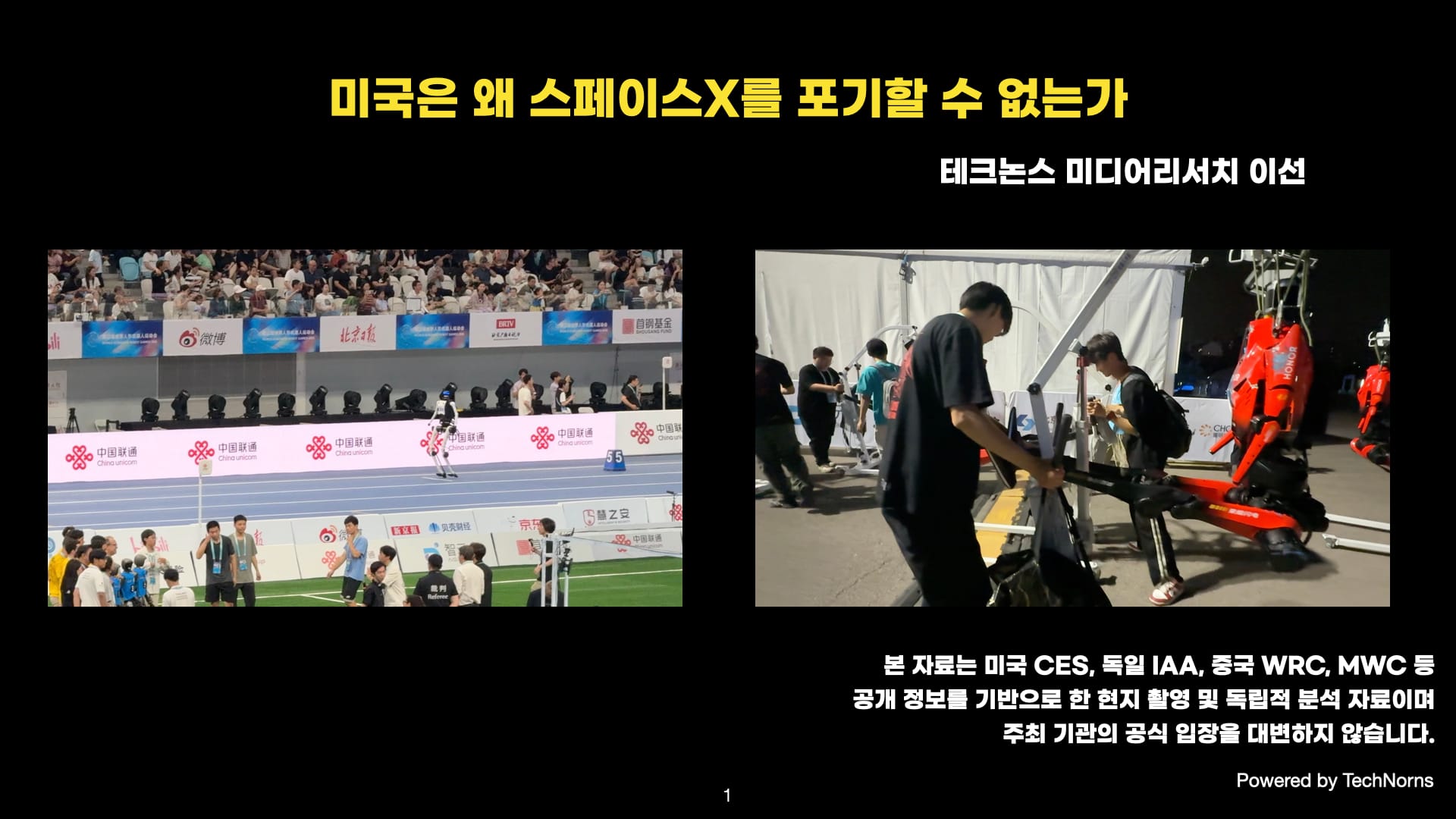
SEOUL — The most important thing about China’s latest humanoid robots may not be the robots themselves.
It may be everything behind them.
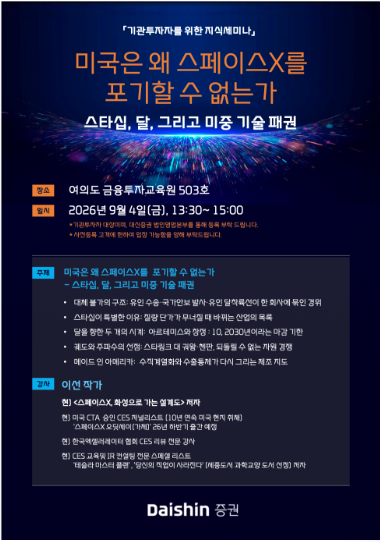
That was the starting point of a recent seminar for institutional investors at Daishin Securities in Seoul, where technology researcher and author Lee Sun examined the U.S.-China technology contest through two industries that are rarely discussed together: humanoid robotics and space transportation.
The session, “Why America Cannot Give Up SpaceX: Starship, the Moon and the U.S.-China Technology Race,” argued that the two sectors reveal a deeper shift in industrial competition.
China is building a manufacturing system capable of rapidly commercializing machines that perform physical work. SpaceX, meanwhile, has integrated rocket engines, spacecraft, software, manufacturing, launch operations and satellite services inside one company in an effort to reduce the cost of reaching orbit.
The products are different. The industrial logic is increasingly similar.
The robot is only the visible layer
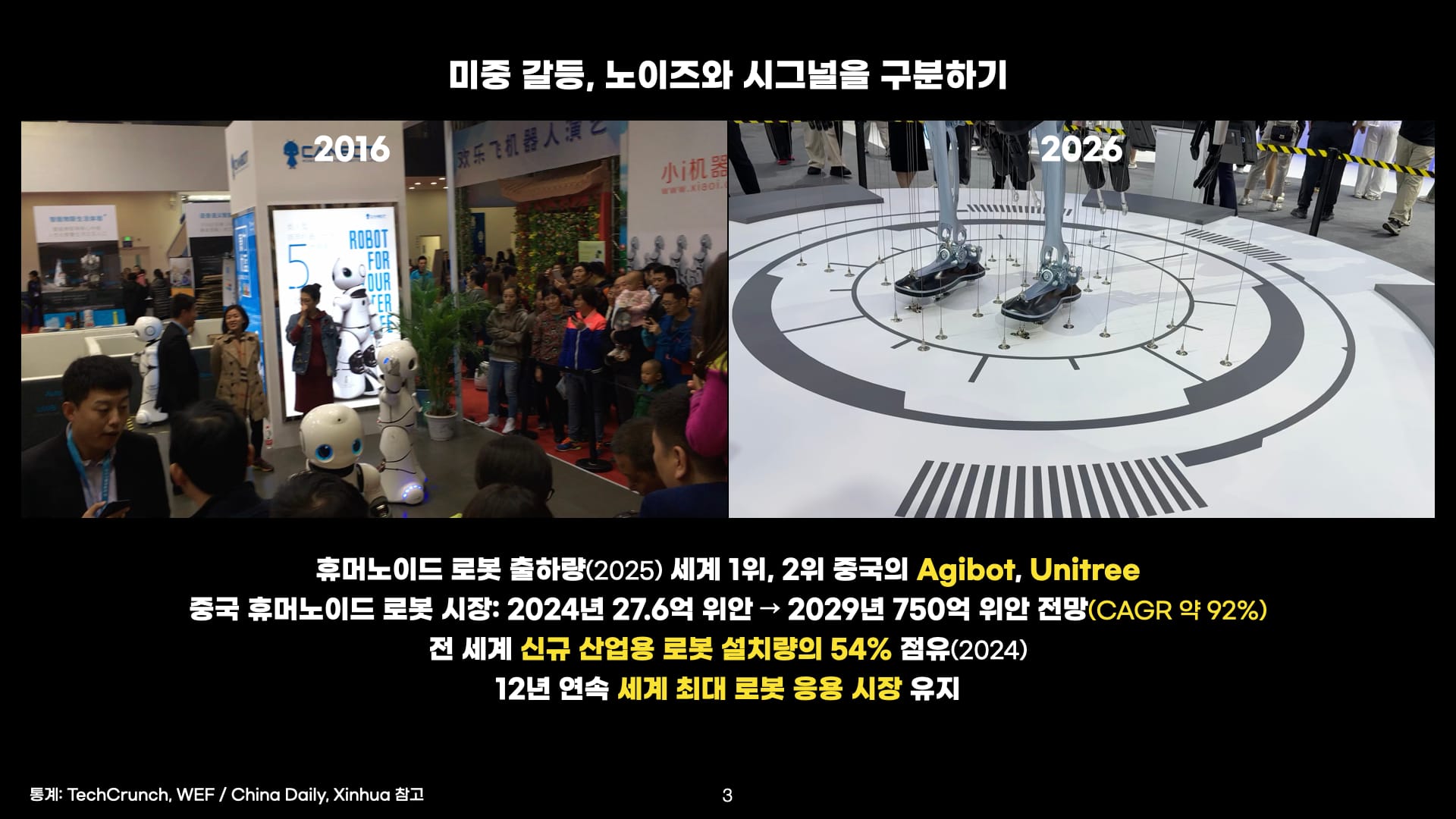
China installed 54% of the world’s new industrial robots in 2024, according to figures presented during the seminar, extending its position as the world’s largest robot application market.
Humanoid robotics is now emerging on top of that industrial base.
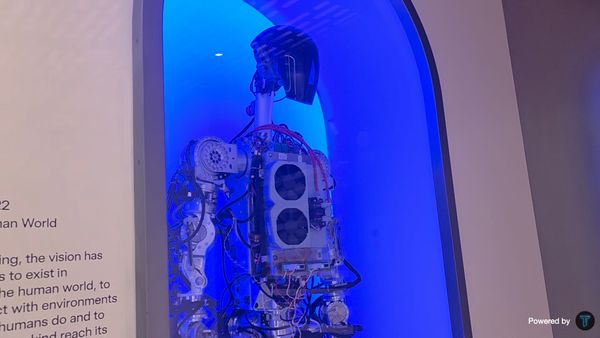
Chinese companies including Unitree and Agibot have expanded production, while firms better known for smartphones, electric vehicles and consumer electronics are moving into robotics.
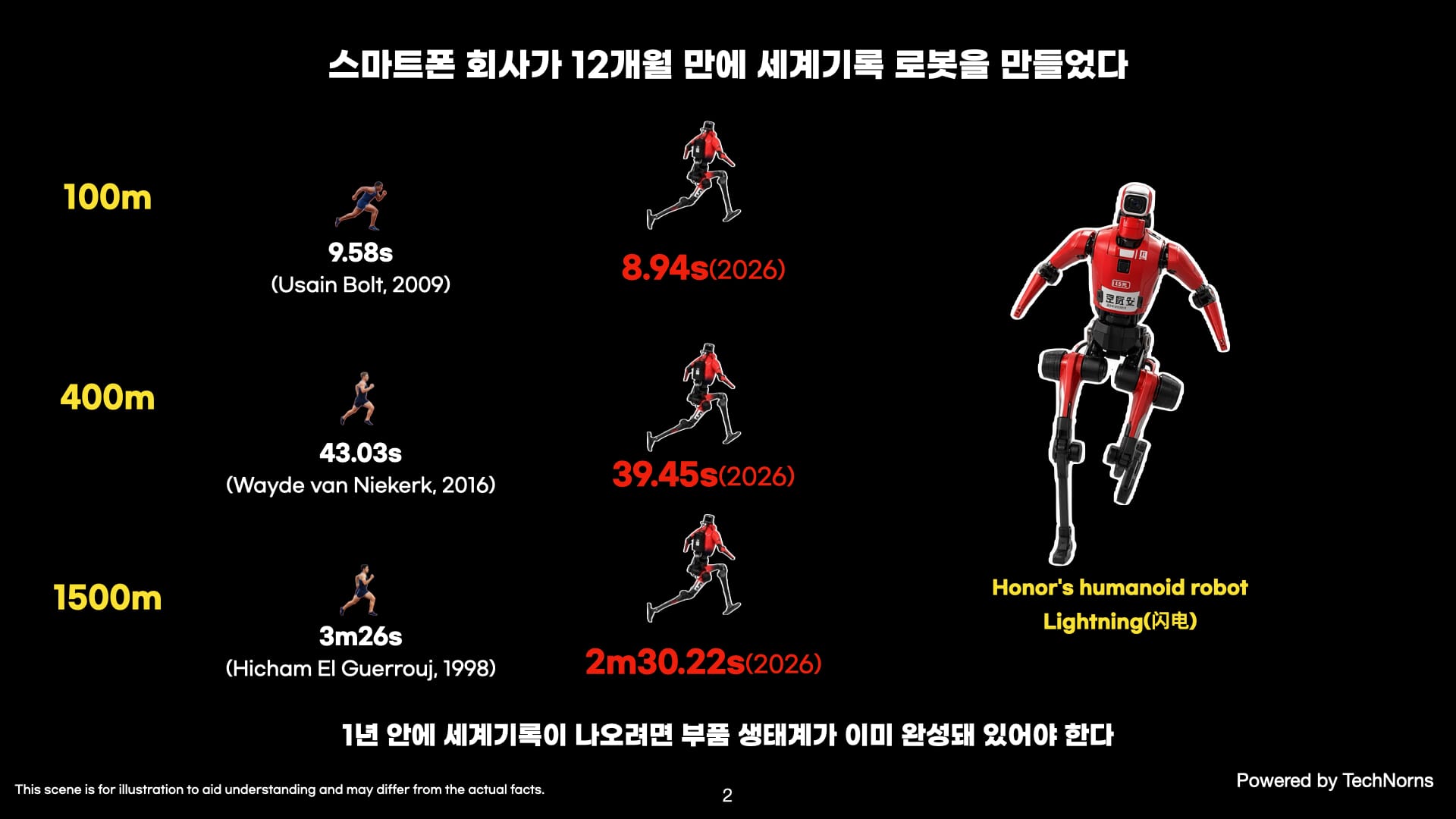
HONOR provided one of the more striking examples highlighted during the presentation. Its humanoid development program demonstrated running performance that drew attention for speed and endurance, including an autonomous half-marathon attempt.
The numbers were not the central point.
A humanoid that can operate over long distances needs far more than a capable control algorithm. Battery systems, power electronics, motors, actuators, thermal management, sensors, embedded computing and mechanical design all have to work together.
The seminar framed this as the difference between noise and signal.
A spectacular robot demonstration is noise if viewed in isolation. The supply chain capable of producing the machine is the signal.
That distinction matters because China’s industrial advantage increasingly lies not in a single technology, but in the connections between industries.
Battery technology developed for smartphones and electric vehicles can be adapted for robots. Motors and power electronics can migrate between mobility and automation. Cameras, communications modules, thermal systems and precision manufacturing can be reused across product categories.
A company entering humanoid robotics therefore does not necessarily begin from zero.
It may already have suppliers, engineers, factories and technical knowledge built for another industry.
The robot becomes the point where those capabilities converge.
China’s real advantage is the common industrial base
This overlap helps explain why China can sometimes move from prototype to commercialization faster than outside observers expect.
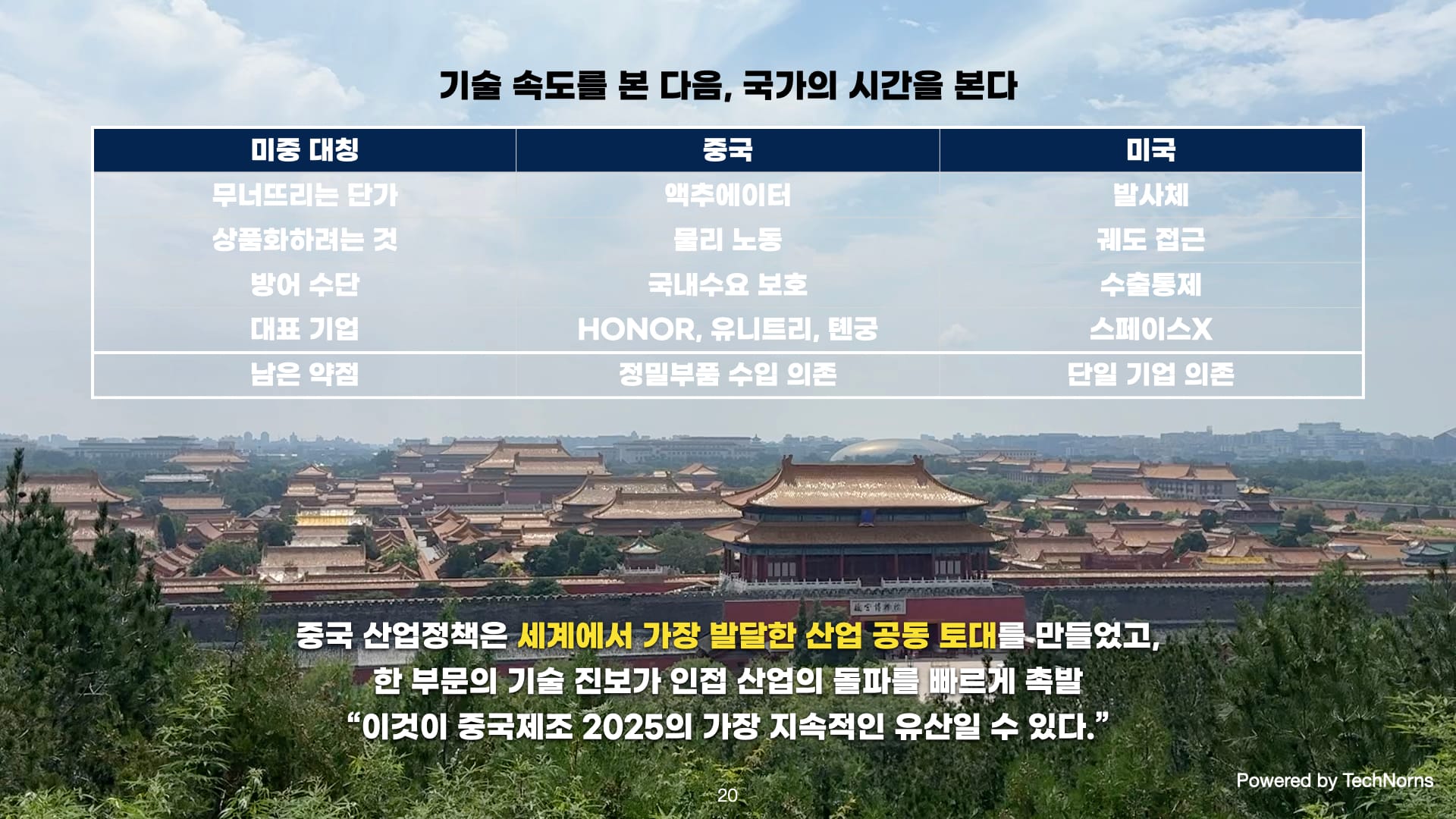
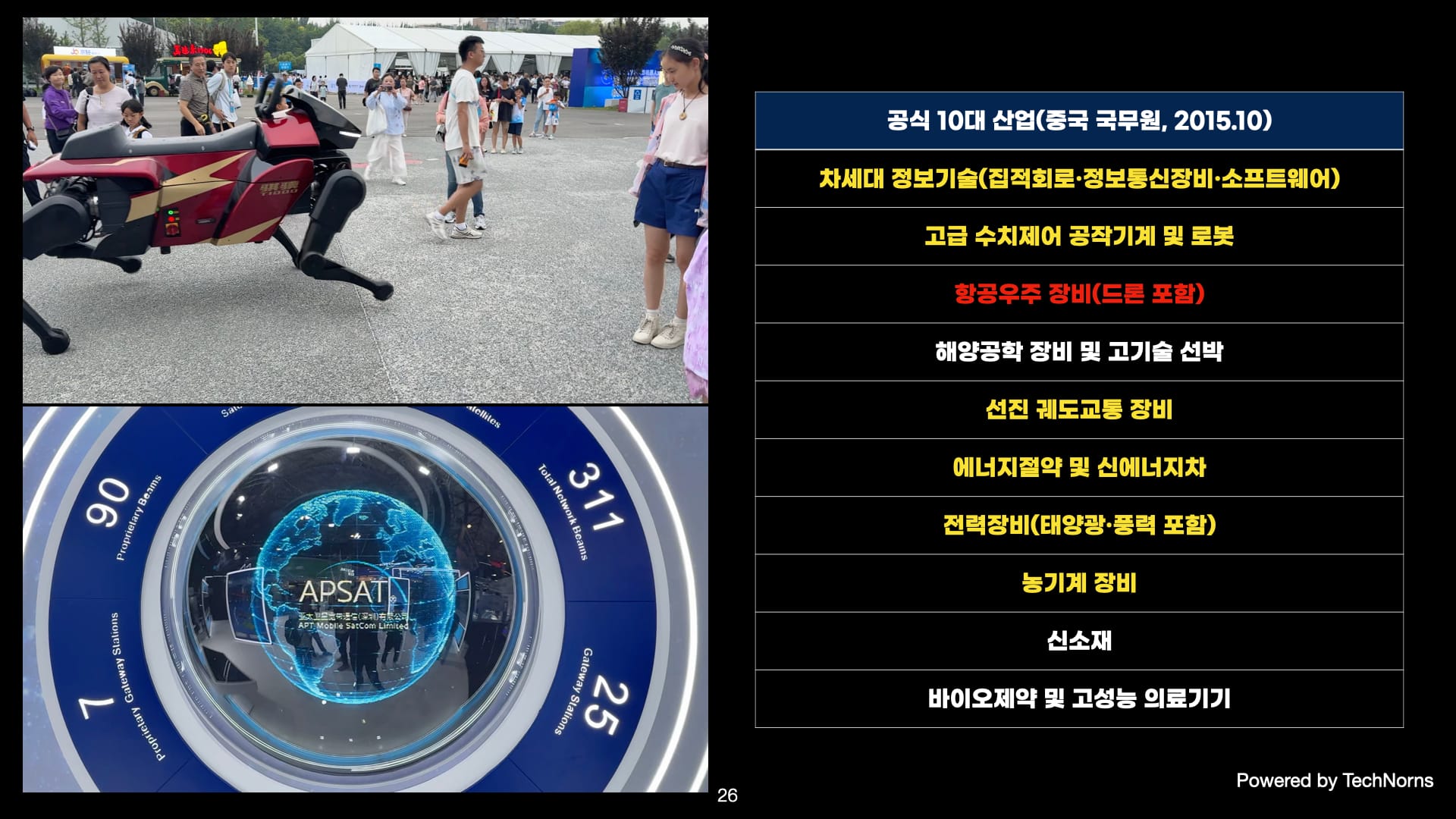
For decades, industrial policy has supported sectors ranging from advanced manufacturing and robotics to telecommunications, renewable energy, rail equipment, aerospace and new materials.
The result is not simply a collection of strong companies.
It is a shared industrial foundation.
Progress in one sector can reduce development time in another. A breakthrough in thermal management, for example, may matter to smartphones, electric vehicles, data centers and humanoid robots at the same time.
The seminar argued that this common foundation may be one of the most durable legacies of China’s manufacturing strategy.
That observation provided the bridge to SpaceX.
The United States does not have the same manufacturing structure across every industry. In some advanced sectors, however, individual companies have achieved an unusually high degree of vertical integration.
SpaceX is one of the clearest examples.
America’s SpaceX problem was decades in the making
SpaceX designs propulsion systems, builds launch vehicles and spacecraft, develops software, operates launch infrastructure and runs Starlink, the world’s largest commercial satellite constellation.
That integration has allowed the company to iterate quickly and control more of its own production process than traditional aerospace programs.
It has also created a strategic vulnerability.
The United States has become increasingly dependent on one company for capabilities that span civilian, commercial and national-security space operations.
The seminar argued that this dependence cannot be explained simply by SpaceX outperforming competitors.
Its origins go back decades.
NASA curtailed the Apollo program around 1970. The Space Shuttle was approved in 1972. By the 2000s, the United States was preparing to retire the Shuttle without a directly available domestic replacement for all of its functions.
Commercial providers eventually filled part of the gap.
SpaceX filled more of it than any other company.
Crew Dragon now carries astronauts for NASA. Falcon 9 and Falcon Heavy launch commercial, civil and national-security payloads. Starlink provides communications infrastructure on a global scale. Starship is central to NASA’s current lunar landing architecture through the Human Landing System program.
The result is not simply a successful contractor.
It is a concentration of strategic capability.
That concentration accumulated gradually through policy decisions, procurement choices and the failure to maintain multiple alternatives.
Starship matters because of economics, not spectacle
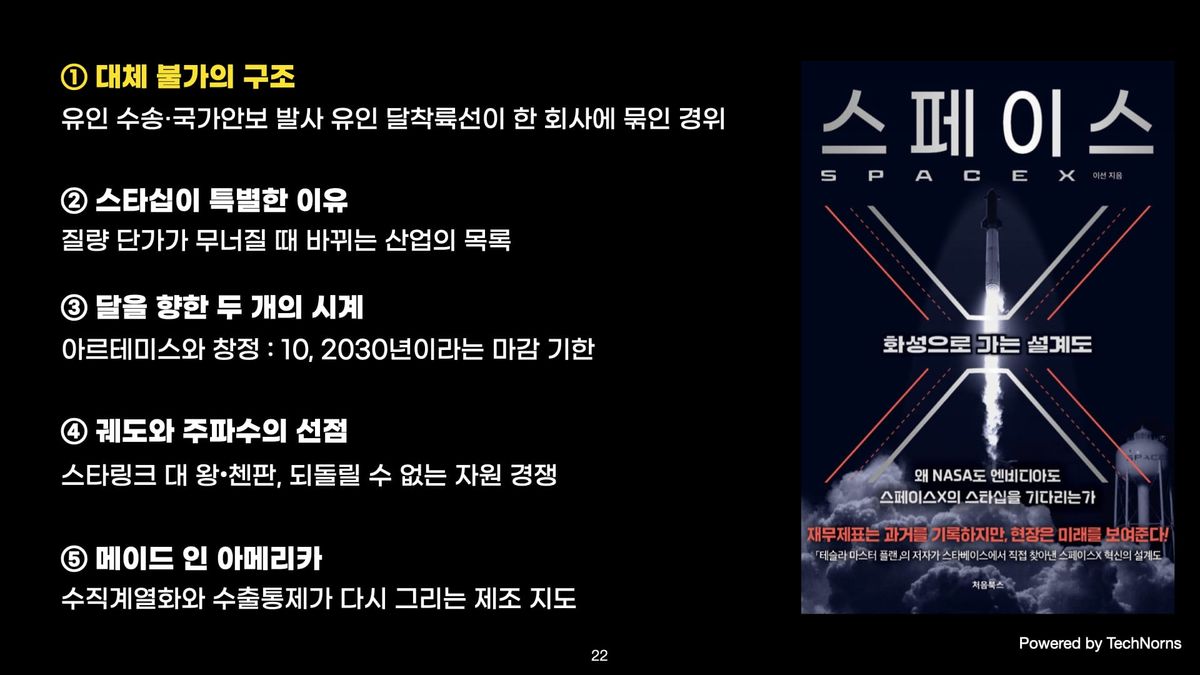
The seminar organized its SpaceX analysis around five structural questions, beginning with that growing dependence.
The second was Starship.
Most public discussion of Starship focuses on its size, engine count, test flights or dramatic launch footage. The more important variable may ultimately be much simpler: the cost of moving one kilogram of mass into orbit.
If Starship eventually achieves high levels of reusability and sharply lowers launch costs, the effects would extend beyond the rocket industry.
Satellite manufacturers could redesign spacecraft around different mass constraints. Orbital infrastructure could become larger. Space stations could carry more equipment. Lunar logistics could change. Hardware currently considered uneconomic to launch might become viable.
The significance of Starship, in that view, is not that it is a larger rocket.
It is that it could alter the cost structure of space transportation.
That would make launch economics an enabling layer for industries that do not yet exist at meaningful scale.
Two clocks are running toward the Moon
The third question was lunar competition.
NASA is pursuing Artemis while China is developing its own crewed lunar architecture, including the Long March 10 launch vehicle.
The seminar described the situation as two clocks moving toward the end of the decade.
One belongs to the United States.
The other belongs to China.
This makes the Moon more than a symbolic race.
Lunar programs require launch vehicles, spacecraft, landing systems, communications networks, navigation, propulsion, manufacturing capacity and operational experience to mature on interconnected schedules.
For the United States, Starship’s role in Artemis means delays at one company can affect a national program.
SpaceX therefore represents both capability and dependency.
The stronger the company becomes, the harder it becomes to replace.
The next strategic territory is already above Earth
The fourth issue was low-Earth orbit.
SpaceX has already deployed Starlink at a scale no previous commercial satellite network has reached. China is building major constellations of its own, including Guowang and Qianfan.
This competition differs from conventional manufacturing.
Orbital positions, radio spectrum, launch cadence and accumulated operating experience all impose constraints that cannot always be overcome simply by spending more money later.
A constellation deployed early gains experience in satellite production, replacement cycles, ground infrastructure, network management and launch operations.
Scale becomes part of the technology.
That is why the seminar characterized orbit and spectrum as resources that become harder to recover once competitors establish an early lead.
The contest is not only about building better satellites.
It is also about deploying them fast enough, launching often enough and operating them at sufficient scale.
Two forms of vertical integration
The fifth theme returned to manufacturing.
SpaceX’s Starbase complex in South Texas brings vehicle assembly, testing, ground systems and launch operations into a single industrial environment.
Its physical scale illustrates a broader point: some of the most important industrial capabilities do not appear clearly in short-term financial metrics.
Factories, launch towers, test stands and engineering organizations require capital long before their strategic value can be measured through conventional returns.
The relevant question is not simply how much revenue a facility produces today.
It is what capabilities are being accumulated inside it.
SpaceX has answered that question through corporate vertical integration.
China has often answered it through ecosystem-level integration.
A Chinese robotics company can draw on suppliers serving electric vehicles, electronics, batteries, telecommunications and industrial automation.
SpaceX attempts to internalize many comparable functions inside one organization.
The structures differ, but both are designed to reduce dependency, compress development cycles and control critical technology layers.
China is lowering the cost of physical work. SpaceX is lowering the cost of orbit.
The comparison leads to a broader symmetry.
China is attempting to reduce the cost of physical automation.
SpaceX is attempting to reduce the cost of access to space.
In robotics, actuators, batteries and manufacturing scale determine how cheaply machines can perform physical tasks.
In space, launch vehicles determine how cheaply hardware can reach orbit.
China’s strength is the breadth of its industrial ecosystem and domestic manufacturing base. Its vulnerabilities remain in some categories of advanced components and technologies.
America retains major strengths in aerospace, software and advanced computing, but increasingly relies on a small number of companies capable of integrating complete systems.
The policy responses reflect those weaknesses.
China has pushed to localize supply chains and expand domestic industrial capacity.
The United States has increasingly used export controls and strategic procurement to preserve advantages in advanced technologies.
Both are trying to secure the parts of the technology stack they consider indispensable.
The real competition sits beneath the product
The broader argument of the Daishin Securities seminar was that the U.S.-China technology contest is becoming harder to understand by looking at individual products.
A humanoid robot is visible.
A rocket launch is visible.
A satellite is visible.
The industrial systems beneath them are less visible.
Machine tools, motors, thermal systems, software platforms, factories, launch infrastructure, suppliers and engineering organizations rarely attract the same attention.
Yet those systems determine how quickly a product can be designed, manufactured, improved and reproduced.
That is why Chinese robotics and SpaceX belong in the same discussion.
China is building a common industrial foundation across multiple sectors.
SpaceX has built an unusually integrated version of such a foundation inside one company.
For the United States, the strategic question is no longer simply whether SpaceX can continue to succeed.
It is how much national capability can be concentrated in a company that has become increasingly difficult to replace.
For China, the corresponding question is whether the manufacturing system that transformed consumer electronics, electric vehicles, drones and robotics can eventually exert the same pressure on aerospace.
The next phase of the technology competition may be decided not by the most impressive robot or the largest rocket, but by the industrial systems that make both possible.
The seminar incorporated original field material recorded at CES in the United States, IAA in Germany, the World Robot Conference in China, Mobile World Congress and SpaceX’s Starbase in Texas. The analysis was based on publicly available information and independent field research and did not represent the official position of the host institution.
For research inquiries or collaboration, contact: ceo@technorns.com