Optimus Never Walked Into the Gigacasting
In 2024 I looked at the U-shaped front casting and pictured Optimus working inside it. That shape disappeared with the unboxed process. Fremont's car line became a robot factory in 46 days.

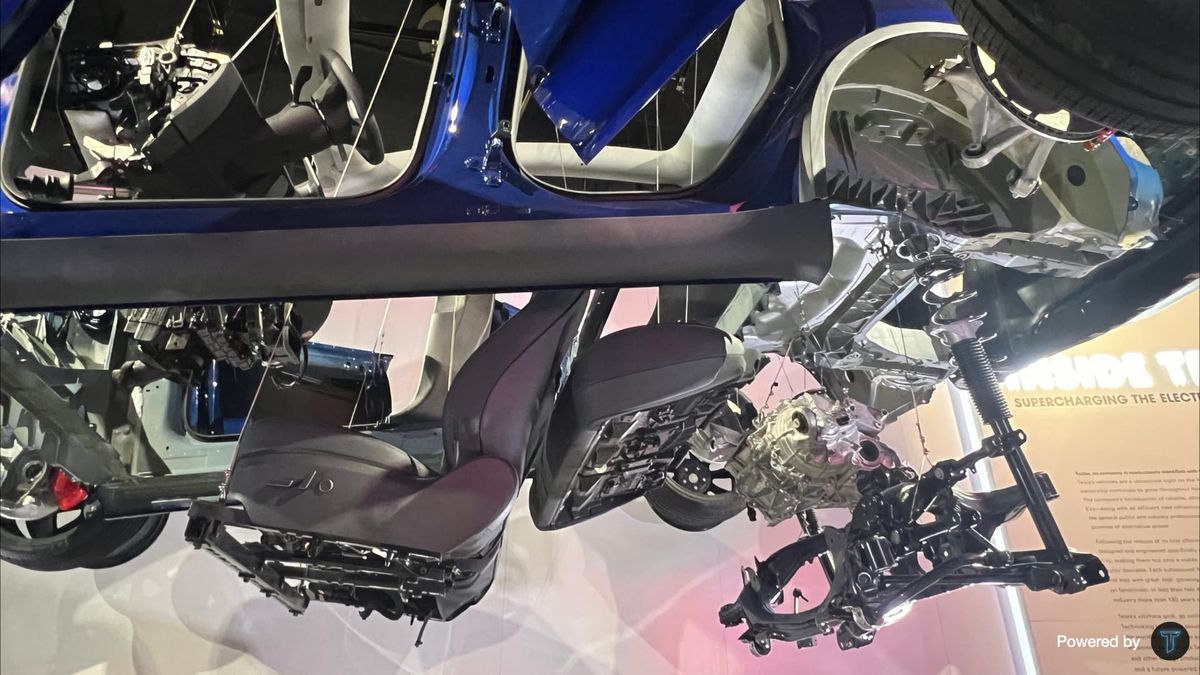
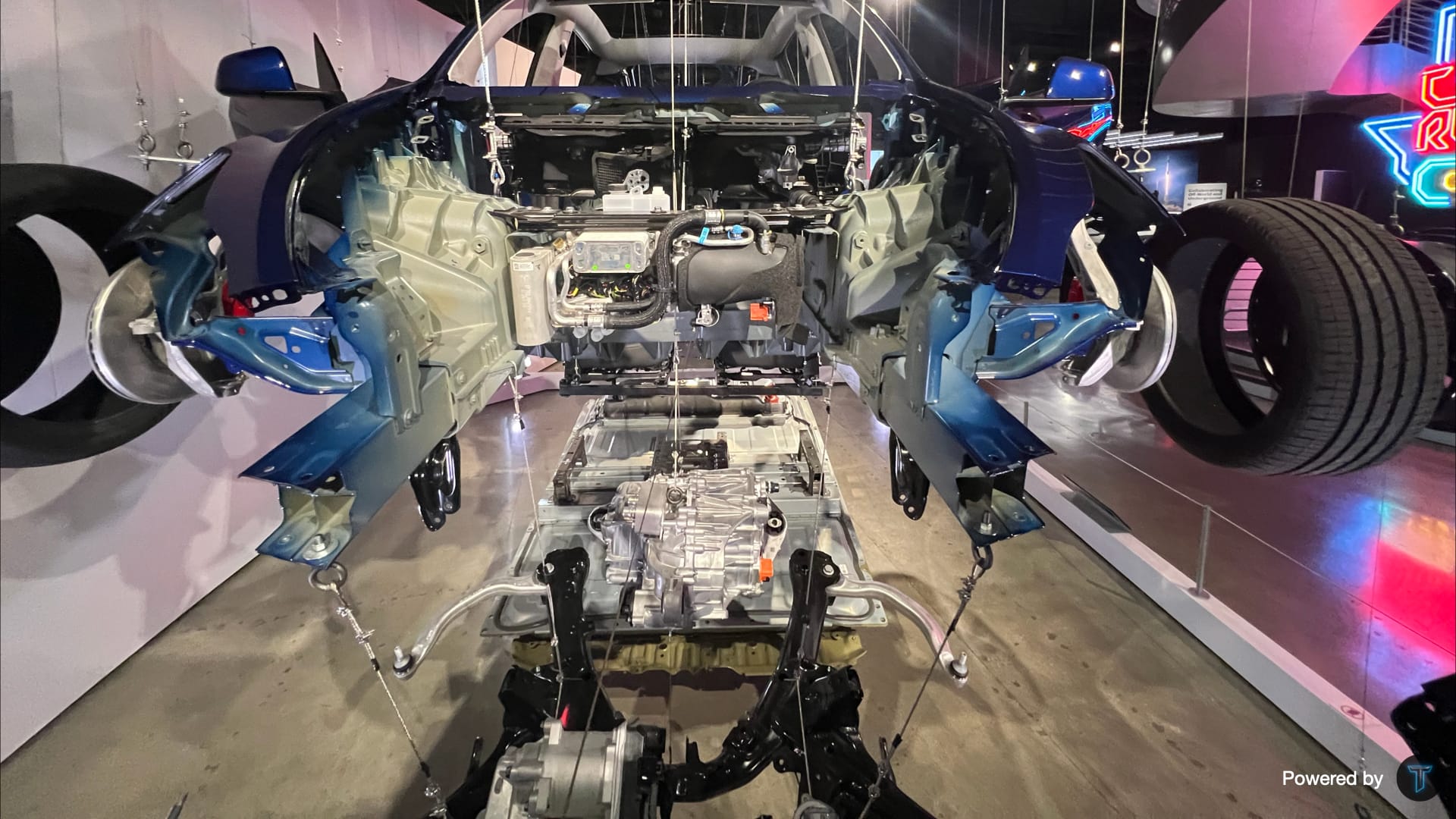
In my 2024 manuscript I looked at the U-shaped front gigacasting and pictured Optimus moving in and out of it. Two years on, that picture has not materialised, and it no longer needs to. The broader direction I described, Tesla's convergence on robots, held. What I got wrong was the mechanism. Gigacasting did not become a workplace for robots. The car line became a robot factory.
What the manuscript saw was a human's path
The detail I confirmed in an interview with Caresoft at the time was specific. Only four vertical bolts are needed to secure the HVAC module on the Model Y. Because the front gigacasting is formed in a U shape, a worker can step inside, fit the HVAC, and assemble the front bumper on the way back out.
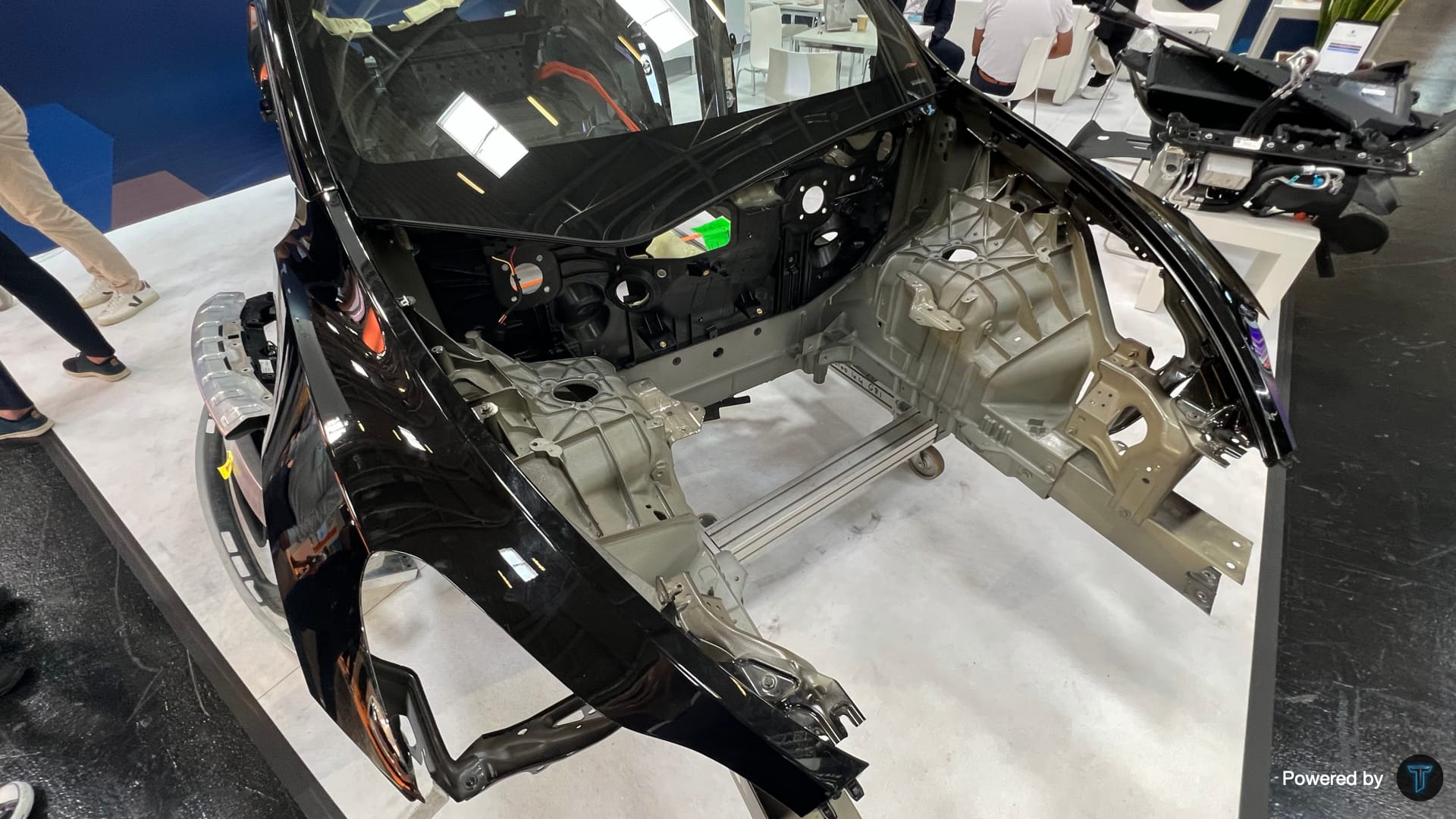
At its annual shareholder meeting in August 2022, Tesla said that adding a front gigacasting to the existing rear one would cut 171 metal parts down to two and eliminate more than 1,600 welds. Terry Woychowski, president of Caresoft, said the underbody had become boringly simple.
There is something I missed there. A path that goes in, works, and comes out is designed around a human body. The width and height of the U-shaped opening, the approach direction implied by four vertical bolts, the sequence that puts the bumper on during the exit: all of it is ergonomics. I looked at that human-shaped gap and thought of a human-shaped robot. The inference only holds if the gap survives.
The unboxed process erased the gap
As the manuscript recorded, Tesla announced at Investor Day that it would move to an unboxed process, assembled more like Lego. Instead of running a car down a linear conveyor, the structural sections are built in parallel and joined at the end.
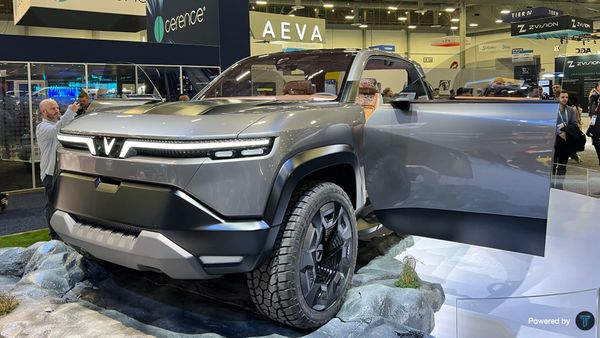
On February 17, 2026, the first production Cybercab came off the line at Giga Texas, the first Tesla vehicle built this way. Volume production followed in April.
In this method there is no occasion to climb inside a car. The front, rear, sides, and battery structure are each worked on while open, then brought together. Once the reason a person had to push their body into a shell disappears, so does the reason a human-shaped robot would.
The U-shaped opening was not a destination. It was an artefact of the transition, meaningful only while the linear assembly line was retained and part counts were being reduced within it.
What happened instead
On January 28, 2026, on the fourth-quarter earnings call, Musk announced the end of Model S and Model X production. He called it time to give both programmes an honourable discharge. The Fremont S/X lines, he said, would be replaced by an Optimus line with capacity for a million units a year.
The last cars came off in early May 2026. On July 10, Tesla released video of the teardown and said the original line had been stripped out in 46 days, showing concrete pits being broken up and robotic arms and conveyors lifted away.
Running the numbers shows the reasoning behind the decision, though exact figures are hard to state. Since 2023 Tesla has not reported Model S and X deliveries separately, bundling them with the Cybertruck and Semi under "other models." That category totalled 50,850 units in 2025, down 40% year on year. Cox Automotive estimated Cybertruck sales that year at between 20,000 and 20,200.
Subtract one from the other and roughly 30,000 units remain for the Model S, Model X, and Semi combined. The Fremont line in question was designed for 100,000. That works out to a utilisation rate around 30%. The premise here treats everything left after removing the Cybertruck estimate as Model S and X, which overstates them by whatever the Semi contributed, so the real rate is likely lower.
And yet nothing carries over
Musk added one sentence on the same call. Optimus is an entirely new supply chain, and there is really nothing in the existing supply chain that exists in Optimus. On the first-quarter call in April he said Optimus has 10,000 unique parts, which makes this year's production rate literally impossible to predict. By July he was calling it the hardest product Tesla has ever had to scale.
Those statements knock out the premise my manuscript rested on. I assumed that a manufacturing environment simplified by gigacasting was creating the conditions for Optimus to enter it. What Tesla is actually saying is that almost nothing transfers when you move from building cars to building robots. What gets shared is the site, the workforce, and the capital. Not the process.
What Optimus is actually doing now
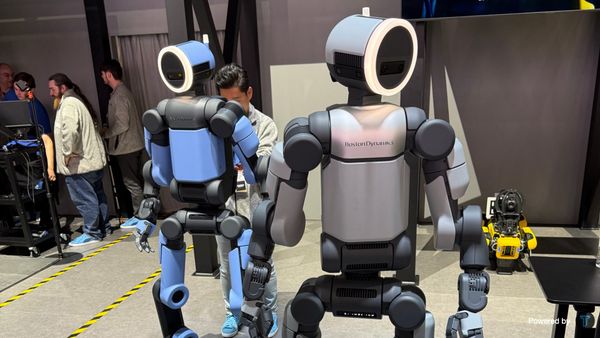
On the January 2026 call Musk said several hundred units were deployed, primarily to learn rather than to perform productive tasks, and that the programme remains very much in R&D. The publicly confirmed autonomous task is sorting 4680 battery cells.
As of the second-quarter shareholder update on July 22, the first-generation Optimus lines at Fremont were still being installed, with production anticipated later in the year. The initial builds go to an internal Optimus Academy rather than to customers.
There is a wide gap between sorting battery cells and climbing into a vehicle's front section to fit an HVAC module. The former handles a known object at a fixed station. The latter requires changing posture in a confined space while controlling the direction of applied force. The production pause in mid-2025 for a hand and forearm redesign looks related to that difficulty.
The direction was right
None of which makes the manuscript wrong throughout. I argued that understanding Tesla's manufacturing innovation meant looking at gigacasting, the structural battery pack, and the humanoid robot together, and I noted that Toyota's warnings about job losses did not account for how fast Optimus was developing.
As of 2026 that point holds. The route of the threat is different, though. It is not Optimus entering car factories and displacing people. It is car factories being converted into robot factories. What disappeared from Fremont was two vehicle models, not the assembly workforce. Musk said headcount there would increase.
What Korean industry should read here
In an earlier column I wrote that gigacasting had shifted from a differentiator to a requirement. This is a different kind of lesson.
The most dangerous move when forecasting where a manufacturing technology ends up is to read its present shape as its destination. The U-shaped opening was a meaningful piece of design in itself, but sketching the next step from it produces the wrong answer, because in the next step the shape disappeared entirely.
If Korean automakers are preparing to adopt megacasting, the question of whether the assembly method that technology presupposes is still valid has to be asked at the same time. Keeping a linear line while reducing part counts is a stretch of road Tesla has already travelled. Reproducing a stretch someone else has already travelled is not catching up.
For research inquiries or collaboration, contact: ceo@technorns.com