Robots Have Started Walking. Grasping Is Still Open.
Walking got solved. Grasping did not. And the winning answer in 2017 was to abandon the human form entirely.

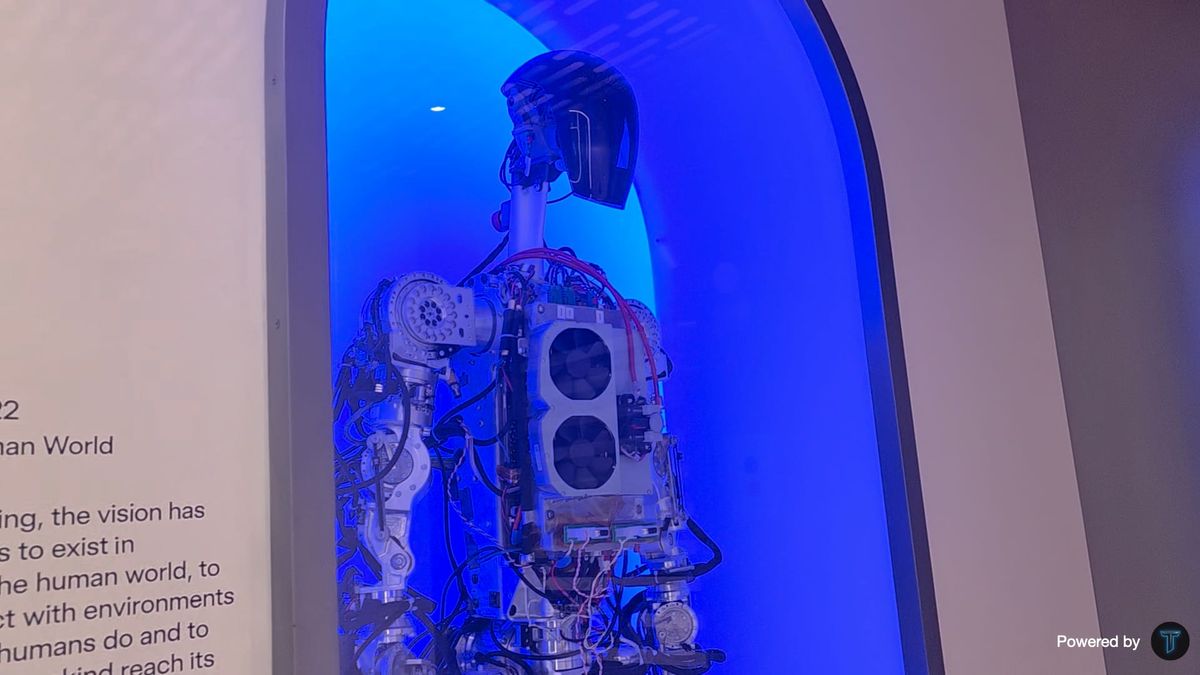
n 2017 I stood in Nagoya and watched a competition about robots picking things up. Nine years on, walking has essentially been solved. The grasping problem I watched that week has not been, and the industry is now running in the opposite direction from the approach that won it.
The benchmark for walking was set in 2006
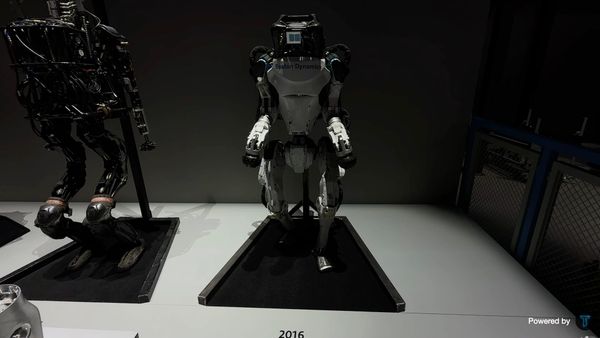
As my manuscript recorded, Honda set up seven stairs on a stage in 2006 to demonstrate ASIMO's gait. ASIMO hesitated for more than twenty seconds before taking its first step, then lost balance on the third stair and fell backwards. There was an audible gasp, the lights went out, and staff rushed in with a curtain to cover the scene.
Humanoid locomotion at the time could execute pre-programmed motions and little else. A small deviation was enough, and the robot had no way to solve the problem on its own.
The benchmark for grasping was set in Nagoya in 2017
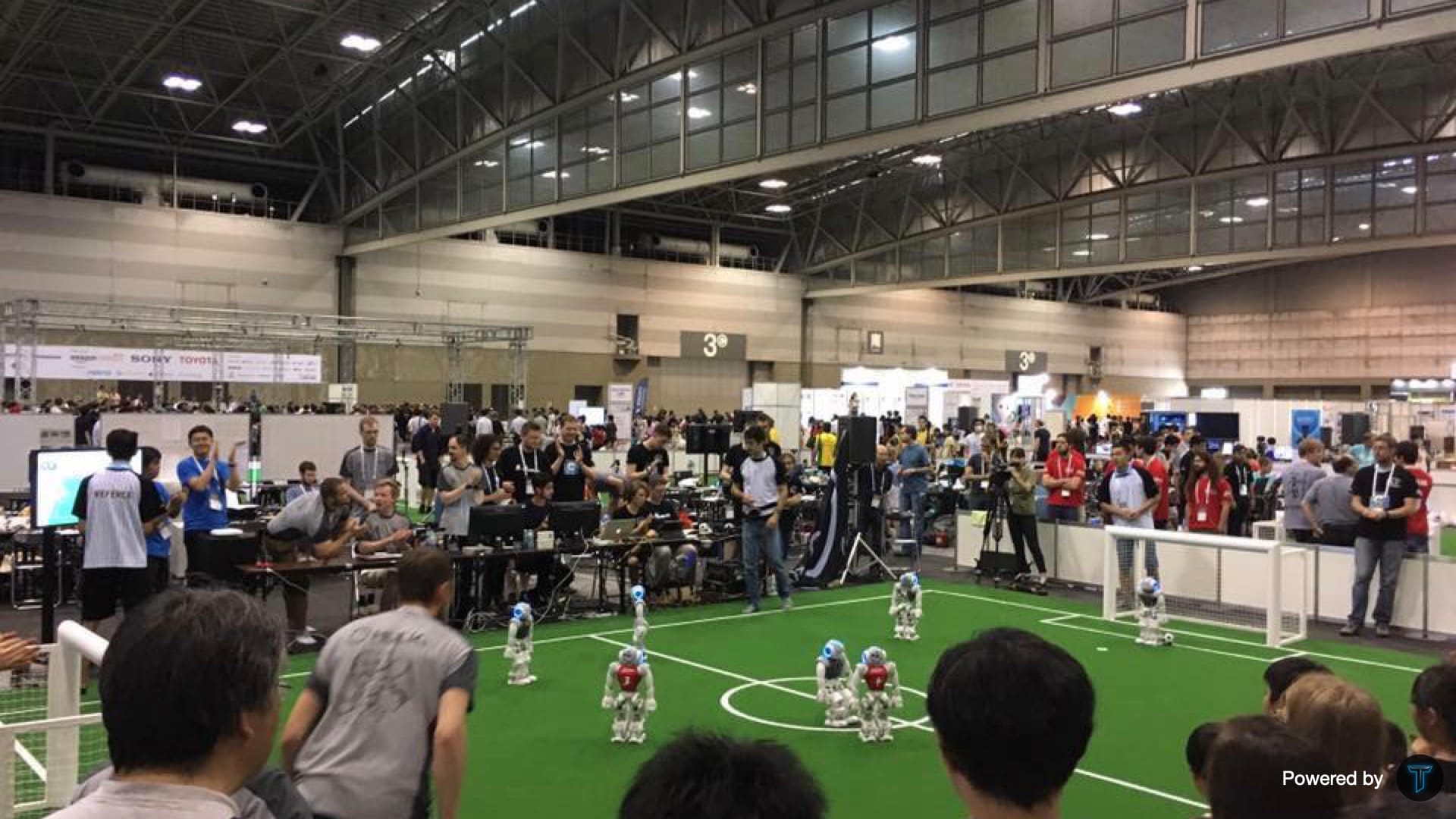
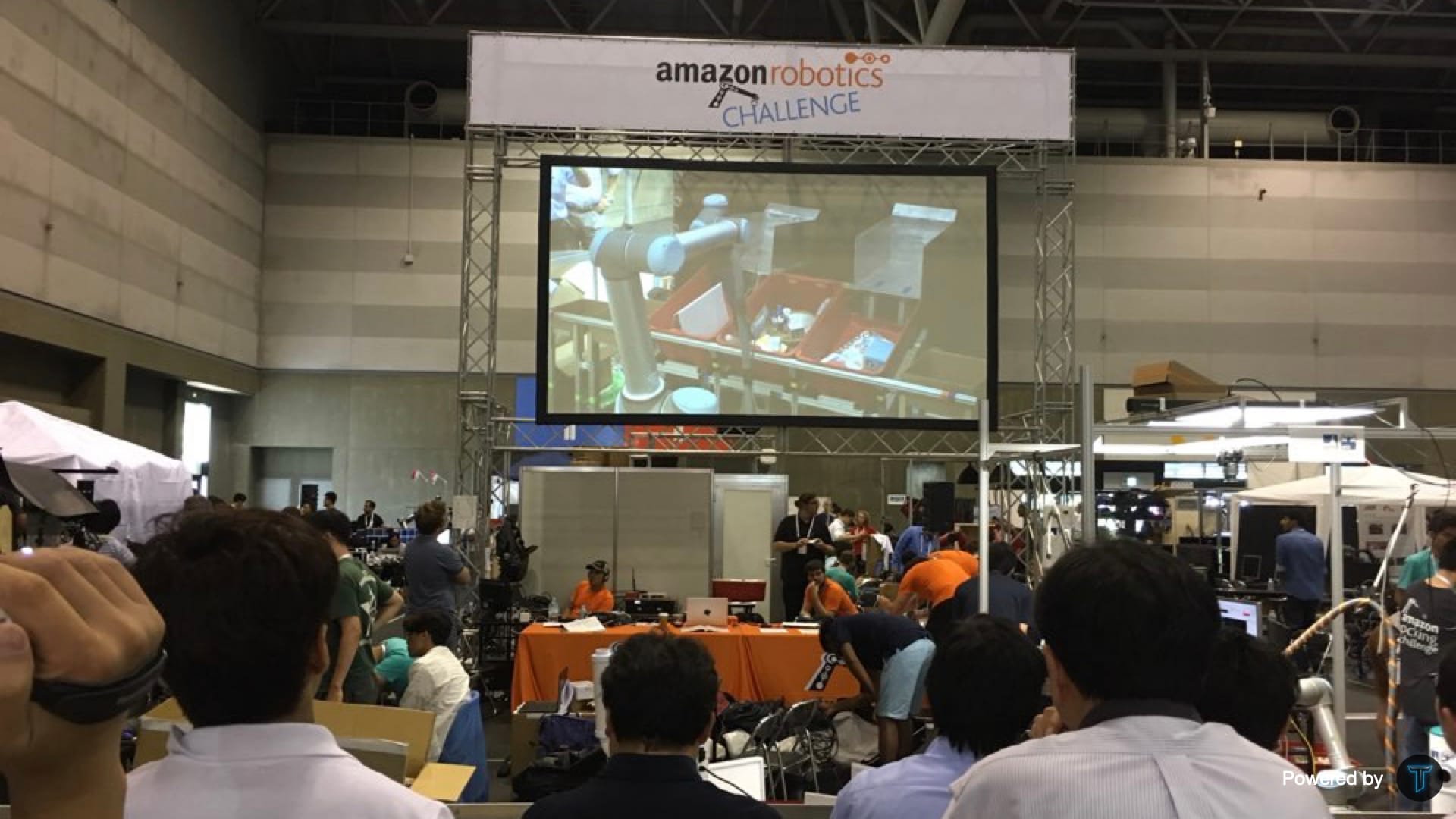
In July 2017, Port Messe Nagoya hosted the Amazon Robotics Challenge. It was the third edition, drawing sixteen teams from Australia, Germany, India, Israel, Japan, the Netherlands, Singapore, Spain, Taiwan and the United States, with $250,000 in total prize money. Students from Carnegie Mellon and Duke were there, alongside researchers from Mitsubishi and Panasonic.
There were two tasks. Pick required taking specified items off a shelf and placing them in a box. Stow reversed it, taking items from a tote and sorting them into cubbies. A combined task was added at the end, requiring a system to retrieve the items it had stored itself. The hardest condition was that half the items were revealed only minutes before a run.
Amazon's reason for assembling the world's best roboticists was straightforward. It wanted robots that could correctly sort, grasp and move objects. Push that capability far enough and you get warehouse robots that work faster than people, never get injured, and never stop.
The winning solution that year is striking in hindsight
The Australian Centre for Robotic Vision, based at Queensland University of Technology, took the championship with a robot named Cartman.
Cartman was not an articulated manipulator built to resemble a human arm. It was a Cartesian robot, three axes meeting at right angles like a gantry crane, fitted with a rotating gripper that switched between suction and a simple two-finger pinch depending on the object. It was the only Cartesian machine at the event, and press coverage described it as the least expensive entrant, though no build cost was published, so that last point is not something to state firmly.
The structure alone makes the direction clear enough. In 2017, the best available answer to the grasping problem was to abandon the human form. Suction cups instead of more fingers. Axes fixed at right angles instead of more degrees of freedom in the arm.
Walking got solved in the years between
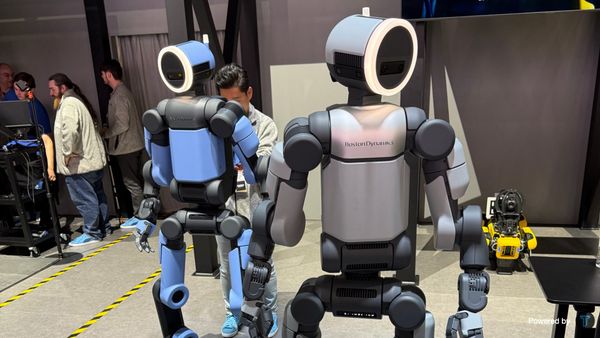
On April 19, 2025, Yizhuang in Beijing hosted the world's first humanoid half marathon. Twenty-one bipedal robots ran the same course as roughly 12,000 human runners. Tiangong Ultra, from the Beijing Innovation Center of Humanoid Robotics, won in 2 hours 40 minutes 42 seconds, swapping batteries three times along the way. Several robots fell, and one overheated and started smoking.
Measured against people, a gap remains. By my rough reckoning, if the men's half marathon world record is taken as roughly 57 minutes, the robot took about 2.8 times as long. The premise is 2 hours 40 minutes 42 seconds converted to 160.7 minutes and divided by 57. I did not verify the current record, so the multiple should be read as an order of magnitude rather than a figure.
Four months later, in August 2025, Beijing held the first World Humanoid Robot Games, with 280 teams from 16 countries competing over four days. Tiangong won the 100 metres in 21.50 seconds. Unitree took four golds in running events.
The second Beijing half marathon, on April 19, 2026, drew more than 300 robots from over 100 teams. Unitree said its H1 completed a 1.9 km winding qualifying course autonomously in 4 minutes 13 seconds, adding that at the same pace this would exceed the human 1,500 m world record.
That comparison is a proportional conversion, not a record. The distance and the course are both different. The separate claim that the H1 reached a peak of 10 metres per second in a 100 m test run is more meaningful on its own terms. Set against ASIMO failing to climb three stairs in 2006, this is a different order of problem.
Karpathy's prediction went the other way
My manuscript quoted the assessment Karpathy left when he departed Tesla at the end of 2022. Optimus would be very hard and take considerable time, he said, but no other company would be able to mass produce humanoid robots.
As of 2026 that appears to have played out in reverse. Reporting on Omdia's assessment of shipment volumes for general-purpose embodied intelligent robots identifies three first-tier vendors: AGIBOT, Unitree and UBTech. All three reportedly shipped more than 1,000 units last year, with the first two above 5,000. All three are Chinese companies. I have not seen the underlying report, so the details of how the tiers were drawn remain unconfirmed.
Tesla, as of its second-quarter shareholder update on July 22, 2026, said the first-generation Optimus lines at Fremont were still being installed, with production anticipated later in the year. On the January earnings call Musk said several hundred units were deployed, primarily to learn rather than to perform productive work.
The bottleneck moved from the legs to the hands
The reason Optimus production stalled does not appear to have been the legs. Reports in mid-2025 pointed to a hand and forearm redesign, and Tesla has not confirmed this publicly. The publicly confirmed autonomous task for Optimus is sorting 4680 battery cells.
Sorting cells means handling a consistent shape at a fixed station. That is a different order of difficulty from the Nagoya task, which was pulling an object you first saw minutes earlier out of a cluttered tote. The problem Amazon posed nine years ago is hard to call solved at a commercial level.
Why did walking give way while grasping held? My reading is that walking is a repeating cyclic motion, so you can run hundreds of millions of trials in simulation against a relatively simple physical model. Grasping changes shape, material and friction every time, which opens a wide gap between simulation and reality. The method that actually cracked walking was transferring policies learned in simulation onto physical machines, the Sim2Real approach, which has since become the industry standard.
Component costs fell at the same time. Practitioners describe humanoid joint modules as prohibitively expensive two years ago, with rapid iteration over the past year driving costs down far enough that individuals can build their own machines, which has produced a wave of open-source projects.
And yet the direction has reversed
Something nags here. The right answer in 2017 was to abandon the human form. The industry's current bet is on reproducing the human hand in fine detail. The wall specification for XPeng's IRON humanoid lists hands built at 1:1 human scale carrying 22 degrees of freedom.
Both directions can be rational. Where the environment can be controlled, as in a warehouse, gantries and suction cups still win. Where a machine has to use the tools and spaces people already use, it needs a hand shaped like a hand. That the second is harder than the first was true in 2017 and remains true now.
What Korean industry should read here
No Korean company appears in that first tier. What matters more than the absence is how the three that are there got in.
The two axes that solved walking were the reinforcement learning environment and component cost. My expectation is that grasping, the next bottleneck, will be decided on the same two: environment design that narrows the gap between simulation and reality, and the unit cost of tactile sensors and compact actuators.
In an earlier column I wrote that the bottleneck in autonomous driving had moved from perception to evaluation. Robotics looks structurally similar. The ability to build the environment that trains the hardware ranks higher than the ability to build the hardware. That layer has not settled into a market yet.
For research inquiries or collaboration, contact: ceo@technorns.com