Even the "Next Tesla" Struggles: The Surprisingly High Barrier to Building Electric Cars
Byton had money and design. It never built the car. In EVs, the real barrier was never the concept.

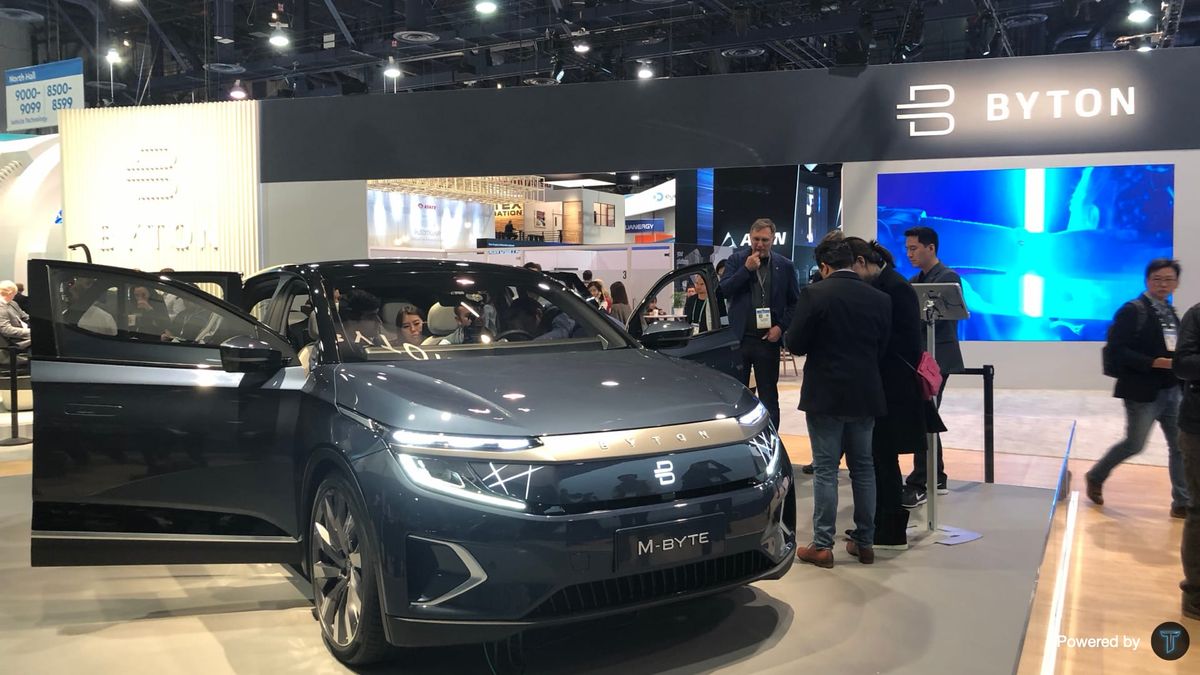
In March 2022, Time magazine named its 100 most influential companies of the year. Rivian made the list. Tesla did not. Two months later, in May 2022, the Financial Times profiled Rivian as the challenger built to take on Tesla. For a moment, the narrative was set: a fresh, well-funded American startup would do to Tesla what Tesla had done to the century-old automakers. Yet the story of Byton, a company I followed closely in China, is a useful correction to that optimism. It shows that for any newcomer, surviving the leap from prototype to mass production remains an enormous challenge.
Every January, Las Vegas hosts CES, the largest ICT convergence show in the world. In the years when relations between China and the United States were warmer, a sister event, CES Asia, was held in Shanghai to court the Asian market. Byton was the electric-vehicle brand launched by Future Mobility. In 2018, Byton's leadership was chosen to deliver a keynote at CES Asia, and sitting in that press conference I could feel the company's confidence that it would grow into a genuine rival to Tesla. It had declared bold ambitions in both EV manufacturing and autonomous driving.
That same year, a Japanese management scholar cited Byton as evidence that the structure of the car industry was breaking apart. Byton's vehicle was polished to a degree that was hard to believe had come from a startup, with advanced technology and refined design. At the time, some industry experts argued that electric cars, unlike internal-combustion vehicles that take decades to develop, had a low barrier to entry. Byton seemed to prove the point.
Byton was founded in Nanjing, China, but much of its leadership came from the European auto industry. Co-founder Daniel Kirchert, born in Bavaria, Germany, had made his name as head of BMW's marketing and sales in China, where he sharply increased revenue and earned a reputation as a China-market specialist. Head of product development Carsten Breitfeld, from Lower Saxony, held a doctorate in mechanical engineering and had served at BMW as project leader for the i8 hybrid sports car and as vice president of engineering. On paper, a Chinese EV startup run by seasoned automotive professionals looked well positioned to succeed.
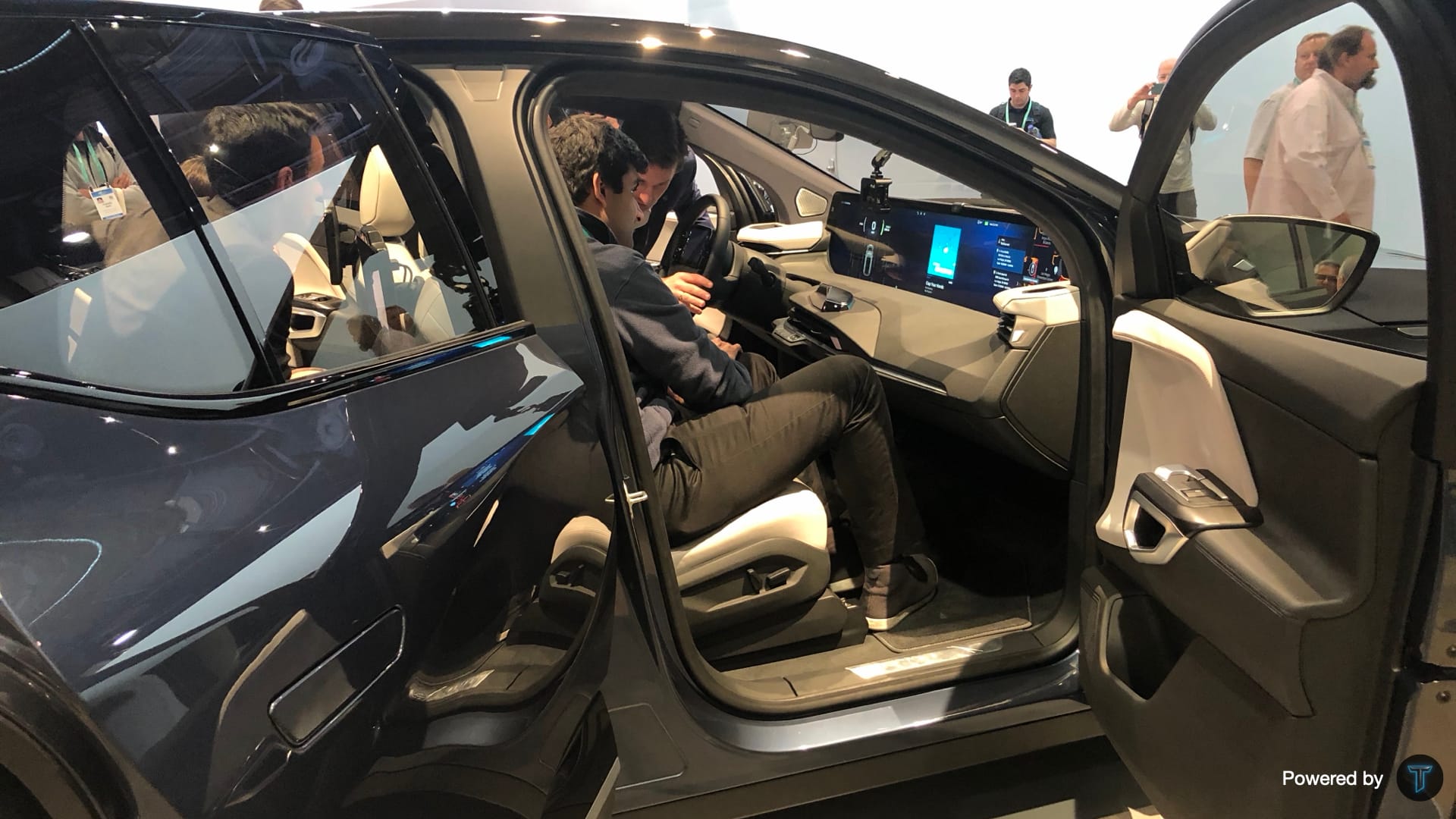
Planning to launch an electric SUV in 2021, Byton raised money across six funding rounds, with five of them pushing cumulative investment past 8.4 billion yuan, roughly 1.489 trillion Korean won. At CES 2020, Byton signed a memorandum of understanding with SK Telecom to explore the development and integration of an in-vehicle infotainment system. The concept, the M-Byte, promised more than 500 kilometers of range on a single charge and a 48-inch display stretched across the dashboard. When I sat inside the M-Byte in both the United States and China, my first thought was that a screen that large could only avoid distracting the driver if the car's autonomous-driving technology surpassed anything Tesla had.
Even Foxconn, the company that assembles Apple's iPhone, partnered with Byton to help bring the car to production, announcing plans to invest 200 million dollars. And yet, despite all of it, the money, the talent, the manufacturing muscle, Byton could not climb out of its financial hole. Its German subsidiary entered bankruptcy in 2021, operations in China were suspended the same year, and Foxconn quietly put the project on hold. The M-Byte never reached mass production. Today Byton is defunct, and the story ended exactly where the skeptics feared. Watching Byton rise and fall drove home a point Elon Musk has made in his own words: building a prototype is easy and fun, but manufacturing a reliable product at a reasonable price and at scale is extraordinarily hard.
Rivian's path tells the same lesson from a different angle. From a climate perspective, I personally hope Rivian's electric pickup succeeds. But the reality has been unforgiving. In June 2023, Barron's reported that Rivian was at risk of being removed from the Nasdaq-100 index. The stock, which had touched 129.95 dollars on November 12, 2021, collapsed to 10.07 dollars by February 23, 2024. There were bright spots. In the fourth quarter of 2023, Rivian produced 17,541 vehicles and delivered 13,972, exceeding its own production guidance for the year.
The years since have not resolved the underlying question of whether Rivian can turn promise into a durable business. In full-year 2025, the company delivered 42,247 vehicles, a decline from the prior year as the withdrawal of federal EV incentives and softer demand weighed on the whole sector. The stock has not recovered its early ambitions either. As of late July 2026 it traded around 17 dollars, well below its 2021 highs, though a long way from the single-digit lows of early 2024. There is, at last, a real reason for cautious optimism: Rivian began delivering its long-awaited, lower-priced R2 in the second quarter of 2026, and that helped push quarterly deliveries to 12,194, above the company's own guidance. Rivian raised its full-year 2026 outlook to between 65,000 and 70,000 vehicles. The R2 is the model that is supposed to move Rivian from a niche premium maker to a volume manufacturer. Whether it can actually build the car profitably, at scale, is the same test Byton failed.
Rivian still faces a stack of unresolved problems: expanding production capacity, managing its supply chain, improving cost efficiency, and growing market share. It must compete against a wave of electric pickups from the incumbents that once ruled the internal-combustion truck market, including Ford's F-150 Lightning, GMC's Hummer EV, Chevrolet's Silverado EV, and Ram's 1500 EV. To make matters harder, Tesla entered the segment with the Cybertruck and drew enormous attention.
But here the plot has twisted in ways few would have predicted. The Cybertruck, once treated as an inevitable disruptor, became one of the biggest disappointments in the EV market. Its US sales roughly halved in 2025, falling to around 21,500 units, the steepest sales collapse of any electric vehicle that year. Even more telling, Ford's F-150 Lightning outsold the Cybertruck in 2025, with about 27,300 units, and Ford still chose to end Lightning production in December 2025, judging the volumes too low and pivoting toward an extended-range electric strategy. The lesson is blunt: in the electric pickup market, strong demand cannot be assumed, and even the incumbents are retreating and rethinking. Mass production is not only hard to achieve; it is hard to justify when buyers hesitate.
Set against that backdrop, consider the company that Time left off its 2022 list. Tesla produced 494,989 vehicles and delivered 484,507 in the fourth quarter of 2023. Its total deliveries that year reached 1,808,581, a staggering figure next to the 1,542 Model 3 units it handed over in the third quarter of 2017. That trajectory was the whole reason people believed a "next Tesla" was possible.
And yet even Tesla has since discovered that scale, once achieved, is not permanent. In full-year 2025 the company produced 1,654,667 vehicles and delivered 1,636,129, its second consecutive annual decline and a drop of roughly 9 percent from the prior year. The peak of 1.81 million deliveries in 2023 now stands as a high-water mark rather than a way station. Tesla remains, by an enormous margin, the most successful company to have crossed the chasm from prototype to mass production. But its recent stumble shows that even the pioneer cannot take demand, cost, and execution for granted.
So what happened in all of this that led Musk to insist that building the factory is a hundred times harder than designing the concept car? The answer runs through every company in this story. Byton had the design, the engineers, and the investment, and it never built the car. Rivian built the car, beat its own targets, and still spent years fighting to prove it could do so profitably. The Cybertruck was built and then stalled as demand evaporated. Ford built its electric truck, outsold its rivals, and shut the line down anyway. Even Tesla, the one company that unquestionably solved manufacturing at scale, is now watching its volumes slip. The barrier to entry in electric vehicles was never the concept. It was the factory, the supply chain, the cost curve, and the customer. Those barriers turned out to be far higher than the early optimists imagined, and clearing them once is no guarantee of clearing them forever.
For research inquiries or collaboration, contact: ceo@technorns.com