Primitive Tools, Perfect Outcomes: The Analogue Engineering of the Saturn V
How did NASA engineer the Saturn V without computers or CAD? Explore the brilliant analogue engineering, from F-1 combustion trials to the Instrument Unit, that successfully conquered the moon.

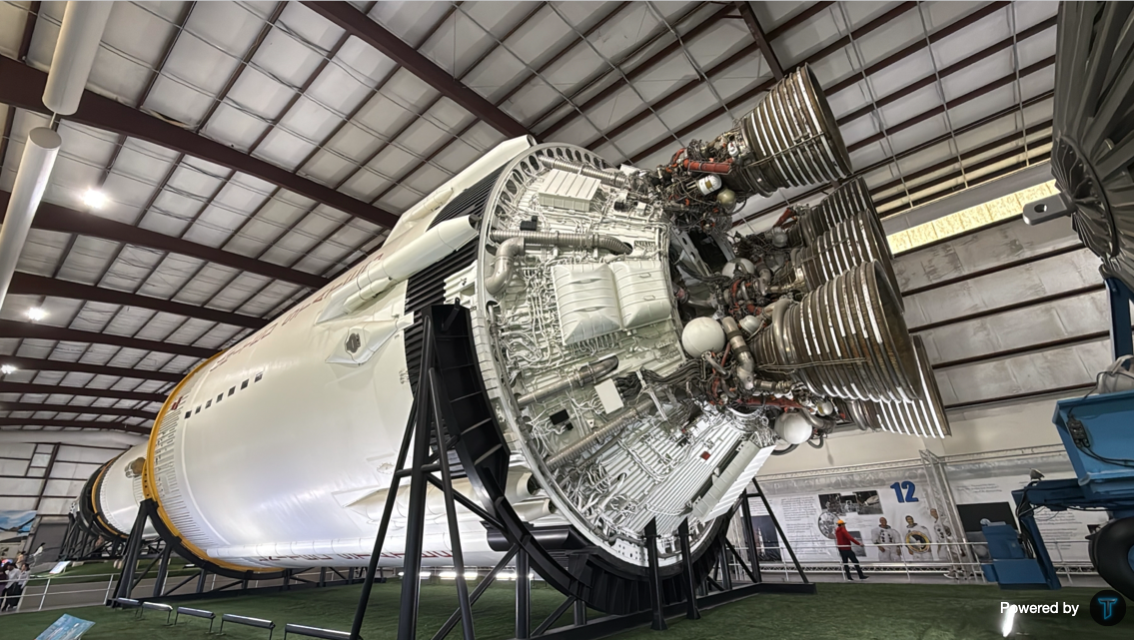
When standing before the physical reality of the Saturn V, a realization hits harder than the sheer physical scale of the machine. This colossus was designed and built without computers, computer-aided design (CAD) software, or digital simulation tools. In an era when calculators, slide rules, and drafting boards were the only instruments available, how did humanity construct such a mechanical giant?
Luke Talley, an IBM engineer who worked on the Instrument Unit (IU) that controlled the entire rocket, captured the atmosphere of the era. He noted that when he graduated in the mid-1960s, he had never taken a single computer class. There was nothing digital; everything was analog. Young engineers, many fresh out of college in their twenties, were tasked with building the most complex machine in human history from scratch.
Solving the Invisible: The F-1 Combustion Crisis
Without digital simulation, engineering was a brutal process of trial and error. This was starkly evident during the early development of the F-1 engine, which suffered from severe combustion instability. Inside the massive combustion chamber, pressure waves swirled hundreds of times per second (specifically around 450 to 550 Hz in the first tangential mode), creating destructive forces that tore the engines apart during test fires.
With no software to model the fluid dynamics, engineers had only one option: build it, fire it, analyze the wreckage when it exploded, modify the design, and fire it again. After hundreds of explosive test runs, they solved the crisis by adding baffles to the injector plate to act as physical partitions. They did not wait for a complete theoretical explanation. The physical solution came first; the mathematical theory was developed only after the engine worked.
The Mechanics of Gravity and Inertia
Restarting a liquid hydrogen engine in the vacuum of space presented another unprecedented hurdle. Once the third stage reached orbit and the engines cut out, the spacecraft entered microgravity. In this weightless environment, the liquid propellant floated freely inside the massive tanks, forming bubbles and drifting away from the fuel intakes. Attempting to restart the engine under these conditions would draw gas instead of liquid, causing a catastrophic engine failure.
To overcome this, engineers designed small solid-fuel rockets called ullage motors. Just before restarting the main J-2 engine, these small motors fired briefly to push the entire rocket forward. This subtle acceleration forced the floating liquid propellant to settle at the bottom of the tanks through inertia, ensuring a clean flow of fuel. This brief, elegant mechanical intervention allowed the third-stage J-2 engine to restart after coasting for two and a half hours, burning for six minutes to push the spacecraft to 39,000 kilometers per hour toward the moon.
The Mind of the Machine: The Instrument Unit
The entire sequence of these complex maneuvers was governed by the Instrument Unit (IU). Positioned as a cylindrical ring atop the third stage, this analog-digital hybrid brain controlled everything from the first stage liftoff to the final trajectory adjustments. As Talley recalled, every critical phase of the flight took place under the direct command of the Instrument Unit. The unit was engineered with extreme pragmatism, designed to function only for the duration of the mission before guiding the spent third stage to a controlled impact on the lunar surface.
At the peak of development in 1967, the Apollo program mobilized more than 400,000 people. This massive workforce included approximately 34,000 NASA personnel and 375,000 contractors from private industries and academic institutions. On the historic day Neil Armstrong walked on the lunar surface, the average age of the engineers in Mission Control was just 28 years old. An entire nation had collectively resolved to achieve the impossible. This monumental effort culminated on November 9, 1967, with the successful maiden flight of Apollo 4, proving that the untried, three-stage colossus could function perfectly on its very first launch.
For research inquiries or collaboration, contact: ceo@technorns.com