Removing the Steering Wheel Was Never the Same as Removing the Driver
Removing the steering wheel turned out to be the easy part. What Zoox was waiting for all along was not better software. It was a document from a federal regulator.

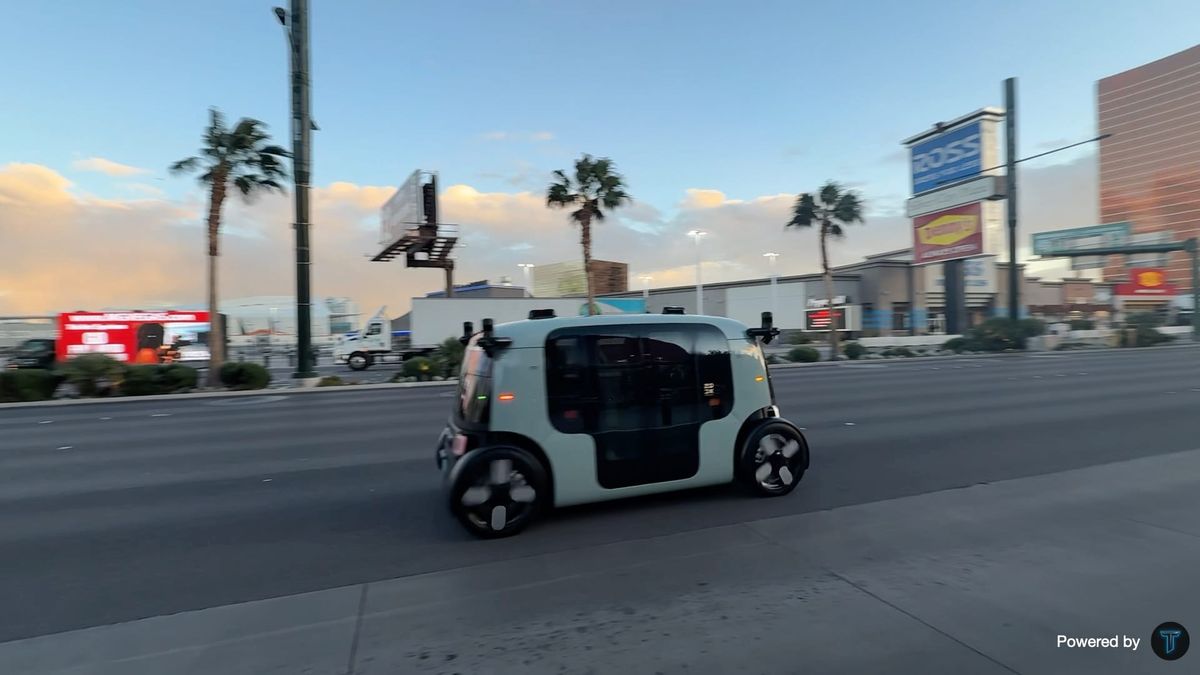
In 2024, in a book I published on Tesla and the autonomy race, I looked at a Zoox robotaxi and wrote this: it has no driver's seat, only passenger seats, with large lidar units at the front and rear, so the vehicle is clearly aiming at Level 5. Two years later, half of that sentence holds up.
The half that holds up is the hardware. Zoox began charging for rides in Las Vegas on August 10, and the vehicle still has no steering wheel and no pedals. I did get one detail wrong even there: the sensor pods sit at all four corners, not at a front and a rear, because on this vehicle there is no front and no rear to put them on. What the National Highway Traffic Safety Administration granted the company in late July was the first commercial exemption ever issued for a purpose-built robotaxi.
Federal motor vehicle safety standards were written on the assumption that every car contains controls a human can operate. Zoox cannot physically satisfy that assumption, so instead of complying with the rule it took the route of being excused from it.
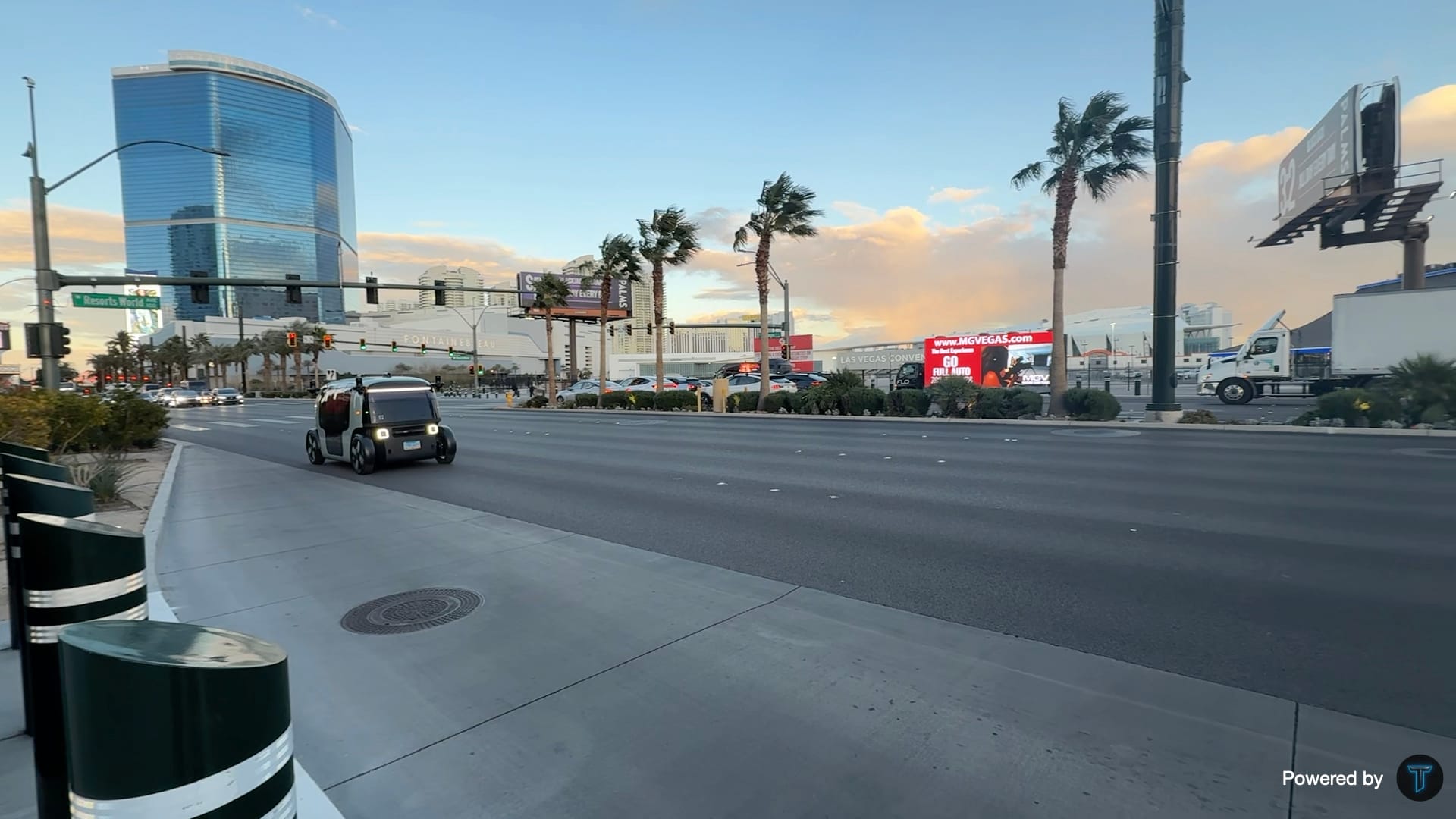
The half that fails is the classification. I read the missing steering wheel as a measure of autonomy. That was the wrong measure. Under SAE's framework, Level 5 means driving without human involvement in all conditions, on all roads. Zoox does not do that. It moves only inside precisely mapped zones, its pickup and drop-off points are a registered list inside an app, and when its judgment stalls, a remote operator steps in. Level 4 means the system handles everything inside a defined operational domain and nothing outside it. That domain is exactly what a geofence draws. By definition Zoox is Level 4. A car with no steering wheel that runs only inside a geofence is not a statement about the level of autonomy. It is a statement about design philosophy.
That gap between hardware and domain became visible in June. An unoccupied Zoox drove into a band of heavy smoke at an active fire scene that had not yet been coned off. The vehicle braked hard, stopped, and reversed out under remote guidance. Zoox filed a software recall covering all 105 vehicles in the fleet. Nobody was hurt. Around the same period Waymo recalled about 3,900 vehicles over behavior in construction zones. Both companies already drive more smoothly than most humans in ordinary conditions.
What remains is not ordinary driving but how a machine reads a scene that is not ordinary: smoke, an emergency in progress, the few minutes before anyone sets out a cone. Those few minutes are not the gap between Level 4 and Level 5. They fall inside the domain Zoox already claims, which is what makes them harder to excuse.
Two companies from that same chapter are gone
In the 2024 manuscript I used Cruise as the present-tense example of Level 4 and Apple's Project Titan as the future-tense one. Neither exists now.
In October 2023 a Cruise vehicle failed to recognize a pedestrian who had been struck by another car and dragged her along the road. The California DMV suspended its operating permit. In December 2024 GM ended the robotaxi program outright. CEO Mary Barra's explanation amounted to this: ten billion dollars had already gone in, and commercialization would take roughly that much again. The Cruise organization was absorbed into GM's Super Cruise driver assistance work.
Apple cancelled Project Titan in February 2024. Roughly 2,000 people moved to the AI organization or left. By the time it was killed, Apple's own target had already retreated from Level 4 to a vehicle with a steering wheel. In June 2026 it was reported that Apple sold its private vehicle testing facility to Waymo. The assets of the company that quit ended up with the company that never did.
When I wrote the manuscript I said that assembling the world's best software talent guarantees nothing in this field. That line still holds, though the reason has shifted. The companies that quit did not quit because the technology eluded them. They quit because they could not justify the time and capital required to turn the technology into a business.
Zoox survived that same stretch for one reason the other two did not have: Amazon bought it in 2020 and kept funding it through six years without a dollar of fare revenue.
How Brown's story actually ended
The manuscript includes Joshua Brown's April 2016 video, in which a truck drifts toward his Model S and Autopilot steers right on its own to avoid it. Musk promoted that clip directly. I used the episode to point out the danger of making Level 2 look like Level 4.
But the manuscript never wrote the ending. On May 7 of that year, Brown died in Florida when his Model S, with Autopilot engaged, passed under a trailer crossing the highway. It became the first known fatality involving Autopilot. Less than a month separated the video from the crash.
That sequence deserves a second look. A single instance of a system handling something well and the actual operating envelope of that system are entirely different pieces of information. The first goes into marketing. The second goes into the terms of use. Most users only ever see the first. That some Tesla owners still search for ways to silence the Autopilot nag chime is evidence that the gap has not narrowed in a decade.
In 2026 the bottleneck is not code, it is text
Brown's case was a company overstating what its system could do. Cruise's was a regulator revoking a permit after the fact. What NHTSA wrote for Zoox is the third option: put the limits in writing before anyone drives.
Zoox says its Hayward plant can build up to 100 vehicles a week. The NHTSA exemption caps deployment at 2,500 vehicles a year. Do the arithmetic and 25 weeks of production exhausts a full year of regulatory headroom. The factory runs at twice the speed the rule allows. Put it another way: the recall covered 105 vehicles, and that was the entire fleet. Hayward can build that many in about a week.
This is not the picture I anticipated in 2024. Back then I framed the remaining work as a problem of software, sensors, and mapping. The real constraint in 2026 is a document that specifies how many vehicles, for how long, in which cities. Before Zoox can charge a fare in California, the federal exemption is not enough; it also needs permits from the state Public Utilities Commission and the DMV. The technology is already standing in line, waiting for approval.
What Korea can take from this
The thing worth studying is not the shape of the Zoox vehicle. Building a car without a steering wheel is not the hard part. The hard part is writing, in advance, the legal text that lets such a car operate.
What the American regulator did was neither permit nor prohibit. It set a unit ceiling, set an expiry date, attached incident reporting obligations, barred Zoox from selling the vehicle to other operators, and opened the door on those conditions. It built a structure it can claw back if things go wrong. That is not leniency. It is design.
The question of when we will see robotaxis in Korea does not turn on which company trains the better model. It turns on whether a document exists that already specifies what gets withdrawn, and how, when something goes wrong. What Zoox was waiting for all along was, in the end, that document.
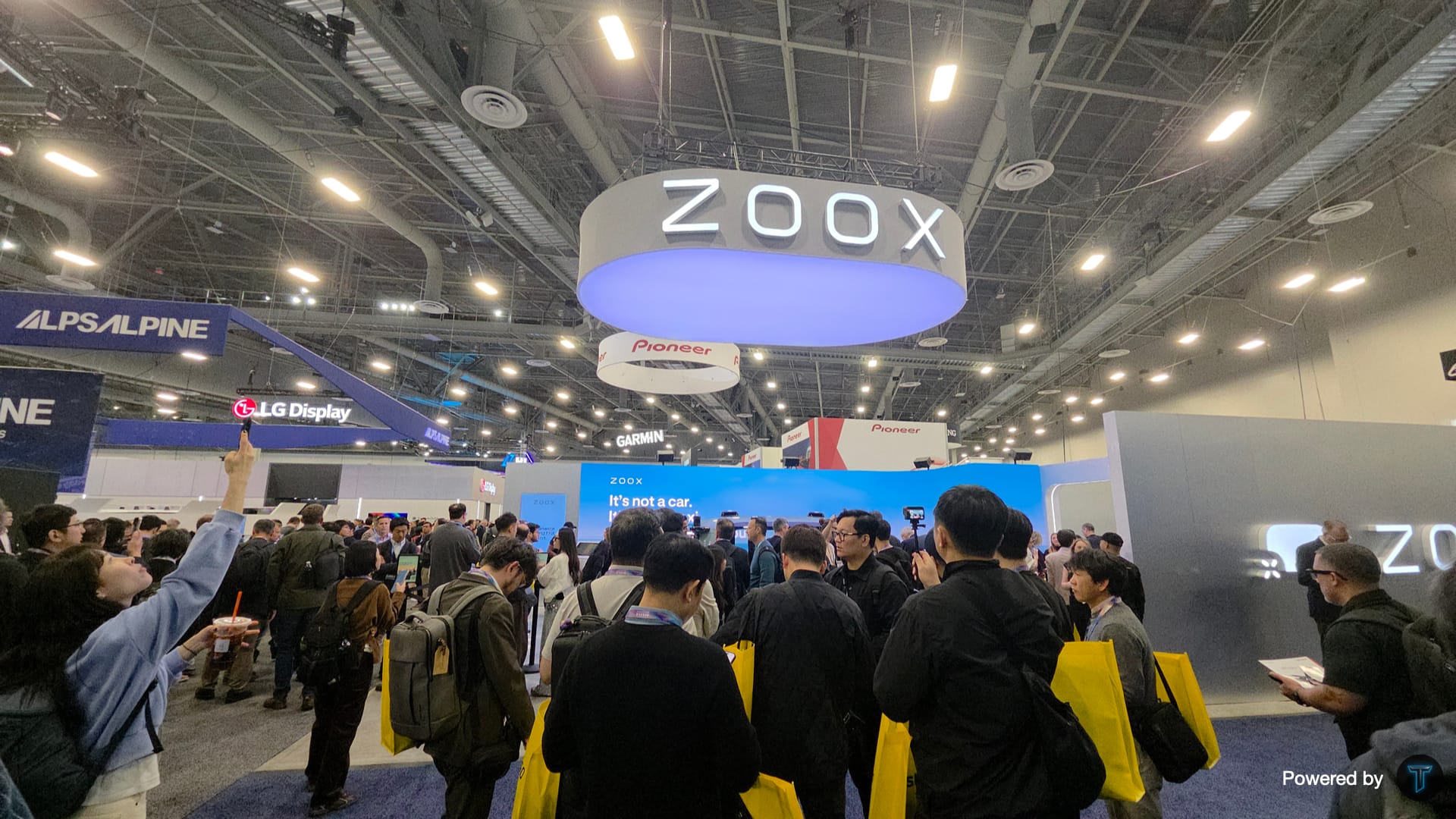
This article is based on first-hand reporting at CES 2026, including photographs taken on the show floor by the author. Corrections are welcome at ceo@technorns.com. AI tools were used in research and drafting. Final verification and editorial responsibility rest with the author.