Tesla Dojo: Symbolic AI’s Hanoi Tower Problem and the Turn to Neural Scaling
This analysis deconstructs Tesla's Dojo through the lens of AI history, from symbolic reasoning limits illustrated by the Hanoi Tower problem to modern neural scaling. We balance the reality of its 2025 pause with the vision of its 2026 turn toward orbital compute.

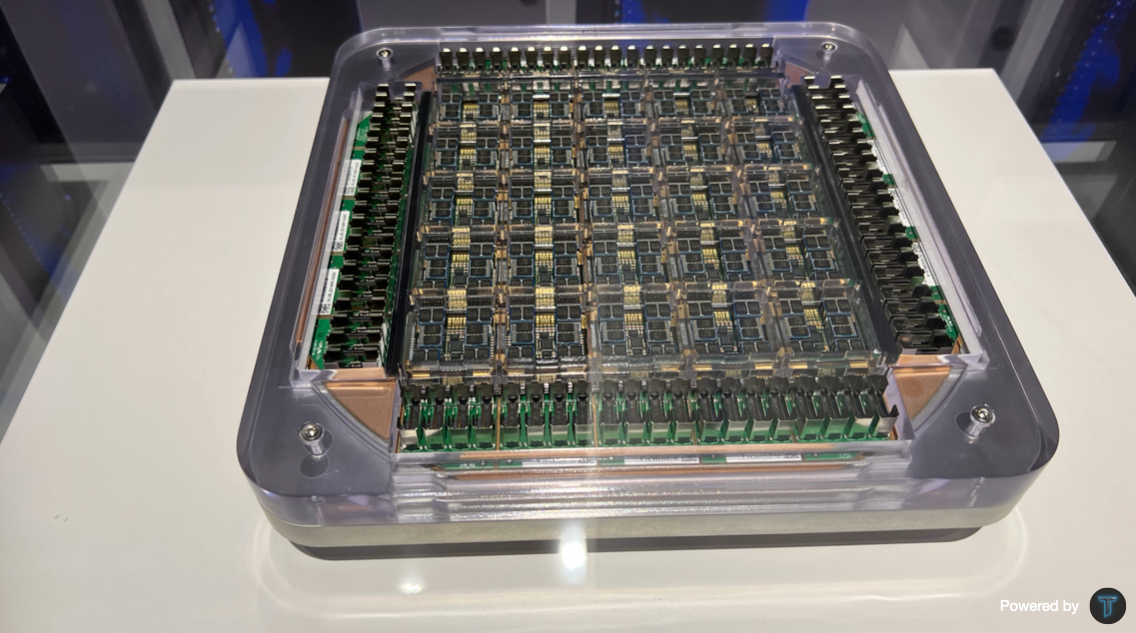
The story of Tesla’s Dojo supercomputer cannot be understood without first grasping why symbolic artificial intelligence ultimately hit a wall. That wall is best illustrated by a simple puzzle: the Tower of Hanoi.
In the 1950s and early 1960s, researchers believed intelligence could be achieved through explicit rules and logical reasoning. Herbert Simon and Allen Newell built the General Problem Solver (GPS) to demonstrate this idea. With three disks on three pegs, GPS could methodically move the stack from one peg to another by following clear rules: move one disk at a time, never place a larger disk on a smaller one. The system worked because the number of possible moves remained manageable.
The moment the puzzle grew to 64 disks, however, the approach collapsed. The number of moves required explodes to roughly 2^64 - 1. If a move were made every second, it would take more than 580 billion years to complete, and even a supercomputer evaluating one move per nanosecond would require nearly 585 years. This is not a problem of insufficient speed. It is a fundamental limit of symbolic, rule-based systems: every new variable multiplies the search space exponentially. GPS could handle narrow, well-defined problems, but it could not scale to anything resembling the real world.
This combinatorial explosion is exactly why symbolic AI entered its first winter. Expert systems of the 1970s and 1980s could perform impressively inside tightly constrained domains, but they failed when faced with the open-ended complexity of physical reality. Adding more rules only made the system more brittle, not more capable.
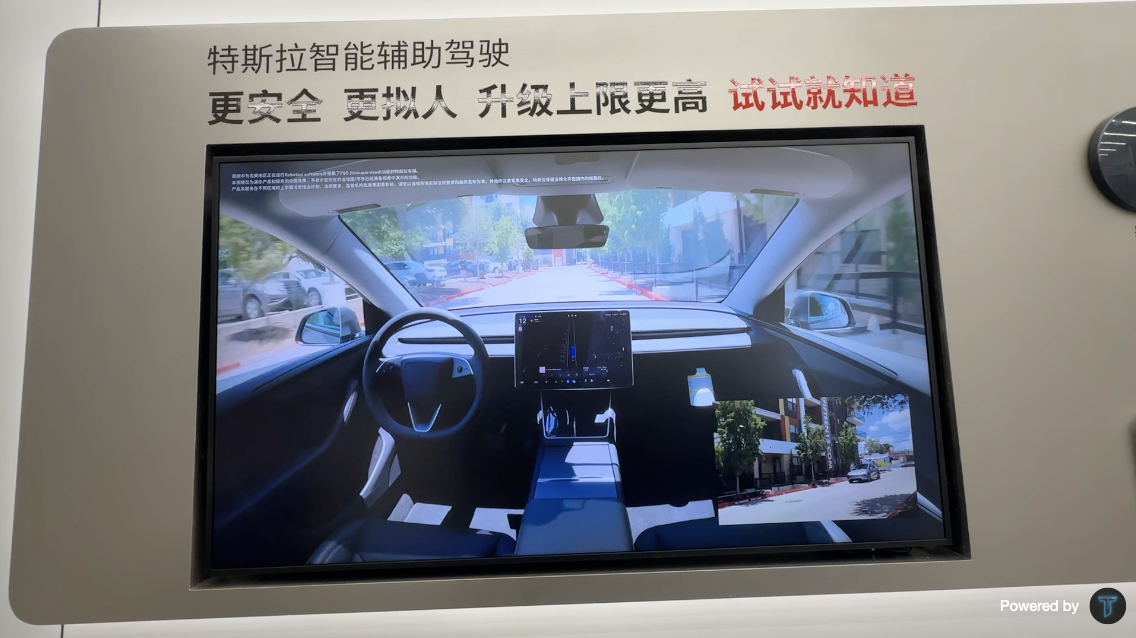
Tesla’s Full Self-Driving and Optimus programs run into the same structural problem. A rule-based autonomous driving system would need explicit instructions for every possible combination of road conditions, pedestrian behavior, weather, construction zones, and unusual events. The number of edge cases grows exponentially, just like the Tower of Hanoi with more disks. No amount of hand-coded rules can cover that space.
This is why Tesla shifted to connectionist, neural network approaches. Instead of trying to write rules for every scenario, the company trains large models on billions of frames of real-world video. The system learns statistical patterns directly from data rather than relying on exhaustive symbolic search. The trade-off is clear: neural networks require enormous amounts of compute to train, but they can generalize in ways that rule-based systems never could.
Dojo was Tesla’s attempt to build the specialized hardware needed for this data-driven path. The custom D1 chips and high-bandwidth mesh architecture were designed specifically to process the massive video datasets required to train vision-based autonomy models efficiently. In 2023 the system entered limited production use alongside large NVIDIA GPU clusters. By August 2025, however, Tesla disbanded the dedicated Dojo team. Leadership determined that the company’s newer inference-focused chips (AI5 and AI6) already delivered sufficient training performance, making a parallel custom training architecture less essential at that moment.
In January 2026 the project was revived as Dojo3, this time with a new focus on space-based AI compute. The restart reflects both the continued need for specialized hardware at extreme scale and Tesla’s broader vertical-integration strategy. Even after the 2025 pause, the company is once again investing in its own silicon rather than depending entirely on external suppliers.
The Hanoi Tower analogy remains useful here. Just as symbolic systems could not escape exponential complexity by adding more rules, modern AI cannot escape the need for massive, efficient compute by relying solely on general-purpose hardware. Tesla’s experience with Dojo shows both the necessity of custom silicon for neural scaling and the practical difficulties of building it. Whether Dojo3 ultimately succeeds in its orbital ambitions will depend on execution, but the underlying problem it was created to solve, which centers on the fundamental limits of symbolic reasoning in complex physical environments, has not gone away.
For research inquiries or collaboration, contact: ceo@technorns.com