The Physical AI Power Struggle: Musk’s Empire vs. China’s Ecosystem
AI has left the screen and entered the physical world. Musk is building a vertically integrated empire with Starlink, Starship, Optimus and xAI. China counters with system-level integration. Power, cooling and space logistics are the new bottlenecks, creating a brief window for Korean companies.
Drawing on years of on-the-ground reporting from CES, the World Robot Conference, MWC, and multiple field visits across the US and China, Lee analyzed how AI is moving from software into the physical world and what this shift means for global industries and investment opportunities.
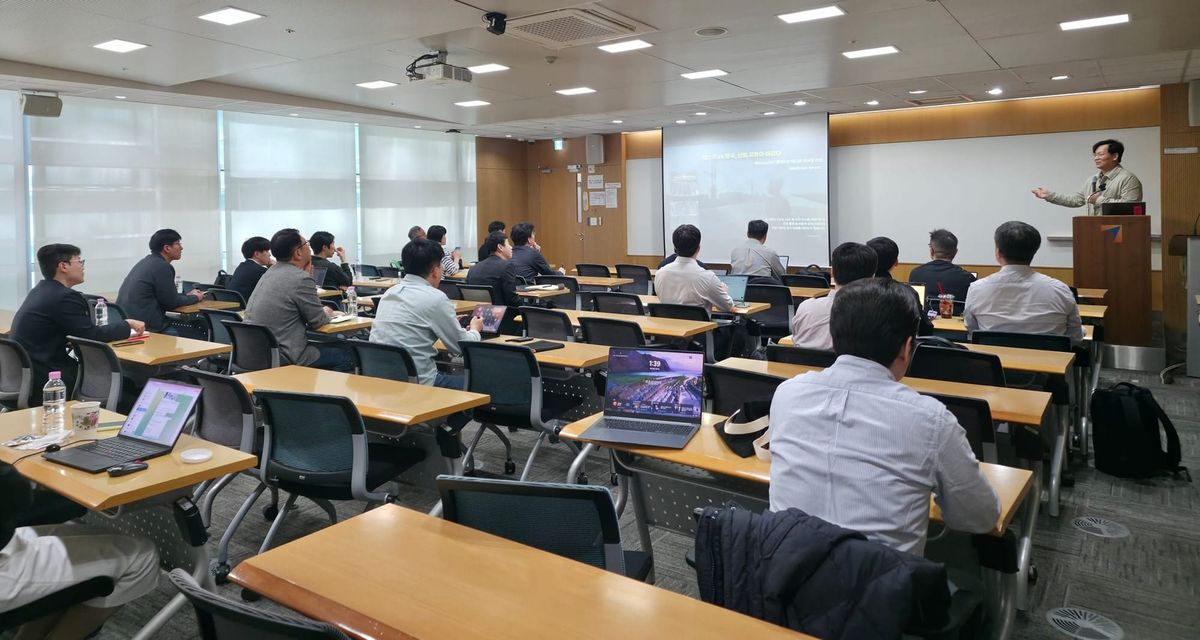
Technorns founder Sun Lee delivered a keynote to institutional investors at the Financial Investment Education Institute in Yeouido, Seoul. Drawing on years of on-the-ground reporting from CES and multiple field visits across the US and China, Lee argued that AI has moved beyond the screen. Intelligence now lives in motors, sensors, and power grids. The real competition is no longer about algorithms, but about who controls the hardware underneath.
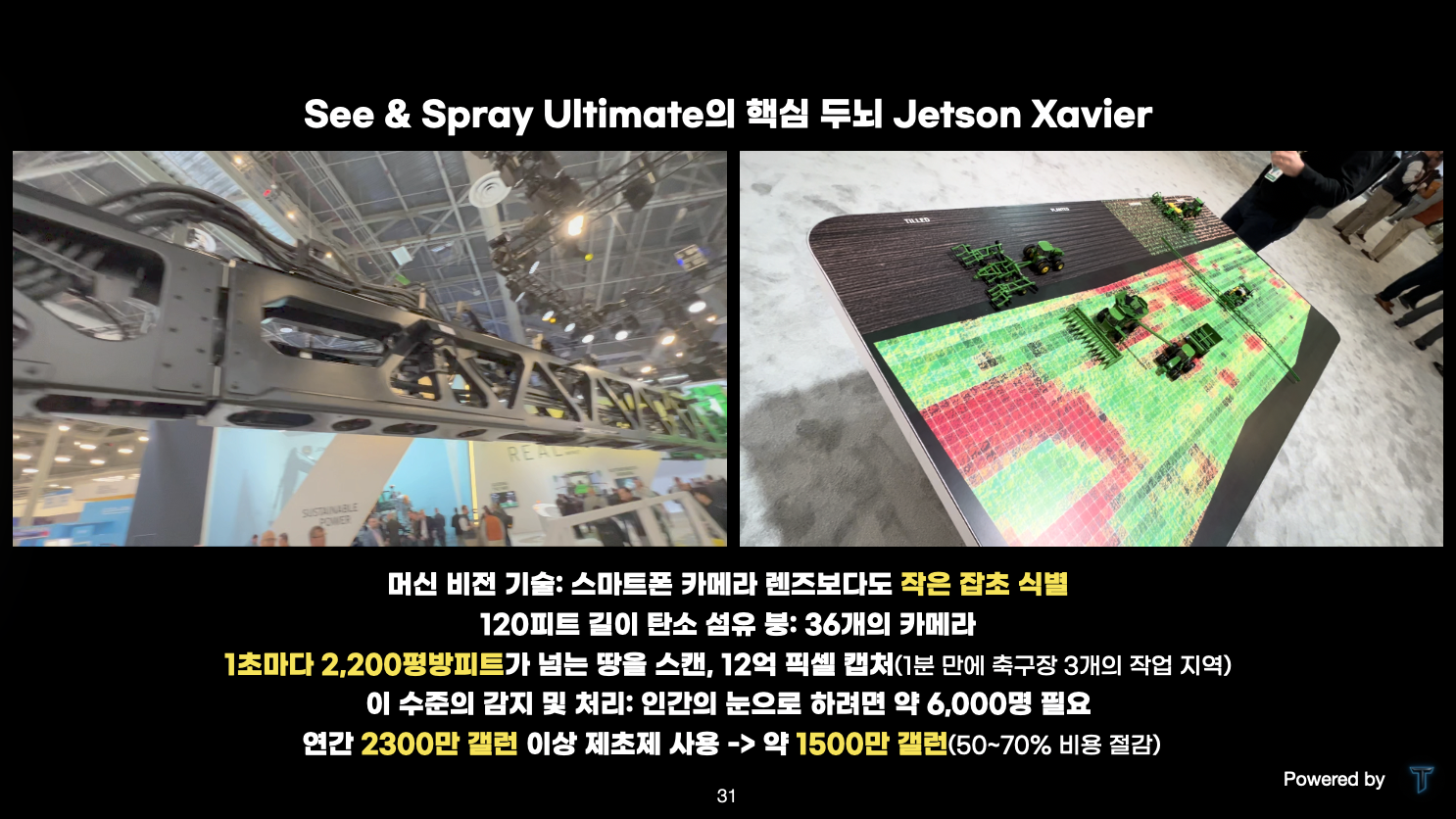
This is one of the slides from my keynote to institutional investors. John Deere’s See & Spray Ultimate, powered by NVIDIA Jetson Xavier, uses 36 cameras on a 120-foot boom to scan more than 2,200 square feet per second. It identifies individual weeds in real time while sparing the crops. The result is a 50-70% reduction in herbicide use, cutting annual consumption from 23 million gallons down to about 15 million gallons. A clear example of Physical AI delivering real economic and environmental value in agriculture.
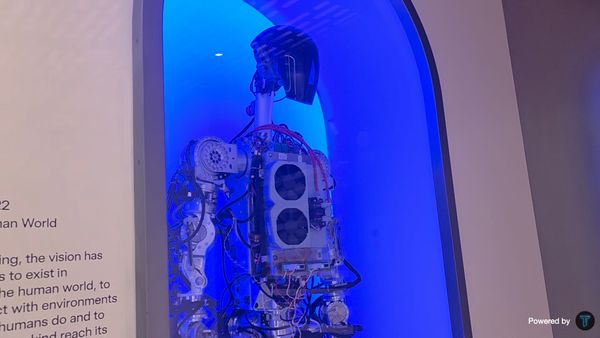
The talk explored four key threads. First, how AI has escaped the digital realm and become physical, shifting the battle from software to hardware dominance. Second, Musk’s vertically integrated blueprint: Starlink and Starship for logistics, Optimus and FSD for the body, and xAI for the brain, blurring the lines between industries.
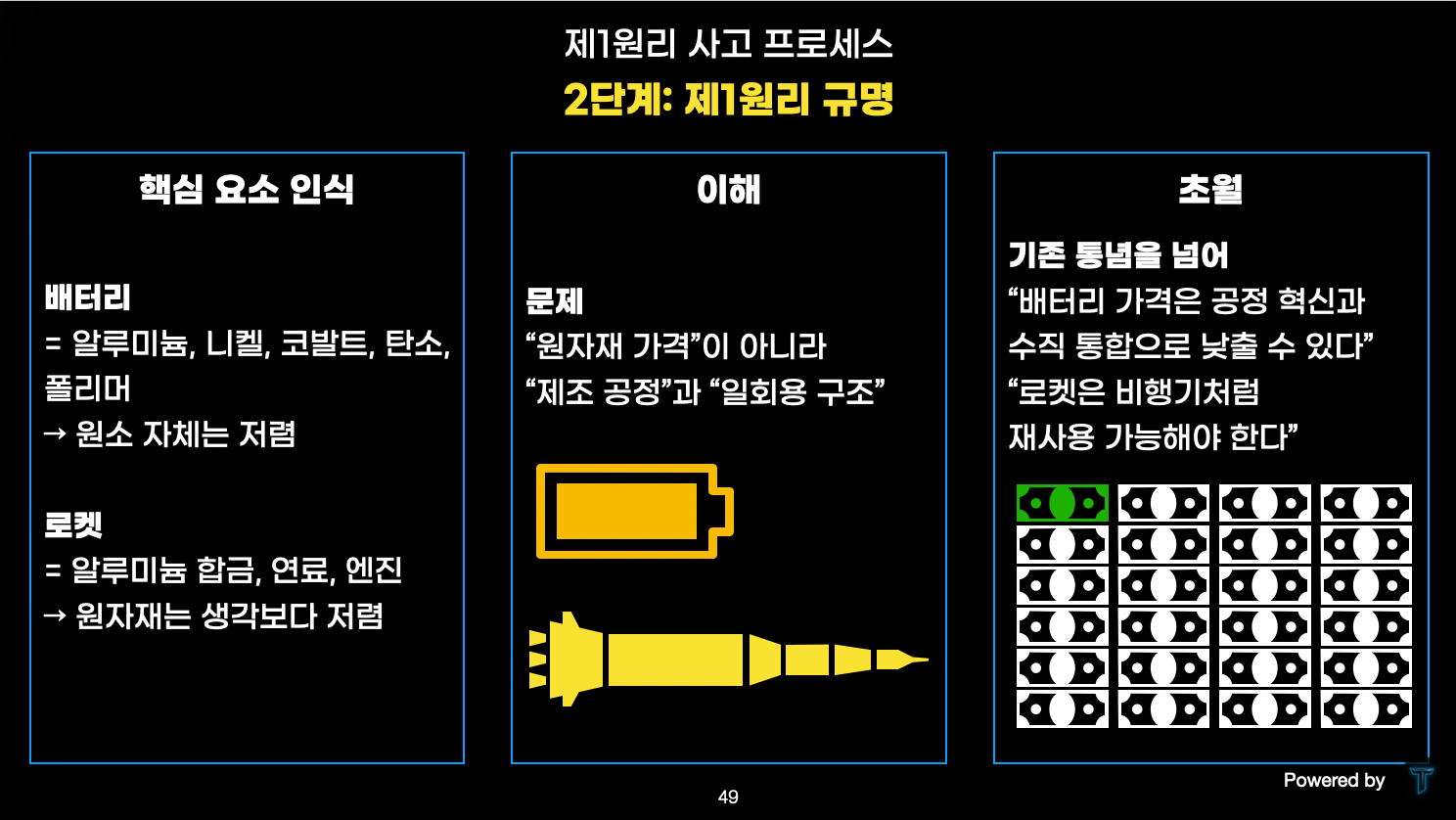
This slide from Sun Lee’s keynote explains Elon Musk’s five-step algorithm using First Principles Thinking. It breaks down a battery and a rocket to their basic materials: aluminum, nickel, cobalt, carbon and polymers for the battery, and aluminum alloys, fuel and engines for the rocket. The raw materials themselves are much cheaper than commonly assumed. The real challenge lies in manufacturing processes and overall design integration. True breakthroughs come when we go beyond conventional wisdom, making batteries affordable through process innovation, and designing rockets to be reusable like airplanes.
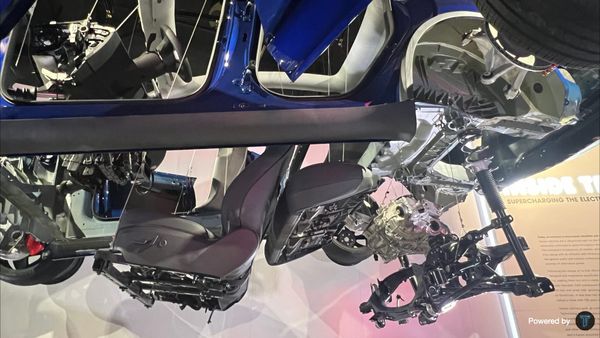
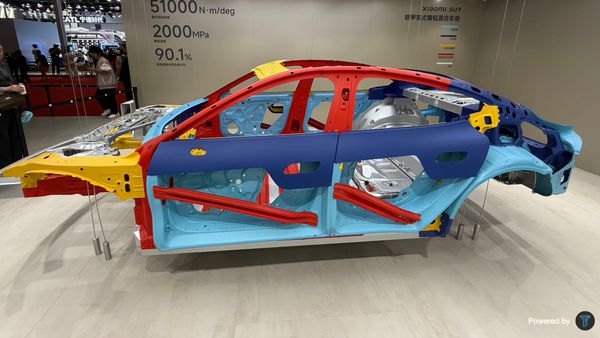
Third, China’s counter-strategy: leveraging system-level integration, as seen at Geely and Xiaomi, to connect cars, satellites, appliances, and AI into a single commercialization engine.
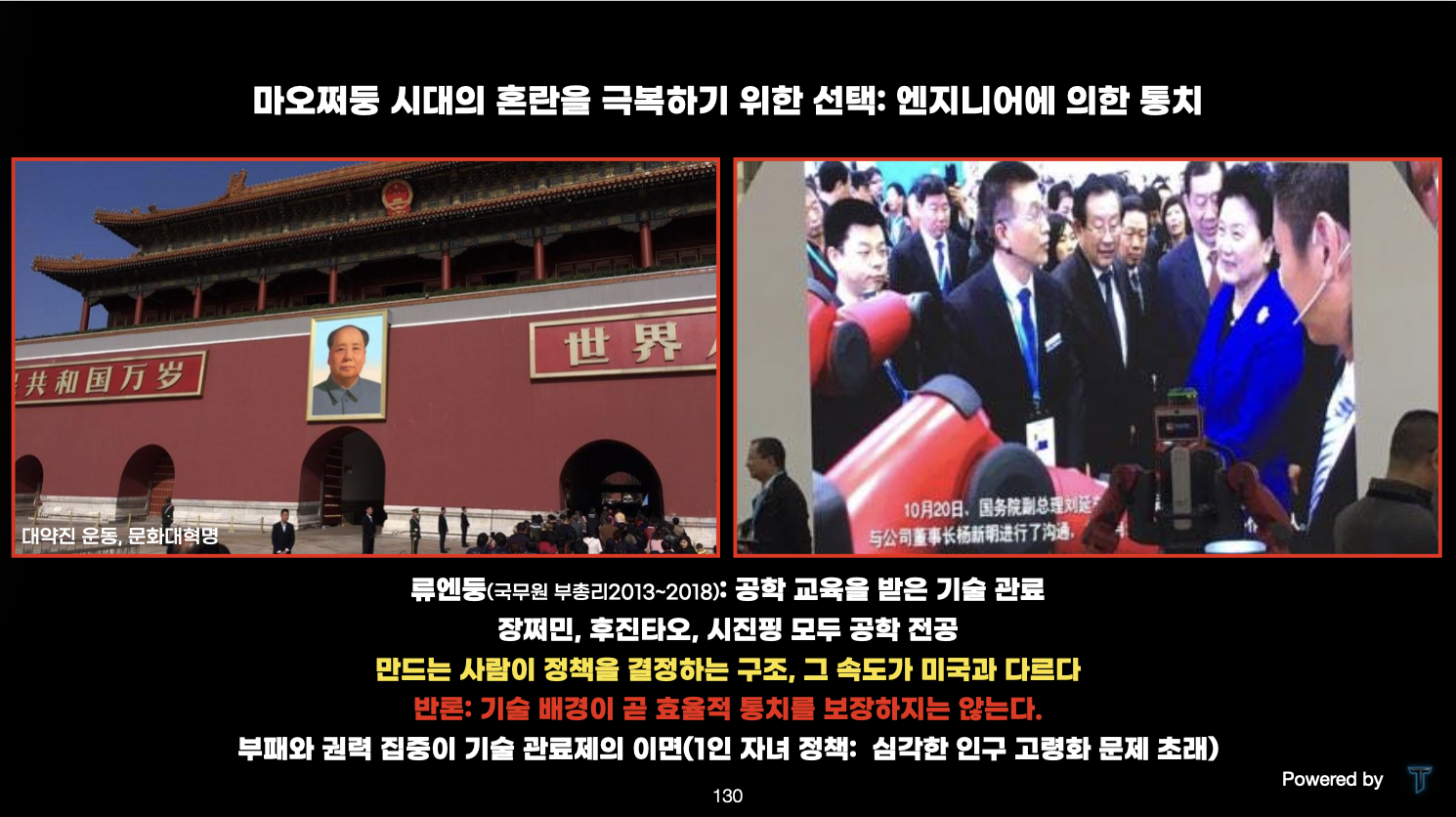
This slide from Sun Lee’s keynote illustrates how China overcame the chaos of the Mao era by placing engineers in key governance roles. Leaders such as Liu Yandong (former Vice Premier), Hu Jintao, Wen Jiabao, and Xi Jinping all have engineering backgrounds. In China, engineers frequently shape policy decisions, a structure that differs significantly from the United States. While this technical expertise accelerated industrialization, it does not always ensure effective governance, as seen in the long-term consequences of the one-child policy.
Finally, the emerging bottlenecks of power, cooling, and space logistics, and the narrow window this US-China rivalry creates for Korean companies.
Technorns goes to the field first, then explains what it all means for the industry.