The Sovereignty Blueprint: How Modular Economies Threaten the Silicon Pipe
How China's 6.8M base stations and open satellite modules challenge Starlink's monopoly.

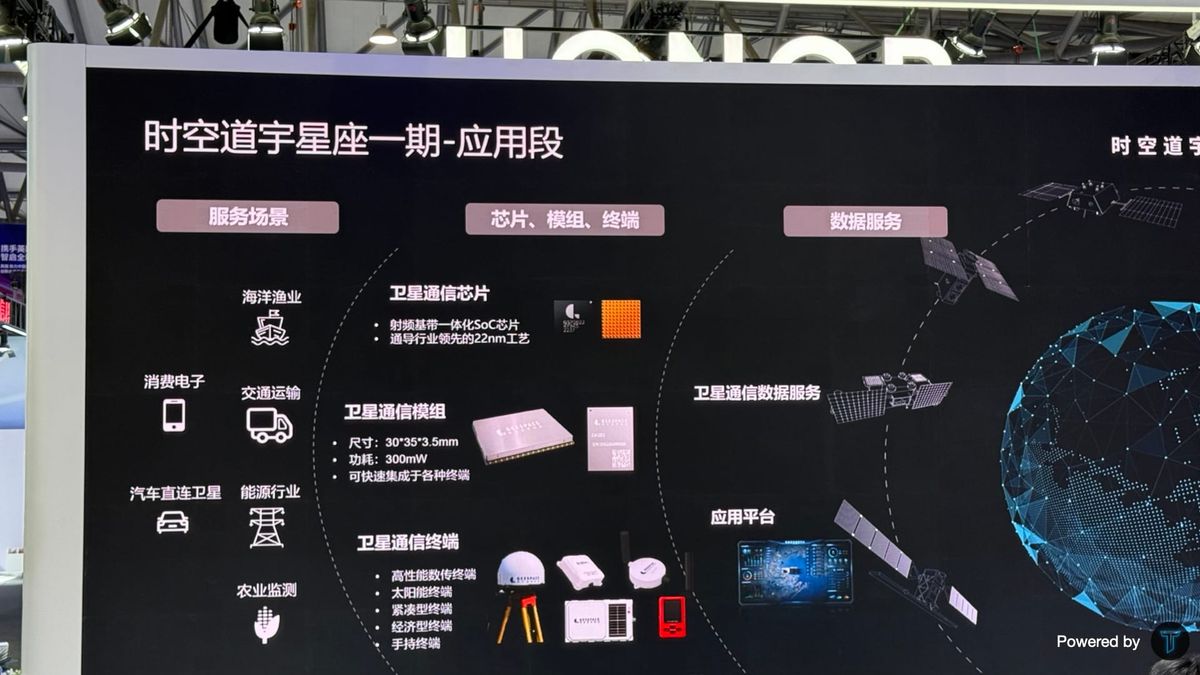
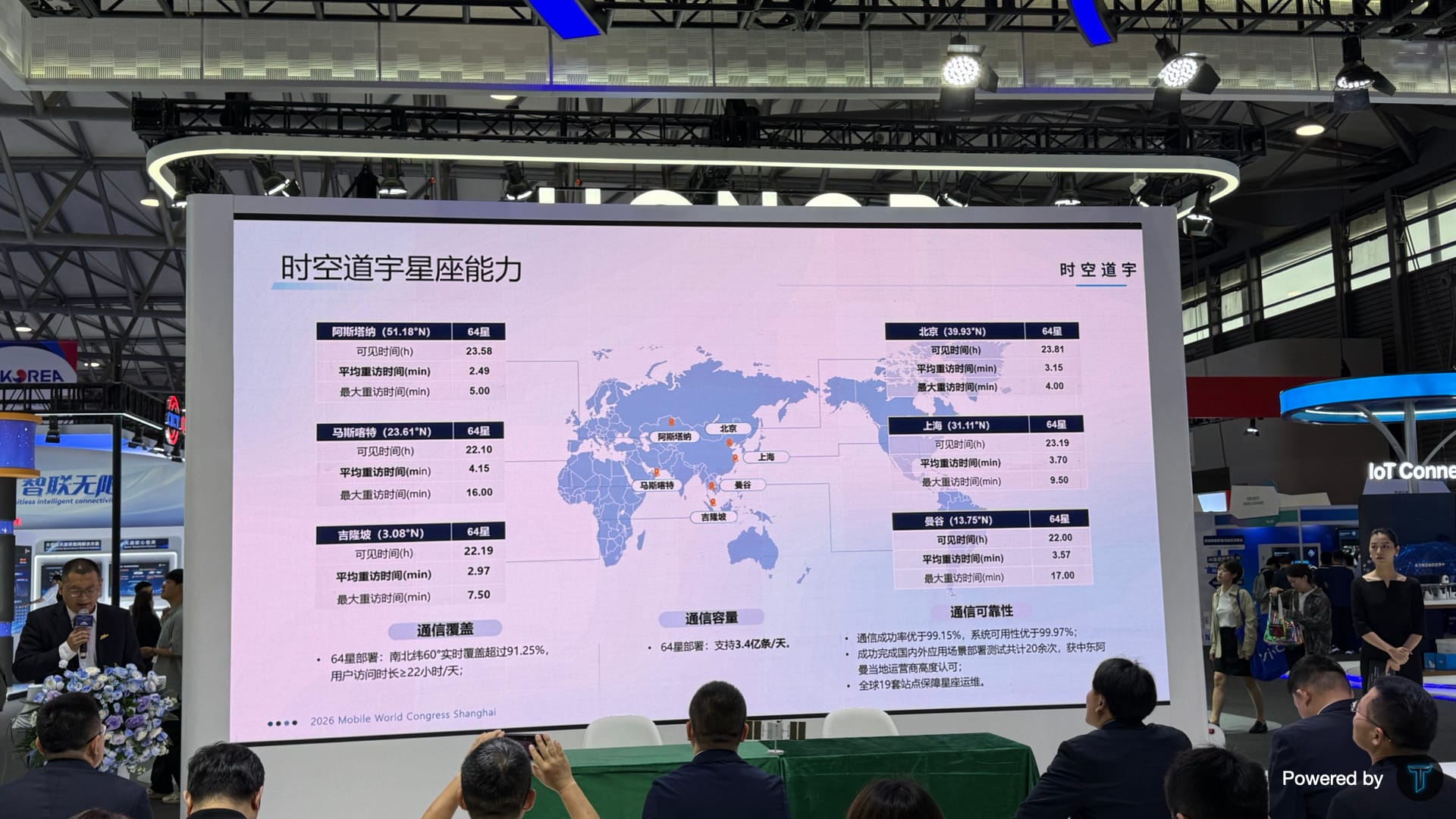
The structural edge SpaceX holds has always been credited to extreme vertical integration. By manufacturing subsystems in-house, control over cost and deployment speed remains absolute. Yet, at MWC Shanghai 2026, Chinese aerospace and telecom entities demonstrated an alternative philosophy tailored to exploit the single vulnerability of a vertically integrated giant: the global demand for sovereignty and the rapid commoditization of hardware.
The shift is capture in an architectural document displayed by Geespace, titled the Constellation Ecosystem Openness Framework. Arranged as a five-tier pyramid, the model outlines a highly accessible ecosystem. While the lower tiers dictate the licensing of chips and modules to commercial verticals, the top of the pyramid introduces a model Starlink cannot match: ground segment sovereignty. Geespace offers strategic international partners the ability to build localized gateway stations, ensuring all data remains stored natively within their national borders under full domestic carrier control.
Starlink's closed system transits traffic through SpaceX-controlled gateways, meaning the ultimate switch remains in Hawthorne. For sovereign governments in Southeast Asia or the Middle East concerned with national security, an integrated, unalterable silicon pipe controlled by a foreign private entity introduces an unacceptable layer of strategic risk. China is turning data sovereignty into a primary product.
Simultaneously, the technical barrier to building space hardware is being lowered via catalog modularity. E-commerce portals like geesatcom.com now list standardized satellite subsystems with complete transparent specifications. An integrated avionics unit delivering 60 million instructions per second with 128 gigabits of storage can be acquired at sub-3.6 kilogram weights drawing less than 10 watts. While 60 MIPS matches space processors from two decades ago, high performance is not the goal. Modularity changes satellite manufacturing from an advanced aerospace engineering feat into a low-barrier assembly job.
Furthermore, the integration of these space components with terrestrial AI and emerging 6G infrastructure introduces a long-term commercial shift. At the Beijing 6G Laboratory exhibit, partners like Qualcomm and Samsung outlined a mobile roadmap shifting from the industrial internet toward the Agent Internet, designed around extended reality and embodied AI. Because autonomous robots and automated systems must continuously upload environmental telemetry, the architecture demands massive uplink capabilities.
Starlink’s residential metrics focus primarily on a 225 megabit download pipe. China's alternative mega-constellations, Qianfan and Guowang, remain tiny by comparison, controlling a combined 430 satellites against Starlink’s 9,600. However, by focusing on embedding commoditised satellite modules into automotive and robotic supply chains while guaranteeing domestic data control, they are angling to capture the high-margin computing endpoints of the next industrial wave. If Starlink remains a general broadband pipe while the high-value data endpoints shift to modular, sovereign ecosystems, the long-term margin profile of the Western space monopoly will face its first true external test.
For research inquiries or collaboration, contact: ceo@technorns.com