Tracing a Century of Rockets
Financial statements record the past. The factory floor shows the future. Inside SpaceX, from Goddard's 1926 rocket to the Nasdaq listing.

From Incheon to Starbase
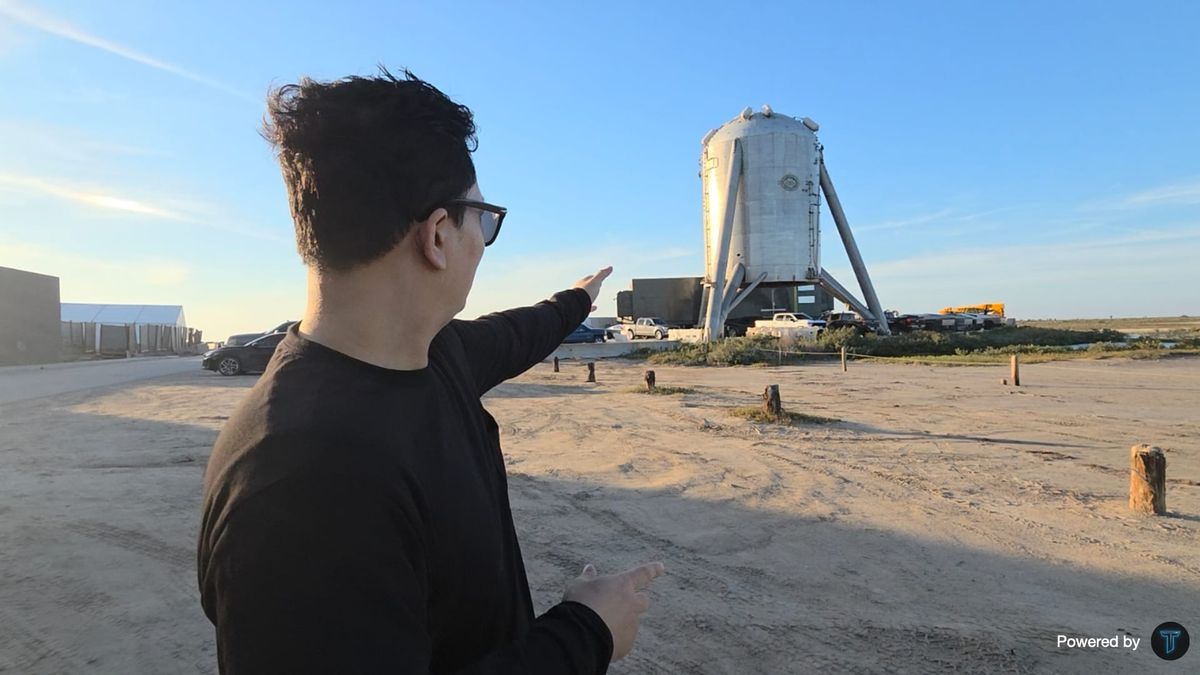
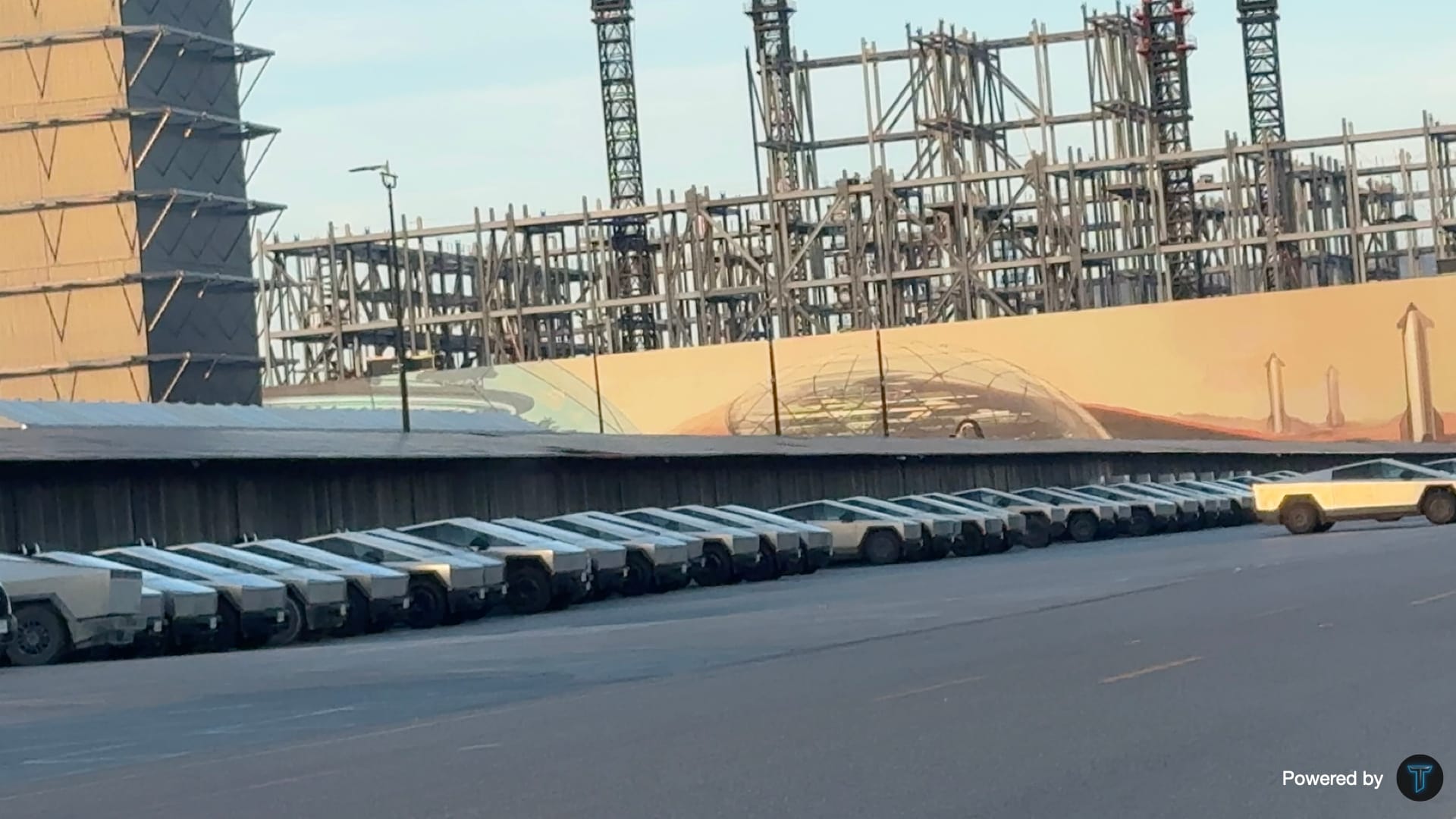
In January 2026 I drove past Brownsville, the southernmost city in Texas, pressed up against the Mexican border, and turned onto State Highway 4, the road locals call Boca Chica Boulevard. The biggest change from a year earlier wasn't the rocket. It was the parking lot, filled with hundreds of identical Cybertrucks in rows, all hard angles and bare stainless steel.
Behind them a vast steel skeleton was going up. This was Gigabay, a new Starship assembly and refurbishment building rising next to Starfactory. The company says it will have more than ten times the working area of Megabay, with 24 work bays, and is targeted for completion by the end of 2026. Elon Musk has said that once it's finished it will be able to assemble three Starships a day, a thousand a year. That is the stated goal for a building that doesn't exist yet.
If I hadn't visited Starbase four times over two years and watched the place change, I would have filed that claim under fantasy. This book is a record of going to look, in person, at whether humanity can actually leave Earth and settle somewhere else.
Hear enough negative coverage of SpaceX and you can miss what is actually being built. But meeting more insiders doesn't get you closer to the truth of the company either. The core technology is locked down under ITAR (International Traffic in Arms Regulations), with an NDA layered on top. Published copies of SpaceX NDAs require a signing party to notify the company before disclosing confidential information, giving it a chance to seek a protective order. Between statute and contract, very little leaks. It's why most of the notable American books on SpaceX were written by outside journalists, with insiders appearing as sources rather than authors.
Reporting from the outside means working with observation and public documents. To get density in that space, you have to go there. So every year I travel to Starbase, on the US-Mexico border, and study what I can see: the launch mount, Starship, Mechazilla, the Super Heavy booster, the water deluge system. Some things you only get by standing in front of them.
The questions I brought back from Starbase, I worked out elsewhere, interviewing specialists at conferences and industry events in China, Germany, and Japan, and through the technical due diligence I perform on space, AI, and robotics companies.
In 2003, the rocket expert Marshall Kaplan told the Los Angeles Times how to become a millionaire in the launch business: start with a billion dollars. It was a joke at the expense of Musk, who had put $100 million of his PayPal proceeds into founding SpaceX.
By mid-2024, SpaceX was valued at roughly $210 billion. In February 2026, when the merger with Musk's AI startup xAI was announced, the combined valuation was put at $1.25 trillion.
Twenty-three years later, the joke had inverted. What's rarer is someone who can explain precisely why Kaplan was wrong, and how Musk made the joke obsolete. Markets know the outcome, but the process that produced it is mostly invisible from the outside. Closing that gap is what this book is for.
Financial statements record the past. The factory floor shows you the future. That's my conclusion after visiting more than a thousand plants and labs for due diligence, and after evaluating over a hundred companies expanding overseas as of May 2026.
It's the same reason that, writing Tesla Master Plan, I spent three years following the trail from the Fremont factory to teardown floors in Germany. The first time I saw a cross-section of the Cybertruck's Gigacasting, Tesla's oversized high-pressure die-casting process that turns much of a vehicle body into a single aluminum casting, dozens of parts and hundreds of welds had simply vanished into one piece. Cost reduction, visible to the eye. SpaceX had to be looked at the same way.
In January 2025 I went to Starbase for the first time. Eleven hours from Incheon to Los Angeles, another three and a half to Houston, then roughly 630 kilometers by car. Heading south on US-77, a freight train ran alongside me for a long stretch, more than two hundred cars of steel with no end in sight. What Musk is building, it occurred to me, isn't one exquisite rocket. It's that train: a production line of Starships hauling cargo to orbit without end.
The first city built for Mars
Starbase sits right off the road. NASA's Kennedy Space Center is a controlled zone, and Vandenberg is a military installation. Starbase has no ticket, no guided tour, no polished visitor center. From a public road, a few meters away, you can watch actual Starships being stacked, tested, and launched.
The Super Heavy booster was there. Put a Starship on top and the stack clears 120 meters, close to half the height of Seoul's 63 Building at 249 meters. Except the 63 Building stands downtown and Super Heavy stands at the edge of the sea. Eyes trained on Seoul apartment blocks have trouble with the proportions.
The ground it stands on became an official city in May 2025. Residents voted 212 to 6 in favor of incorporation, among registered voters. Starbase is that rare thing in America, a town founded outright by a company. Around 500 people live there, mostly SpaceX employees and their families. The town's central industry is the settlement of Mars. Six years ago it was sandflats.
Just north of the road at the entrance to the launch site stands Starhopper, Starship's first test article, the prototype that flew a low-altitude hop on a single Raptor engine in 2019. It's retired now, parked at the roadside with no museum around it and no fence. NASA would have put it behind glass. SpaceX left it where it stands and moved on to the next test article.
Not everyone welcomes that pace. Starbase is ringed by wildlife refuge. In 2024 the Environmental Protection Agency notified SpaceX of Clean Water Act violations, and the Texas Commission on Environmental Quality investigated unpermitted industrial wastewater discharge and levied a $3,750 penalty. A survey after a launch that June found that eggs in plover and least tern nests within 400 meters of the pad had all been lost or damaged.
In its 2025 environmental assessment for raising SpaceX's launch cadence to 25 per year, the Federal Aviation Administration issued a finding of no significant impact, conditioned on mitigation measures. Regulators and environmental groups still read the evidence differently. Whichever side is right, the argument assumes that staying on Earth is humanity's only option. A species that has bet everything on a single planet, trying to escape a crisis of its own making, has to break that assumption somewhere. That this stretch of empty ground by the sea is where it starts is either an irony or an inevitability.
The engine the financials don't show
In 2026, the company that launched the most powerful rocket in history from that empty lot finally got a price tag. On June 12, 2026, SpaceX listed on the Nasdaq under the ticker SPCX at $135 a share, valuing it at roughly $1.77 trillion. It raised about $75 billion, the largest IPO in history, surpassing Saudi Aramco in 2019.
The stock closed its first day up 19 percent at $160.95. Four days later, on June 16, it touched $225 intraday and briefly passed Amazon and Microsoft.
That was the peak. On June 22 it fell 16.4 percent in a single session to $154.60, and the next day traded below its debut price, down roughly 31 percent from the high, with some $600 billion in market value gone. A $20 billion bond issue and the opening of options trading, which made short selling possible, arrived at the same moment. Less than 5 percent of shares were in public float, so even modest selling moved the price hard.
The market's arithmetic got busier after that. Starlink revenue, Falcon 9 launch counts, and xAI merger synergies piled up on one side. On the other sat the fact that the company still isn't profitable and that its valuation has run far ahead of its results.
On July 10, 2026, a Long March-10B first stage lifted off from Hainan, China, and was caught in netting on the deck of a recovery vessel, using hooks on the airframe instead of landing legs. CASC called it the country's first controlled recovery of a launch vehicle stage. At that same moment SpaceX's cumulative Falcon booster landings had passed 600. In 2025, Falcon 9 alone flew 165 times while all of China flew 92. Net capture isn't the path SpaceX chose, but the objective is the one Falcon 9 proved: land the first stage, refurbish it, fly it again. Many of China's new vehicles copy Falcon 9 down to the landing legs and grid fins. When a nation-state replicates a methodology one company pushed for 24 years, that is evidence the methodology was right.
On July 29, 2026, in Seoul, Carlos García-Galán, who leads NASA's Moon Base program, took the stage at an event organized by KASA. He put up a rendering of a three-phase lunar base and said it was only what we imagine today, that he didn't want to lock himself into a particular vision. NASA is leaning on things like SpaceX's Starship, he said. Starship might carry around 100 tons of cargo, and Blue Moon might send uncrewed assets far more often. If those go better than expected, the picture on the screen could change entirely.
Afterward I asked him whether Moon Base phase two depends on orbital propellant transfer. He said yes. Then doesn't that put it on Starship? Only the part about putting people there, he said. Starship hasn't demonstrated propellant transfer yet, so what's the alternative if the schedule slips? His answer was short: "As far as Starship goes, we're not even counting on it yet." Phase one doesn't need it, and they'll know about phase two in advance. Within a year they'll know what the challenges of propellant transfer are, and if it looks like it won't work, that's when they can start building alternatives. Then he added that he has considerable confidence in what they can pull off. "They do insane things."
Read SpaceX only through numbers and you make Kaplan's mistake in reverse. Kaplan underrated Musk, and parts of the market now risk overrating him. Both errors come from not knowing where this company came from.
Starship did not appear out of nowhere. It is what became of a small liquid-fueled rocket that rose 12.5 meters from a Massachusetts cabbage field in 1926, carried across a hundred years. A photograph of the man who launched it, Robert Goddard, hangs on an office wall at SpaceX headquarters in Hawthorne, California.
In between, the V-2 was developed as a weapon at Peenemünde, and Wernher von Braun, who built it for Germany, crossed to the enemy United States and built the Saturn V that put the first humans on the Moon. The Space Shuttle, flying out of Kennedy Space Center, was the first partially reusable spacecraft. Because engines and heat shield tiles had to be pulled and serviced by hand after every flight, its costs climbed until the word "reusable" came to mean expensive. That failure is what provoked Musk. SpaceX's Falcon 1 failed three times in a row before reaching orbit just as the company was running out of money. Falcon 9, built on top of it, redefined what reusable means.
A soot-streaked booster lifting off again. A stainless-steel hull with hexagonal heat shield tiles taking reentry heat in a test. Mechazilla's chopstick arms plucking a booster out of the air. These are different answers to the same question: how do you launch rockets often, build them cheaply, and send them back to where they started?
The thinking behind the answer is surprisingly plain. Question every requirement. Delete parts and process steps. Simplify what's left. Speed it up. Automate last. Those five steps, which Musk has repeated on factory floors, are the formula for the motion this company has been accelerating for 24 years.
Now the market is trying to price it. Most of SpaceX's revenue comes from Starlink, its satellite internet service. NASA uses the company because it has no good alternative for getting people and cargo to the space station. Nvidia came for a different reason. In October 2025, Jensen Huang traveled to Starbase in south Texas to hand Musk an AI supercomputer. Putting chips in orbit eventually requires a rocket, and when the cost of lifting a kilogram falls far enough, the answer to what you put on top of it changes.
This book follows that century. It is not an investment guide, and it does not argue whether the company's valuation is right or wrong. It deals with what you need to know to read that number properly.
Looking up at the launch mount, I thought: Starship isn't finished. Gigabay next to it isn't finished. The road is a mess. And yet this unfinished scene may say more than a finished one would. Whether that's true is answered on a blueprint that has been drawn over a hundred years, starting in 1926.
For research inquiries or collaboration, contact: ceo@technorns.com