What Matters More Than a Fascinating Exterior
A booth full of gorgeous hardware, and one question nobody there was asking out loud: what's actually going to launch any of it?

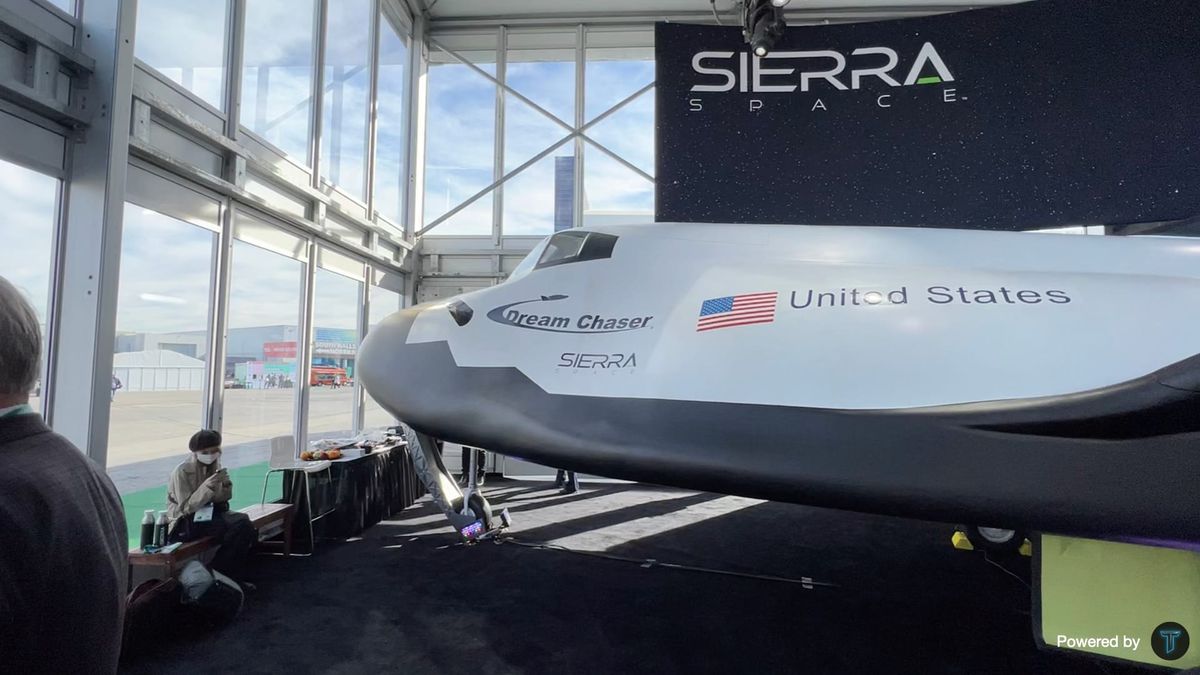
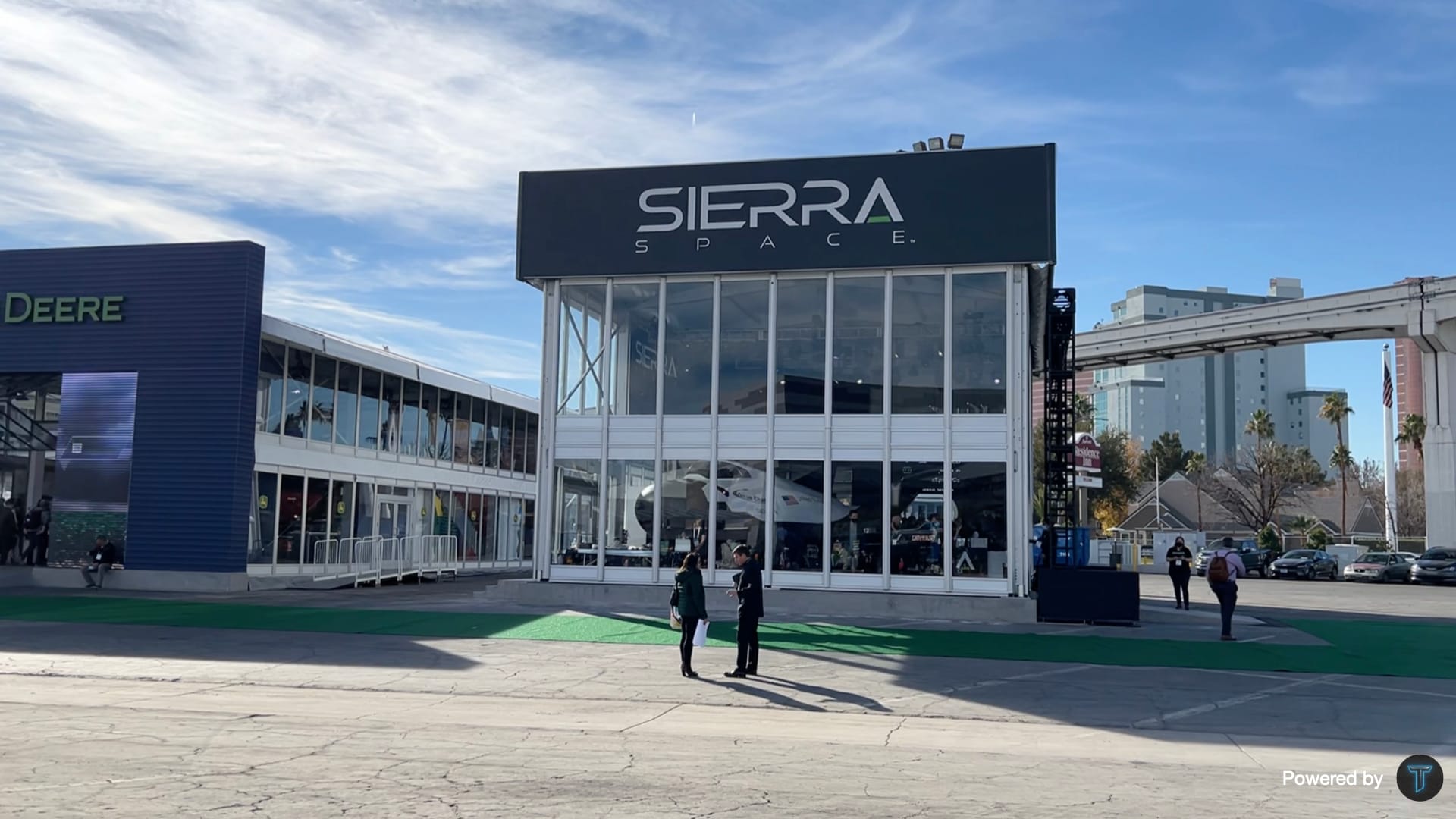
At CES 2022, on the floor of the Las Vegas Convention Center, one booth stopped me.
That year the show added space tech as a new category, the first of its kind since CES began in 1967. Space took its place beside transportation, digital health, and sustainability as one of the four ideas the floor kept returning to.
Inside the Sierra Space booth, a company's entire vision of orbit was laid out at once. A full-scale Dream Chaser sat in runway posture, its name meaning something like a chaser of a truck-sized dream. It looked like a space shuttle shrunk down, and in a sense it was one, a descendant of the HL-20 lifting body NASA studied in the 1980s and 1990s. The shuttle ran 37 meters long with a 23-meter wingspan and carried 25 tons. Dream Chaser is 9 meters, 7 meters across, 5.5 tons of payload, roughly a quarter of its ancestor.
Beside it hung a rendering of Orbital Reef, a commercial station. Its cutaway showed a three-story LIFE module, about 8.2 meters in both diameter and length, with a vertical farm growing inside. LIFE rides to orbit folded and inflates once it arrives.
A spaceplane that lands on a runway like an airplane was genuinely something to see. SpaceX brings its Dragon home a different way, a round capsule under parachutes that drops into the ocean. A recovery ship has to fish the capsule out and tow it back to port before anyone can reach the samples inside.
Two black Sierra Space suits stood nearby. One panel ran through the company's résumé. More than thirty years of spaceflight heritage. Over four thousand systems supplied. More than five hundred missions. Fourteen Mars missions. The panel was seductive. It also hid one thing. Where was the rocket to put any of it into space?
On my second lap around the booth, that question stayed with me. The gracefully gliding vehicle, the plush inflatable home, the well-made suits. All of it was design and nothing more unless someone stood a booster back up and brought launch costs down hard. Sierra Space's whole vision rested on a single assumption, that all of this could be lifted to orbit cheaply enough.
Here is the irony. In 2014, Mark Sirangelo, then a vice president at Sierra Nevada Corporation, the parent company, took a public shot at SpaceX. He noted that Dragon needed something like thirty hours from splashdown to sample recovery. A runway landing, Sierra Nevada promised, would cut that to thirty minutes. In sixty years of capsules, he pointed out, none had ever been reused and flown to space again. Others might reuse hardware, but putting people back on top of it was a long way off.
The company that was so skeptical of SpaceX then lost the 2014 NASA commercial crew contract (CCtCap) to Crew Dragon and Boeing's Starliner. Its protest to the Government Accountability Office was denied. Dream Chaser survived by becoming a cargo craft in 2016, promised at least six resupply runs to the station under NASA's CRS-2 contract, later raised to seven.
The first flight was meant for 2021. The first Dream Chaser, Tenacity, reached the Kennedy Space Center in May 2024. But its ride, ULA's Vulcan Centaur, lost a nozzle from one of its two solid rocket boosters on its second certification flight in October 2024. Five months of investigation followed, and the rocket earned its security certification in March 2025, while Dream Chaser's first flight slipped to 2025, then to late 2026.
Certification did not settle it. On February 12, 2026, on Vulcan's second national security mission, USSF-87, a nozzle burned through and fell away again, this time from one of four boosters. The same defect from the 2024 flight had returned. The payload still reached its intended geostationary orbit, and the defect went back under investigation for months.
Sirangelo's argument was elegant. But a fascinating exterior does not answer the only question that matters. Which rocket lifts the spacecraft, and can it be done cheaply enough to matter.
For research inquiries or collaboration, contact: ceo@technorns.com