When Moore's Law Stops, SpaceX Looks Up
NVIDIA Rubin vs Blackwell: extreme co-design, six new chips, and why AI's real bottleneck is power.

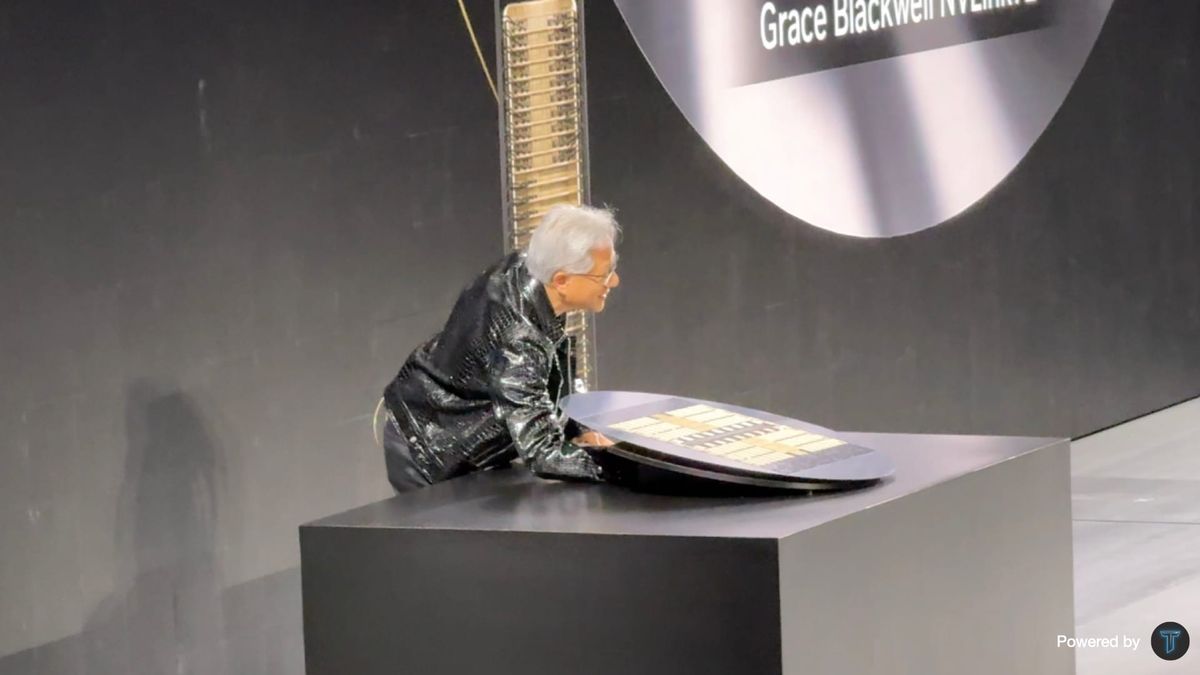
Las Vegas, January 2025. From thirty meters away, I watched Jensen Huang cross an arena stage in his black leather jacket, holding a silver disc in front of him like a shield. It was a sculpture of the GB200 NVL72, the whole rack compressed into what looked like a single wafer of silicon. He told the room that Nvidia's systems were advancing faster than Moore's Law. Standing in front of that stage, I understood for the first time that the ceiling on AI had stopped being an algorithmic problem and become a physical one.
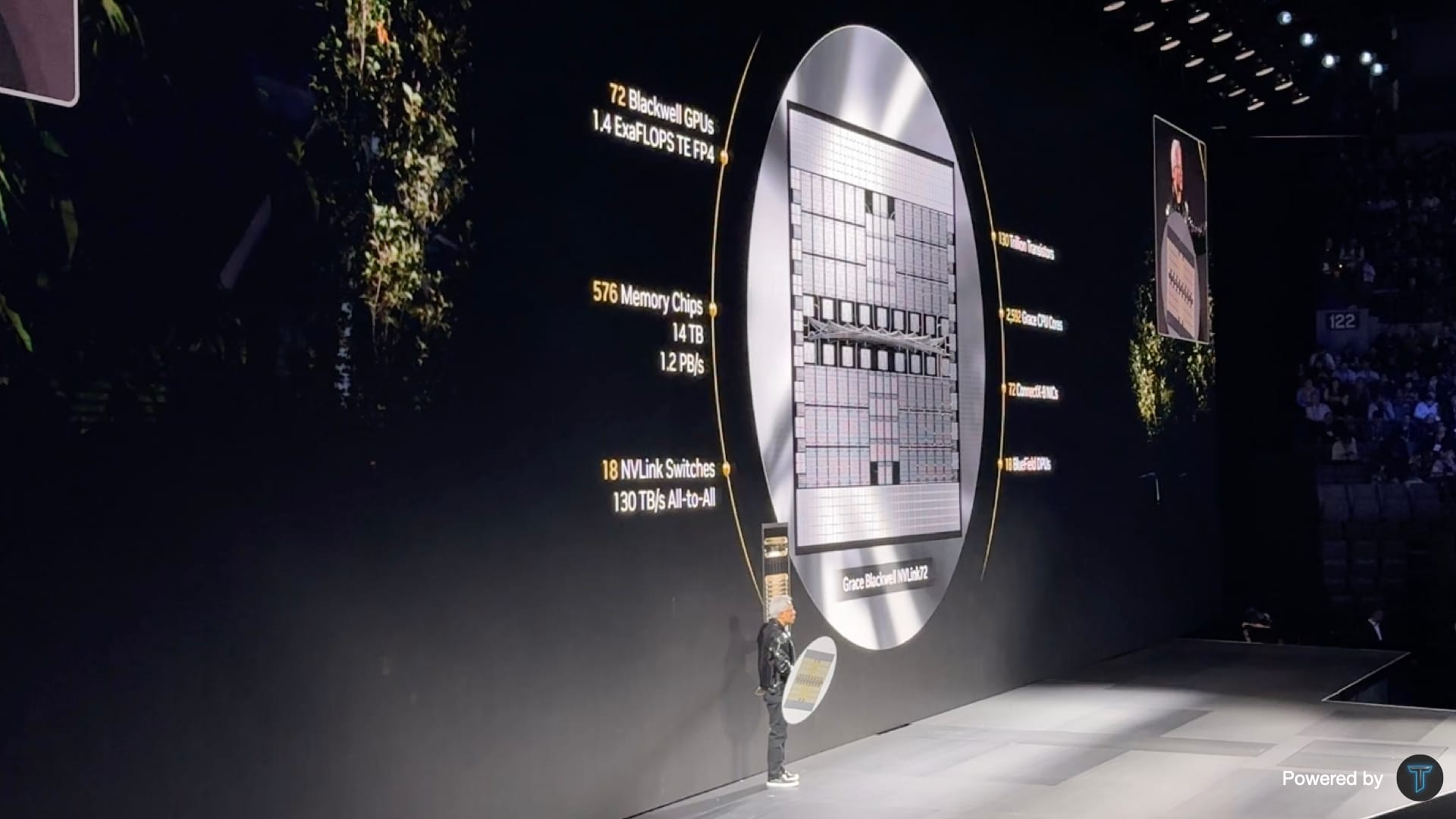
Moore's Law was first stated in 1965 by Gordon Moore, then director of research at Fairchild Semiconductor. In 1975 he refined it into the version the industry lived by: transistor count doubles roughly every two years. For decades that sentence functioned as a warranty on hardware progress. The warranty is now expiring. Rubin, Nvidia's next-generation GPU, carries roughly 1.6 times the transistors of Blackwell. That is a long way from doubling.
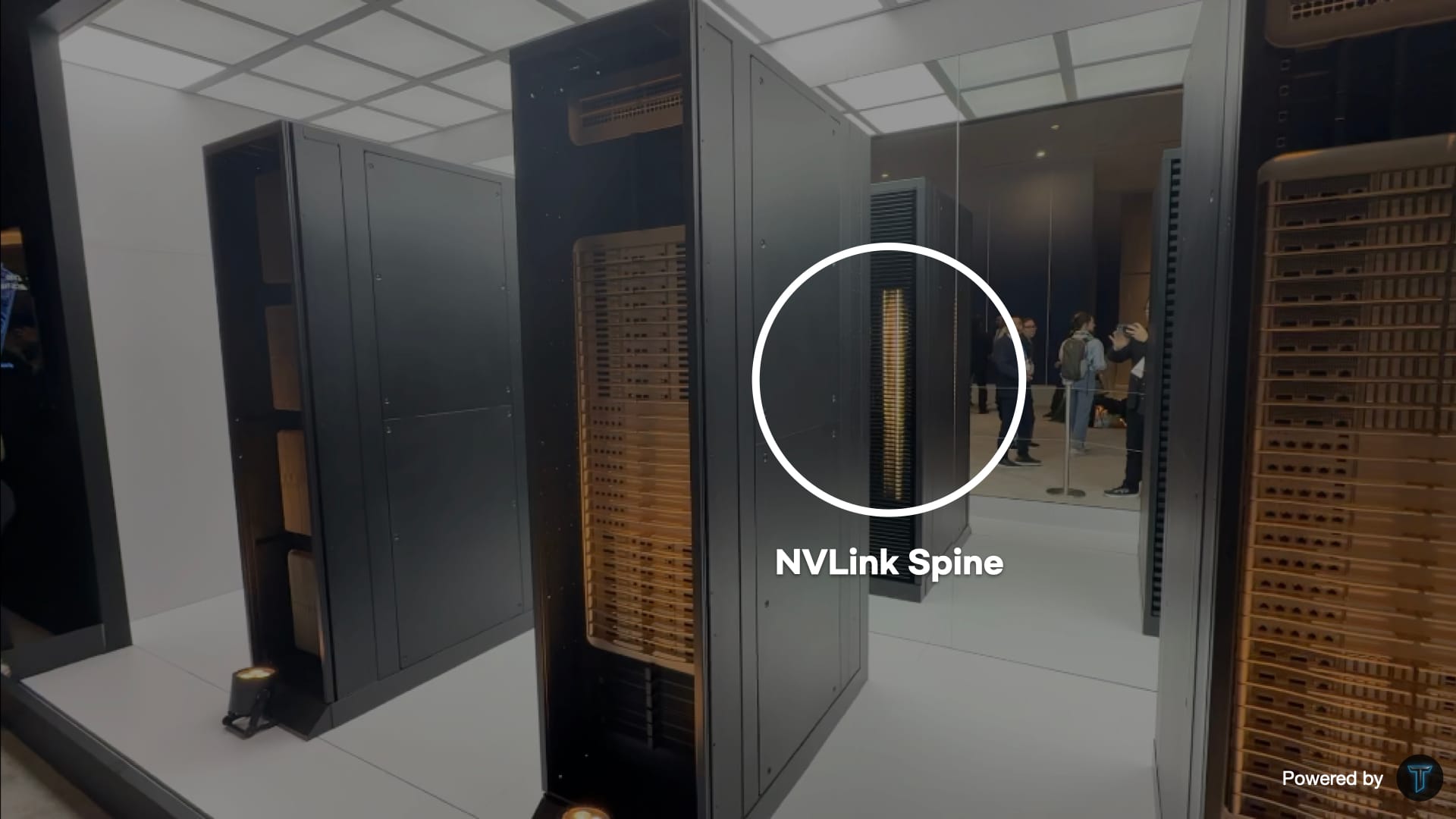
Demand runs in the opposite direction. Model sizes are growing about tenfold per year. With the arrival of test-time scaling, the machinery behind so-called reasoning models, token generation is climbing roughly fivefold per year. Meanwhile the market asks for a tenfold reduction in the cost per token every year. Supply doubles every two years; demand multiplies by ten every one. That gap is the real equation behind the AI industry today.
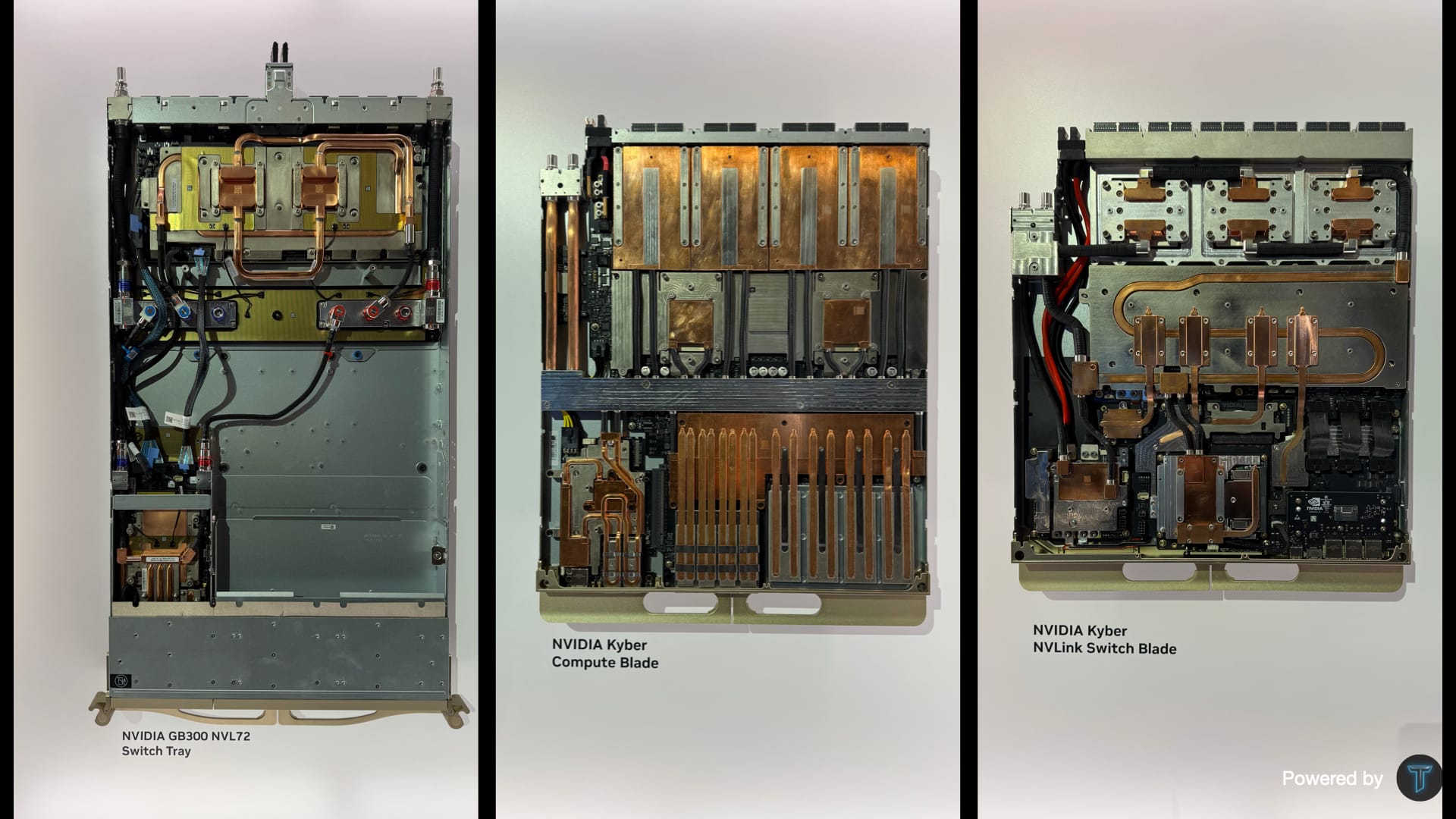
Huang's answer was to abandon the habit of building one faster chip at a time. A conventional semiconductor company reduces risk by redesigning one or two components per generation. With Rubin, Nvidia redesigned six at once: the Vera CPU, the Rubin GPU, the NVLink 6 switch, the ConnectX-9 SuperNIC, the BlueField-4 DPU, and the Spectrum-6 Ethernet switch. Nvidia calls the method extreme co-design. The company claims that on large Mixture of Experts inference, at the same latency, Rubin cuts the cost per token to roughly one-tenth of Blackwell's, and that training the same model requires a quarter of the GPUs.
Here is the part that matters beyond Santa Clara. Co-design does not eliminate the bottleneck. It moves it, from transistor density to power and heat.
The first company to feel that shift in its bones was Elon Musk's xAI. The Colossus data center in Memphis began with 100,000 H100s and entered a build-out toward 550,000. In that phase, the scarce resource its engineers fought over was not silicon. It was electricity. They trucked in gas turbines, stacked batteries, and negotiated for substation capacity. You can own the chips and still not turn on the racks if the grid will not have you. Terrestrial AI is now a semiconductor business and a power-generation business at the same time.
SpaceX is solving the same physics problem from a different coordinate system. Orbit does not require an interconnection agreement. Sunlight arrives around the clock without atmospheric attenuation, and heat leaves by radiation. What orbit does require is cheap mass to altitude and enough bandwidth to bring the results of the computation back down. Starship handles the first constraint, Starlink the second. A Starlink V3 satellite carries roughly 1 Tbps of capacity, and a single launch puts about 60 Tbps into orbit, more than twenty times the V2 generation. That is the point at which an orbital data center stops being an engineering joke and starts being a line in a capital plan.
The registration statement confirms the shape of the bet. In 2025, SpaceX's Connectivity segment produced $11.387 billion in revenue and $4.423 billion in operating income. In the same year, the AI segment posted an operating loss of $6.355 billion against $12.727 billion of capital expenditure. The satellite internet business is fuel, and the compute business is the engine burning it. On June 12, 2026, SPCX priced its Nasdaq offering at $135 a share, an implied valuation of roughly $1.77 trillion.
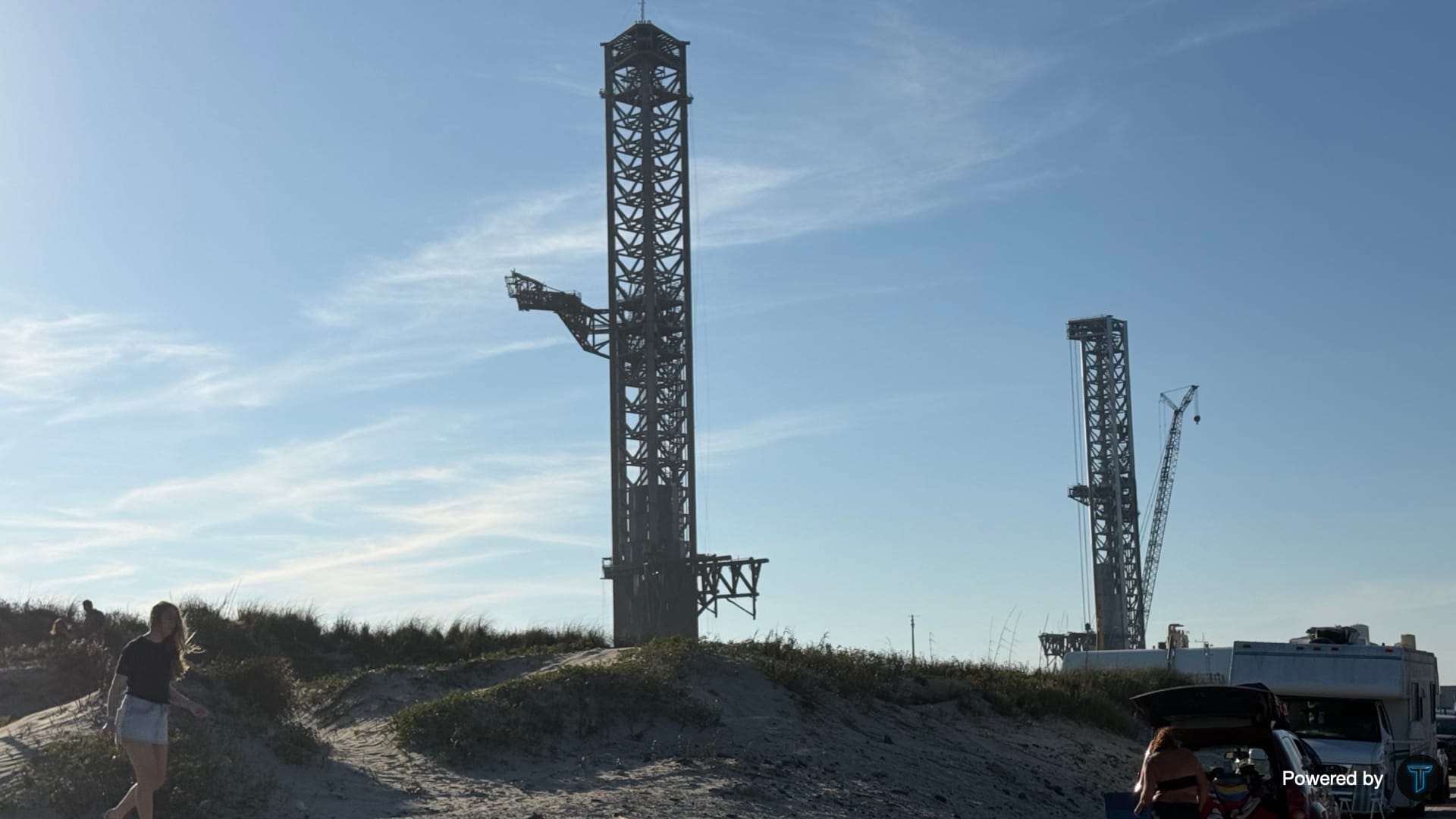
The question an investor should be holding up against that price tag is not the success rate of the rockets. If the ceiling on AI is power and heat, then it is a question of where those constraints get solved: at a power plant and a cooling tower on the ground, or in the sunlight and vacuum above the atmosphere. The silver sculpture on that Las Vegas stage and the launch mount in South Texas are two sides of the same equation.
For research inquiries or collaboration, contact: ceo@technorns.com