When the Chipmaker Invests in the Buyer
NVIDIA invested in xAI's $20B round while selling it GPUs. Circular capital, or conviction? The case against.

The skeptics deserve a hearing, and not as a footnote appended to an enthusiastic story.
Their case is simple to state. Model performance may not improve in proportion to the capital poured into it. If each additional order of magnitude of compute buys a smaller increment of capability, then the infrastructure bill arrives on a schedule the revenue cannot meet. That argument has been made by serious industry analysts, and nothing in the last two years has settled it.
Capital moved anyway. xAI's Series E was raised from an initial target of $15 billion to about $20 billion as of January 2026. The names on the cap table are what make the round worth pausing over. NVIDIA joined as a strategic investor. So did Cisco Investments. The company that makes the chips and the company that makes the network fabric both took a position in the company buying both.
That is either a vote of confidence or a warning, depending on where you stand, and the honest answer is that it can be read both ways.
The skeptical reading is circularity. A supplier that invests in its own customer is financing the demand it books as revenue. Dollars leave the chipmaker as equity and come back as purchase orders, and the loop can run for a while whether or not the end market is real. This is not a novel pattern in technology. It has ended badly before.
The other reading is less dramatic and possibly more accurate. Strategic investors buy access and information as much as returns. A chip vendor with a seat near the largest training cluster on earth learns what breaks at scale, which is worth something regardless of whether the equity appreciates. The test is proportion. If the strategic stake is small next to the customer's total spending, the loop is a detail. If it is large, the loop is the business model. That ratio is the number to demand before accepting either story.
Then there is the argument that gets the least attention and may bite the hardest: depreciation.
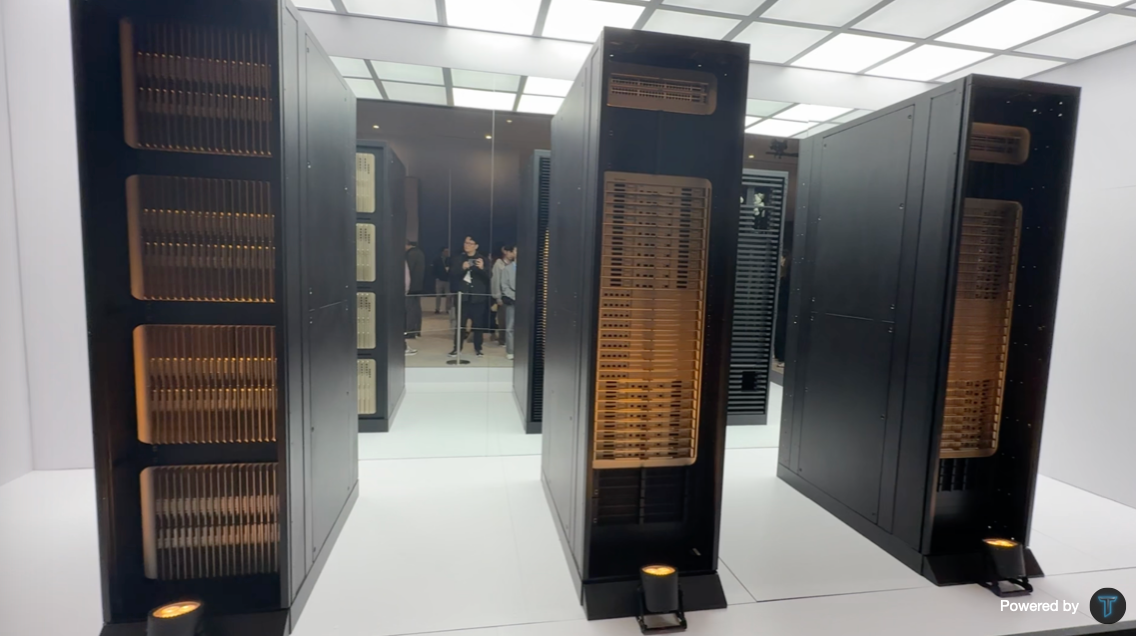
Look at how Colossus was actually built. It began in the summer of 2024 in an abandoned factory in Memphis with roughly 100,000 H100s. By June 2025, the site held about 150,000 H100s alongside 50,000 H200s and 30,000 GB200s. In early 2026, a second campus, Colossus 2, came online nearby, loaded with GB200 and GB300 parts. Across both sites, the GPU count reached roughly 550,000.
Read that sequence again as an accountant rather than an engineer. Four hardware generations landed in the same buildings inside about eighteen months. Every generation makes the previous one less competitive per watt and per dollar. If a GPU is depreciated over five or six years on the books but is economically stale in two or three, then reported earnings across this entire industry are flattered by an assumption that the build history itself contradicts.
The counterargument has teeth. Older accelerators do not become scrap. They are pushed down the stack from training to inference, where the workloads are less punishing and the demand is growing faster than the training side. A depreciated H100 serving tokens is still earning. Whether it earns enough to justify its original price is an empirical question that will be answered in the next few quarters of disclosure, not in an argument.
What both camps agree on is more interesting than what divides them.
Neither side thinks the constraint is silicon anymore. Musk has framed his own company as a toddler standing next to competitors that are five, ten, twenty years old, and his point was that the technology worth having is not the quantity of hardware but the distributed-systems design and fault handling that make the quantity behave as one machine. The skeptic and the builder arrive at the same wall from opposite directions. Power. Cooling. Land. The skeptic says the wall caps the return. The builder says the wall has to be gone around.
Which is why the argument about whether this spending pays off does not get settled in Memphis.
For research inquiries or collaboration, contact: ceo@technorns.com